ByteDance enters the AI smartphone market and prepares the second generation of “agent-based” devices
 By ForGeeks
ByteDance and ZTE are developing the second version of Doubao’s agent-based AI smartphone, which is expected to be unveiled in late 2026. The company is strengthening its position in OS-level automation and is actually entering into competition with Apple, Huawei, Xiaomi, and other ecosystems.
The first model sold out in limited quantities, but quickly
The first ByteDance smartphone with integrated Doubao, the ZTE Nubia M153, was released as an engineering device. The print run amounted to about 30,000 copies, and the model was intended to test the AI’s performance in real-world scenarios. Despite its experimental status, demand was high, and prices on the aftermarket rose by more than 40 percent.
Why the company needed a test launch
Prototype launch gave ByteDance the opportunity to test system automation at the OS level: performing complex tasks, working with multiple applications, booking services, comparing prices, and other operations. The data obtained will help in the development of the second version of the device.
App restrictions after privacy controversy
After the smartphone’s release, a number of popular Chinese apps blocked or restricted Doubao’s operation. The reason was concerns about the AI’s access to data and its ability to control apps without standard API permissions. The conflict has drawn attention to the security issues of agent-based AI.
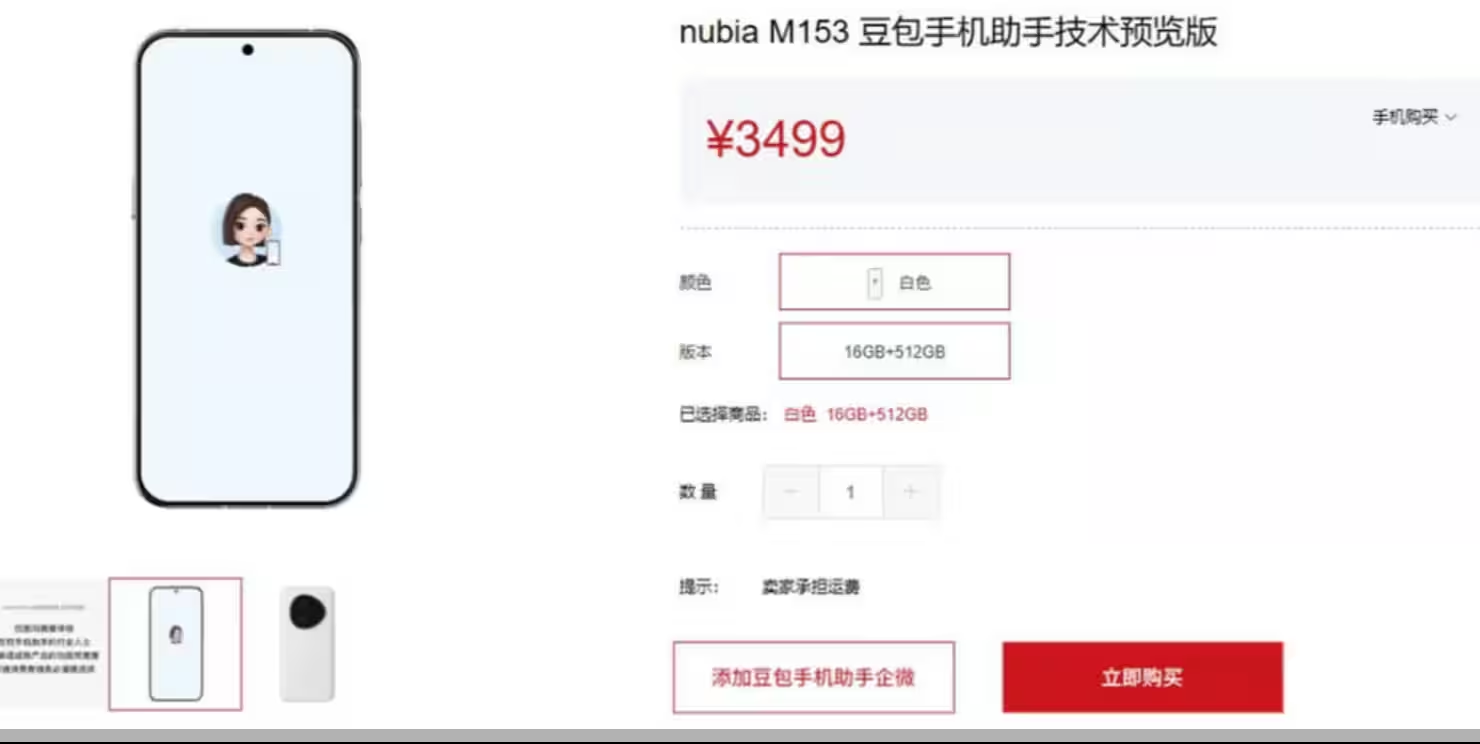
Second generation Doubao-smartphone – by the end of 2026
ByteDance and ZTE are already working on a more mature version of the device. Production of the current prototype has ceased, and the new model should offer refined hardware specs and deeper Doubao integration.
ByteDance and ZTE are already working on a second-generation Doubao smartphone.
Long-term strategy: an AI layer instead of a proprietary smartphone
The company says it has no intention of becoming a permanent smartphone maker. The goal is to turn Doubao into an AI layer on top of the OS that third-party manufacturers can use. However, analysts at Morgan Stanley and IDC believe partnering with big brands could prove difficult, with leading players developing their own AI systems.
The company says it’s not looking to become a permanent fixture in the smartphone industry.
Why ByteDance needs an AI smartphone at all
Although ByteDance is known for TikTok and Douyin, its work on smartphones helps it test agent-based AI in an environment of complete control from system to app. The partnership with ZTE gives the company the opportunity to develop Doubao and demonstrate its capabilities to potential OEM partners without having to build a business on hardware.
A partnership with ZTE gives the company the opportunity to develop Doubao and demonstrate its capabilities to potential OEM partners without having to build a business on hardware.
Opportunities and risks for future growth
IDC predicts ByteDance will struggle to attract premium hardware partners by 2026, which could limit Doubao’s distribution despite 159 million active users. That said, the company sees potential in partnering with app developers and services – especially in e-commerce, travel, payments and shipping.
The Volcano Engine platform, which already handles nearly half of public requests for LLM-API in China, strengthens ByteDance’s position in the future expansion of the AI ecosystem.