Google removes permanent “Everyone” mode from Quick Share, adds 10-minute limit
 By Sergey K
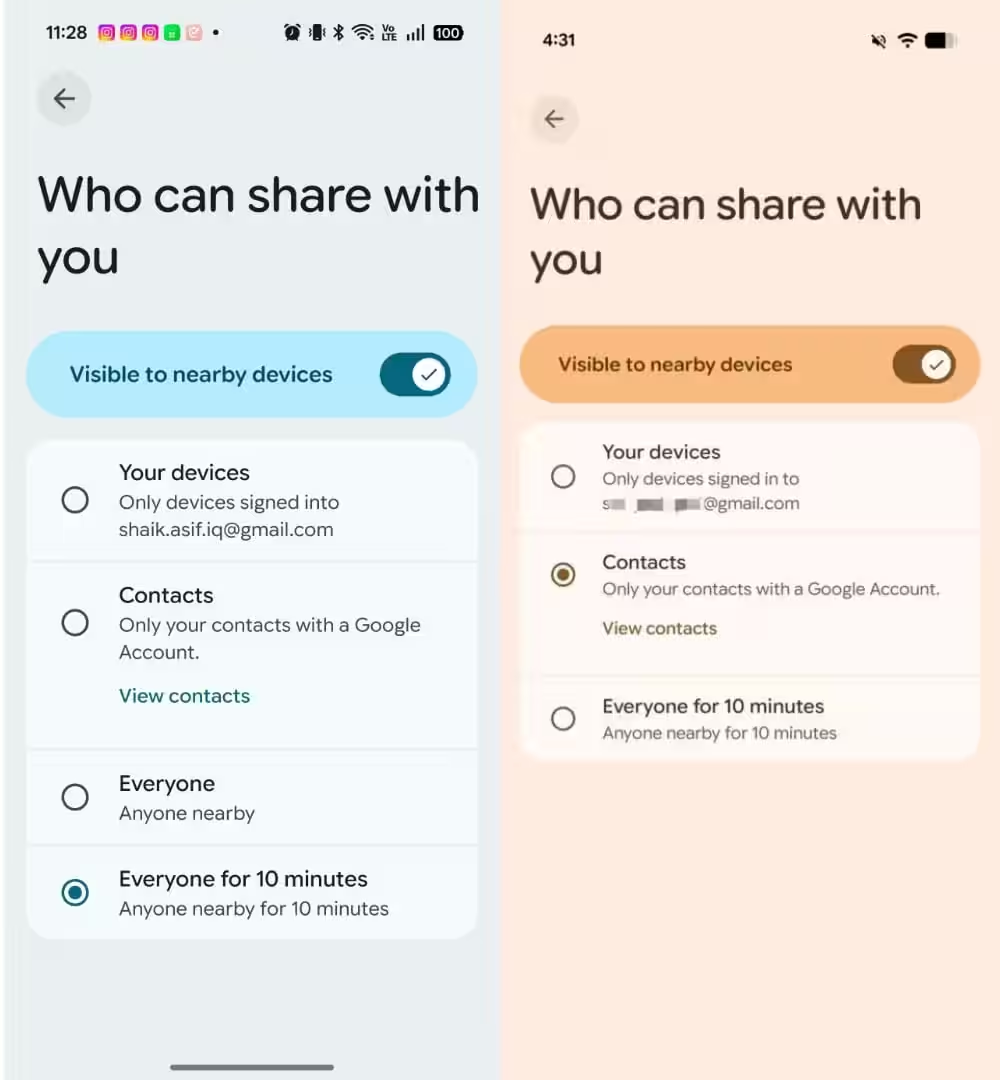
Google has disabled the permanent “Everyone” mode in Quick Share on the Pixel 10 via a server-side change: now the file-sharing feature offers just three options – Contacts, Everyone for 10 Minutes, and Your Devices. This adjustment is active on devices running the beta version of Google Play Services v26.06.31, meaning you can no longer keep receiving files openly from anyone nearby indefinitely.
For users, this means fewer accidental or malicious transfers from strangers and a better alignment with how Apple’s AirDrop handles public sharing. For Google, it’s a move to reduce security concerns and improve Quick Share’s compatibility with both AirDrop and Samsung devices.
What’s changed in Quick Share
The endless “Everyone” option has been removed from Quick Share on Pixel 10. Here’s the breakdown:
- Version: The change was spotted on devices running beta Google Play Services v26.06.31.
- New options: Contacts, Everyone for 10 Minutes, and Your Devices.
- Effect: You can no longer keep “Everyone” mode permanently active – the maximum duration for sharing openly with everyone is now 10 minutes.
How this differs from AirDrop
Apple has long imposed a time limit on its “Everyone” mode – now Google is clearly following suit. Essentially, Quick Share is no longer a “leave it on forever” transfer option; instead, Google introduced a temporary window that mirrors AirDrop’s approach.
Importantly, Samsung still allows users to keep Quick Share open indefinitely. The “Only for 10 Minutes” option exists but can be toggled off. However, as Quick Share becomes more aligned with AirDrop, Samsung may phase out the unlimited mode in One UI 8.5 or One UI 9.
Why Google made this change
Several reasons overlap here. First, this patches an obvious security hole: leaving reception constantly open makes it easier for unwanted transfers or data harvesting in public spaces. Second, it moves toward ecosystem uniformity – if Quick Share wants to “play nice” with AirDrop, adopting similar rules makes sense.
A third reason is regulatory diplomacy. Amid pressure from the EU and calls for tech interoperability, Google and Samsung can now argue they’ve made cross-platform sharing safer and more accessible. That weakens any claims Apple might make about Android’s incompatibility posing security risks.
What’s next for Quick Share and Galaxy devices
None of this is set in stone. Possible scenarios include:
- Samsung synchronizes its behavior and removes permanent “Everyone” mode in the next One UI update to maintain AirDrop compatibility.
- Quick Share keeps the 10-minute limit only on Pixels while Galaxy phones stick with the old model – leading to a fragmented user experience on Android, complicating ease of use.
- Apple could theoretically alter its own restrictions – but that’s more of a political and business decision than a purely technical one.
The best advice for users is simple: keep Quick Share turned off when you’re not using it and regularly review your privacy settings. For manufacturers, the message is clear – interoperability is valuable, but not at the cost of open doors for attackers.