Tesla delays CarPlay rollout due to slow iOS 16 adoption
 By Arthur Berg
Tesla planned to add Apple CarPlay support, but the launch has been pushed back. The main hurdles? Navigation compatibility issues and the slower-than-expected adoption rate of iOS 16. There’s no official release date yet – according to Bloomberg, the delay is driven both by technical challenges syncing Apple Maps with Tesla’s in-house navigation and pragmatic concerns: too few Tesla vehicles are currently paired with iPhones running the latest iOS to justify a broad rollout.
Why iOS 16 adoption is holding back CarPlay in Tesla
The core problem boils down to conflicting navigation data. Tesla uses its own proprietary maps and routing, which are tightly integrated with driver assistance and autopilot features. Introducing external navigation solutions like Apple Maps via CarPlay requires precise sync of routes, voice prompts, and control handoffs between apps. Apple has already issued an iOS 16 patch aimed at improving coordination between the two navigation systems, but Tesla feels the current penetration of iOS 16 among its drivers is too low to launch CarPlay without risking a flawed experience.
Apple reports that 74% of iPhones from the last four years are running iOS 16-a number that’s still climbing. Tesla notes, however, that the distribution among Tesla owners could differ significantly from Apple’s overall stats. As a result, Tesla is taking a cautious approach: delaying CarPlay activation until confident that the majority of users will get a seamless experience without conflicts impacting safety and navigation.
Who benefits and who loses from the CarPlay delay
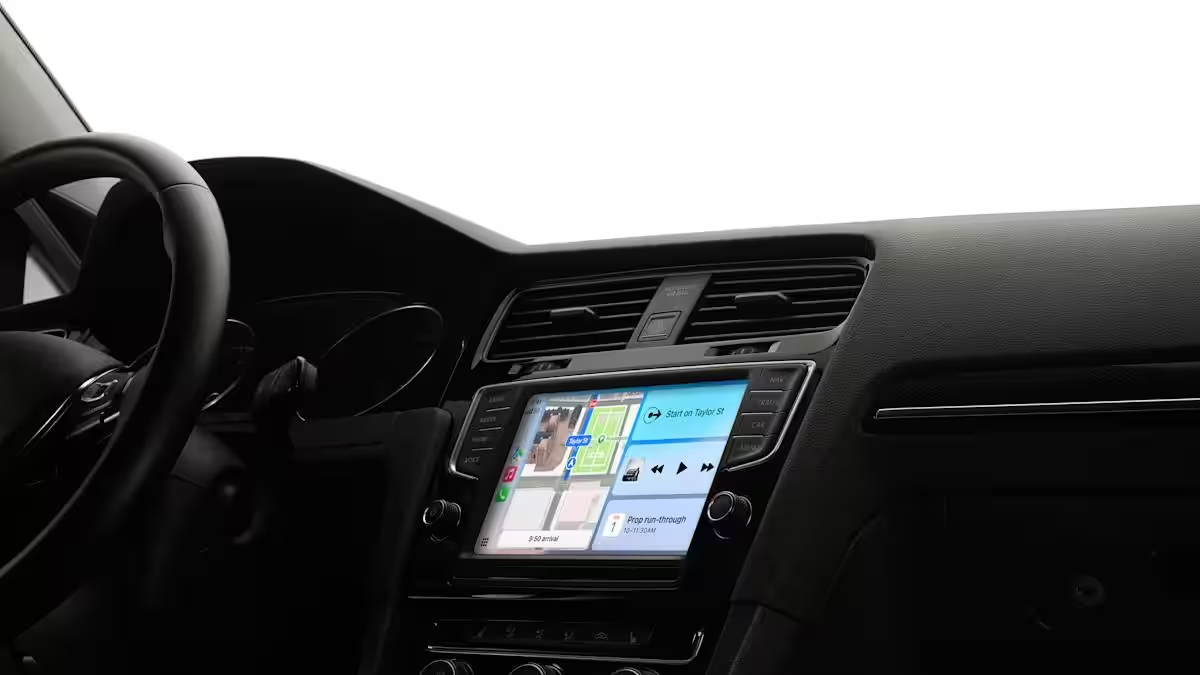
CarPlay is more than just a convenient interface for music and messaging. For many drivers, it’s a familiar ecosystem with trusted navigation, voice assistant, and favorite apps. Here’s a quick breakdown of the winners and losers from the postponement:
- Apple and third-party navigation apps benefit – it’s in their interest that CarPlay doesn’t launch prematurely, forcing rushed compromises with Apple Maps.
- Tesla owners lose out – many have been requesting CarPlay for years and now face delays amid slowing vehicle registrations in the US.
- Tesla as a brand takes a hit – missing popular features hands competitors like Ford, Volkswagen, and Hyundai (all of whom have long supported CarPlay) a sales advantage.
- Safety wins – cautious delay reduces risks of autopilot conflicts and potential legal headaches that could arise from rushed integration.
US registration data shows Tesla sales have been declining for several months, so any feature that boosts loyalty could have commercial value. Still, Tesla has traditionally maintained a closed platform, and adding CarPlay represents a balancing act between user convenience and control over the in-car ecosystem.
When can we expect CarPlay in Tesla?
There’s no firm timeline yet. The most realistic path is a phased rollout: initially beta testing on a subset of vehicles, followed by a wider release as more drivers upgrade to iOS 16 and residual compatibility issues get ironed out. Apple and Tesla are already working on patches. Should iOS 16 adoption accelerate and navigation conflicts be fully resolved, CarPlay could debut in Tesla’s next major software update.
The big question remains – will Tesla opt for partial CarPlay functionality, like multimedia-only support, or allow full integration including navigation and autopilot subsystem control? That choice will ultimately decide who truly wins here: Apple’s ecosystem or Tesla’s own platform.