Outcomes 2025: the memory crisis, agent-based AI and the failure of ultra-thin smartphones + [bonus] ForGeeks Podcast
 By Sergey K
In recent years, we have been living in a world where almost everything is influenced by artificial intelligence. And in 2025, that influence has become most prominent. If 2023 was the year of “Wow, it talks!” and 2024 was the year of “Let’s put this in every microwave,” then 2025 was the year of the “hangover.” We suddenly discovered that there wasn’t enough memory and electricity to run all this AI. It wasn’t ideas, it was matter. Silicon, copper, lithium, concrete and megawatts.
At the same time, the world has experienced a strange cognitive dissonance. On one side is agent-based AI, which promises to remove half of routine life from humans. On the other, increasingly rigid digital boundaries, prohibitions, sovereignties and new forms of control. The freedom of automation has collided with the reality of infrastructure and regulators.
2025 turned out to be the year when technological progress suddenly stopped being a story about “how things got smarter” and became a story about “how things got tighter.” Tighter in data centers, tighter in supply chains, tighter in power grids, and literally tighter inside smartphones. We’re used to the idea that software will always find a workaround and hardware will somehow catch up. In 2025, hardware didn’t catch up – it footed the bill.
Memory crisis: HBM ate the market, and we paid for it at the store
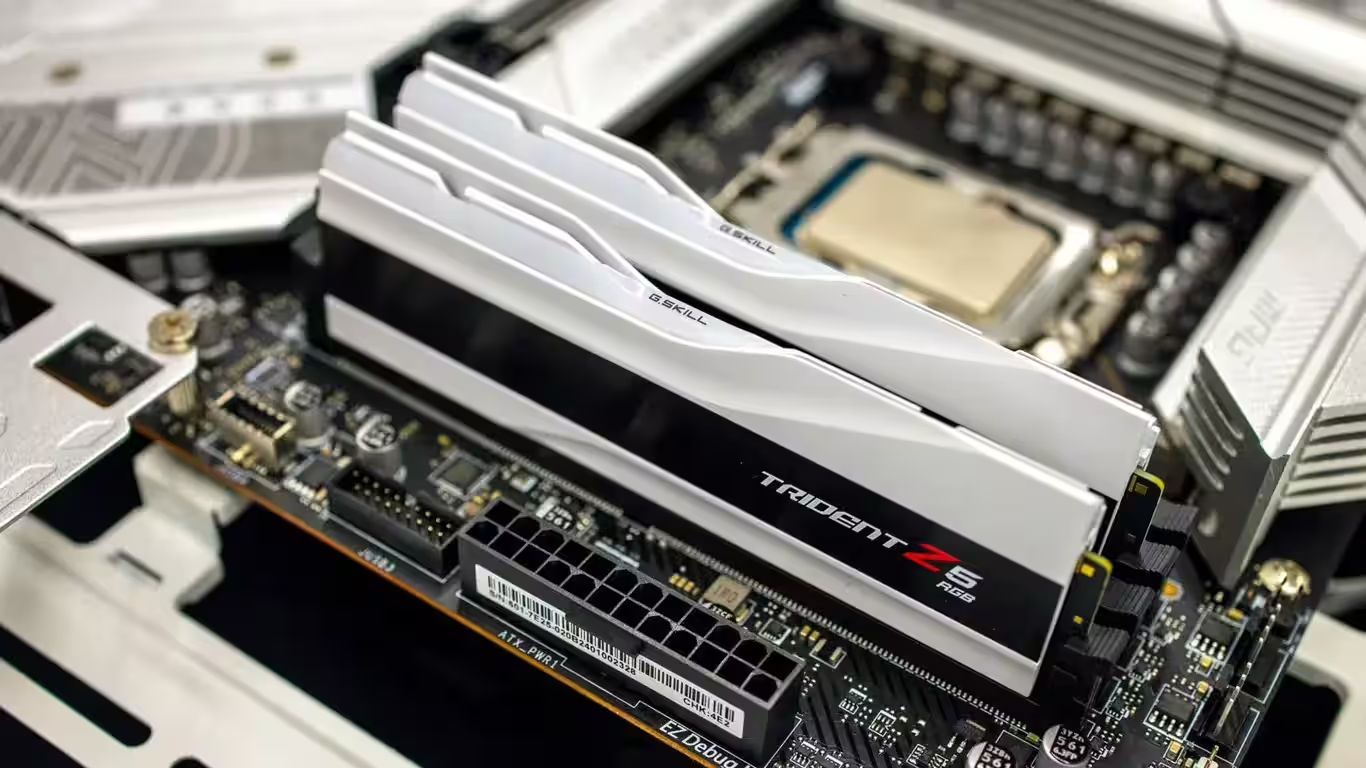
The strangest thought of 2025: scarcity didn’t happen where we used to expect it. Not video cards. Not processors. Memory. High-speed HBM has become the lifeblood of the AI industry: it’s what determines how much data a gas pedal can digest without choking. AI gas pedals began to consume HBM in industrial quantities, and this changed the economics: it made sense for memory manufacturers to allocate the best capacity and the highest priority lines to where demand was guaranteed and margins were higher. What used to go to mass-market DDR and consumer configurations has been pulled to the server segment, where everything is sold by contract and the market is more nervous.
On a household level, it felt like a return to the “hardware is a luxury” era. Prices of popular modules jumped, shipments got jumpy, and laptop makers began to re-normalize basic configurations that look like a mockery in an era of localized models and AI features in the OS. Separate absurdity: the market started to remember DDR4 again not as “the past” but as “at least something affordable,” and even the big players were adjusting plans to roll out old lines, but primarily for enterprise customers – in other words, it didn’t get any easier for the masses.
The main point of this paragraph is not that “memory has gotten more expensive.” The point is that AI has, for the first time before your eyes, reallocated the manufacturing priorities of all electronics. This isn’t a whim of the PC market, it’s a side effect of the data center race. In 2025, you didn’t just buy a set of memory – you bought a slice of global scarcity.
Agent AI: Prompts are dead, “operators”
2024 was the year people learned to “ask properly”. 2025 was the year asking became uninteresting because you can mandate it. The most important shift is that AI gained the ability to act in an interface: to see the screen, to click, to type, to scroll, to perform steps in a browser. This isn’t just a “new feature,” it’s a shift in the interaction model. AI is no longer a generator of advice, but an executor of tasks.
Hence the new reality of “one team, many actions”. You formulate a task in human language, and then the agent itself opens websites, compares options, designs, books, fills out forms. The convenience here is almost dangerous: you begin to see the Internet as a system where you don’t click on tabs, but an “operator” does it for you.

That’s why trust and security issues have skyrocketed in 2025. Where once the main risk was “he lied in a text”, now the risk has become “he did the wrong action on your behalf”. This has spawned a new race: who is better at controlling the agent, who is better at showing his steps, who gives rights in a metered way, who knows how to put “fences” at the level of accounts and payments. In parallel, the familiar world of apps began to erode. Not because apps have disappeared, but because they are no longer the only way to do something. Where you used to need a separate interface for ordering/booking/payment, now all you need is an agent that knows how to walk through a site or pull an API. The Post-App Era in 2025 has become not a slogan, but a working market hypothesis.
The post-App Era in 2025 is no longer a slogan, but a working market hypothesis.
The search that doesn’t “find you”: AI Overviews and the end of clicks as currency
If agent AI is taking some of the action away from apps, AI search is taking some of the audience away from websites. This is the second fundamental blow to the old internet, and in 2025 it has become massive. AI answers in search have gone from an experiment to the default solution. The user gets a “ready-made squeeze” right in the output and is less and less likely to click on the original source. At the same time, search has started to embed monetization inside these AI blocks: advertising is moving from classic links to the new format of answers. As a result, the very mechanics of visibility are changing for businesses and media: being on the first page has become less important than being inside the answer – and preferably next to the ad layer.
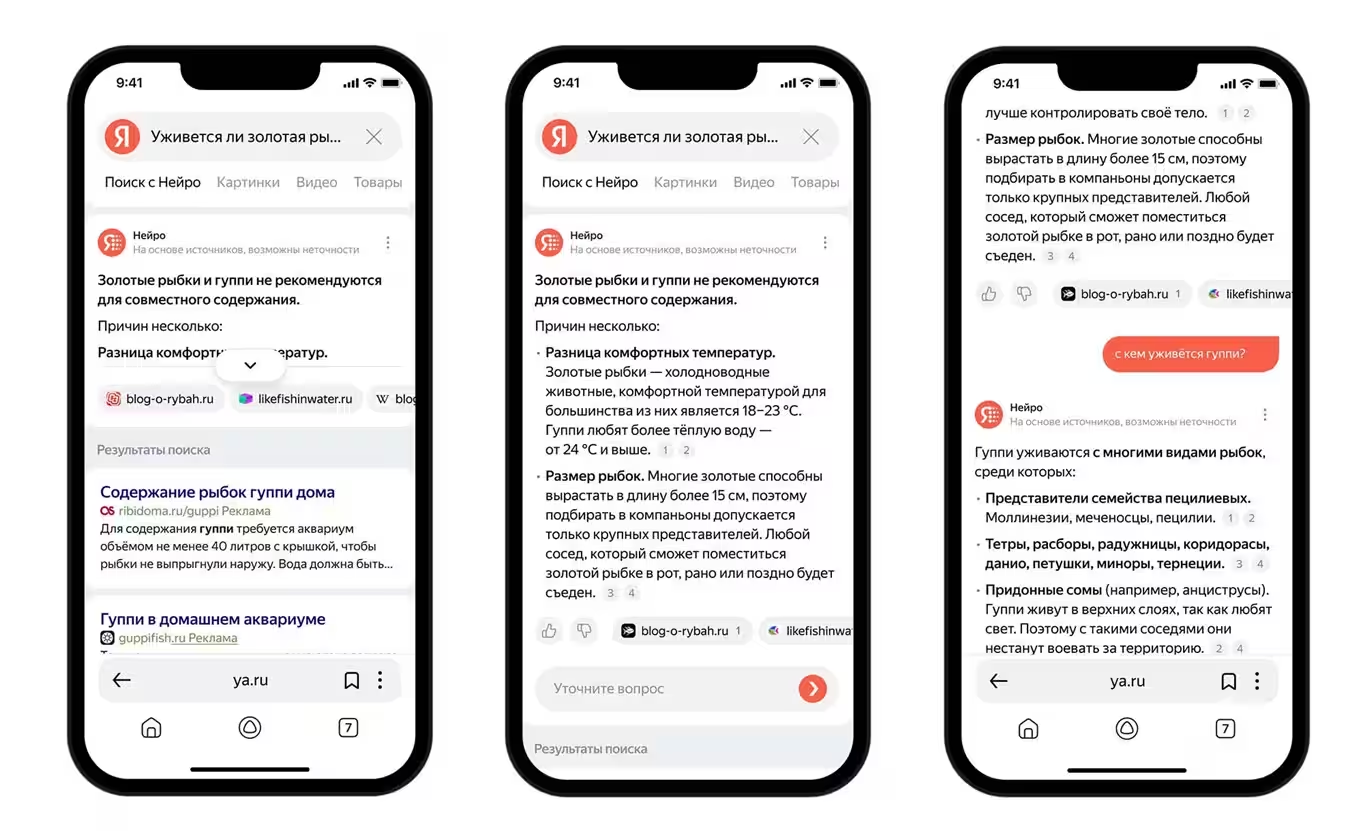
This has spawned the conflict of the year: publishers and content creators feel their texts are being turned into raw material for retelling, and economic returns are falling. The reaction is natural: more paywalls, more closed mailing lists, more “daycares” and clubs, more restrictions on bots. The open web begins to fragment: the “good stuff” goes where it can’t be so easily retold without consequences.
Paradoxically, 2025 was the year that the internet started to resemble a library with keys to departments again. Access is there, but not for everyone and not for free. And if you’re media, the main SEO dilemma now sounds tough: how to simultaneously be visible in search and not feed a system that diminishes your audience.
Sovereign Curtain: messengers under pressure
Global story of the year is automation and agents. Local (especially Russian, but not only) – control and reconfiguration of communications. In 2025, an important marker was the limitation of functionality in large messengers: they didn’t “turn everything off,” but they started to crack down point-by-point and consistently – and primarily on calls. To combat fraud and crime. Mobile communications in the regions are being shut down for the same reasons.
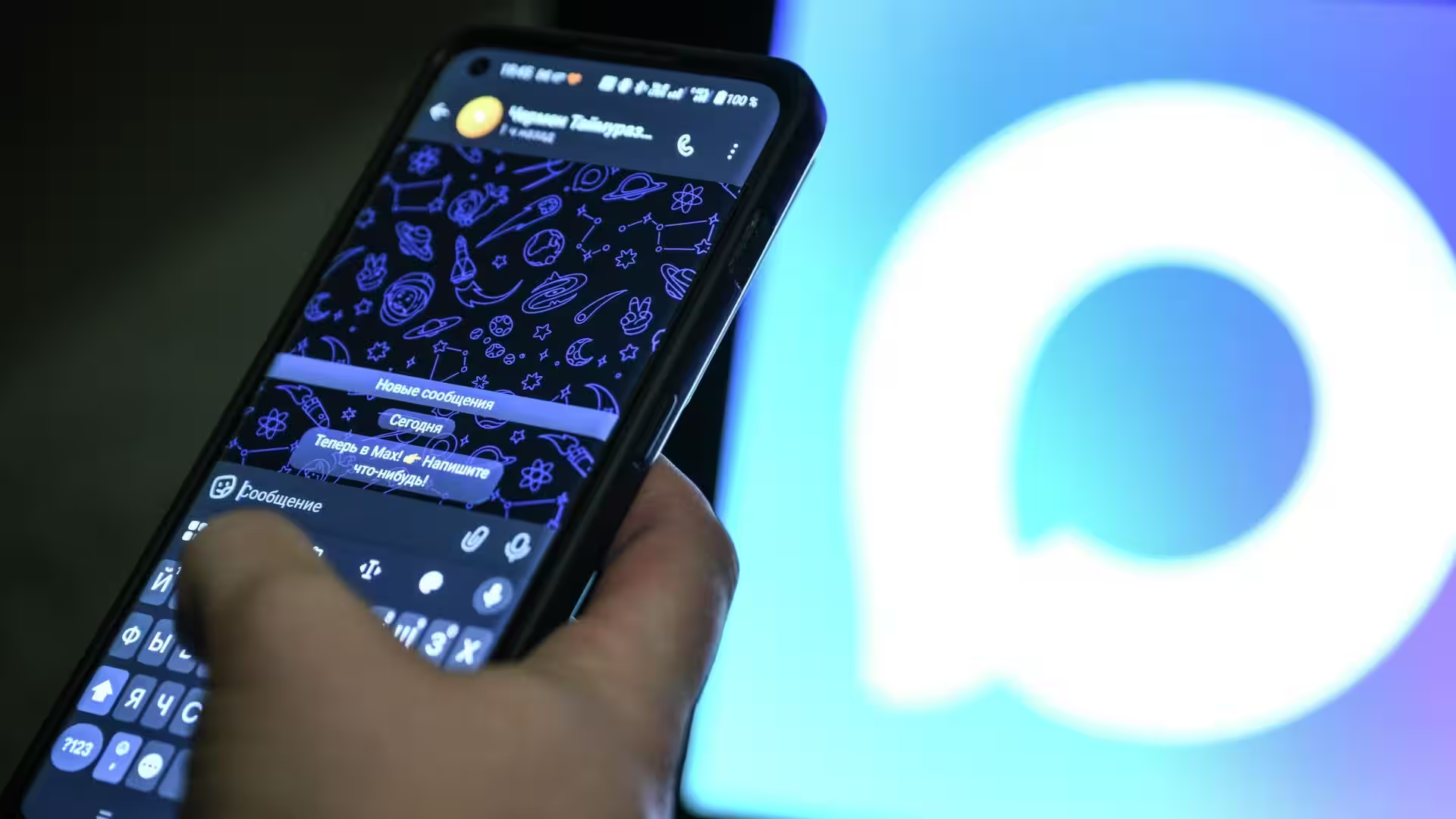
In the face of these pressures, there is a growing push for “alternatives” that are easier to regulate and build into national ecosystems. It’s not just a competition of apps. It’s a competition of models: a neutral global service versus the “right” platform embedded in local regulations. Of course, we’re talking about the messenger that catches in the elevator and in the parking lot.
Max’s capabilities as a «one-stop shop» are expanding in parallel, sometimes replacing even Government Services. This is another point where 2025 changes habits: the dialogue with the state becomes an interface, and the interface becomes a personalized assistant. And the more services pass through this interface, the more it becomes a digital passport.
And the more services that pass through this interface, the more it becomes a digital passport.
Atomic Big Tech: data centers need megawatts
Industry in 2025 has finally stopped looking like “magic”. It started to look like infrastructure. And infrastructure requires electricity. A lot of electricity. With a guarantee. That’s why one of the most symbolic stories of the year is Big Tech’s long energy contracts and the turn toward nuclear generation as a source of stable power. When companies sign agreements for decades to come, they are effectively saying, “we are planning this AI world seriously, and it’s going to live a long time.”
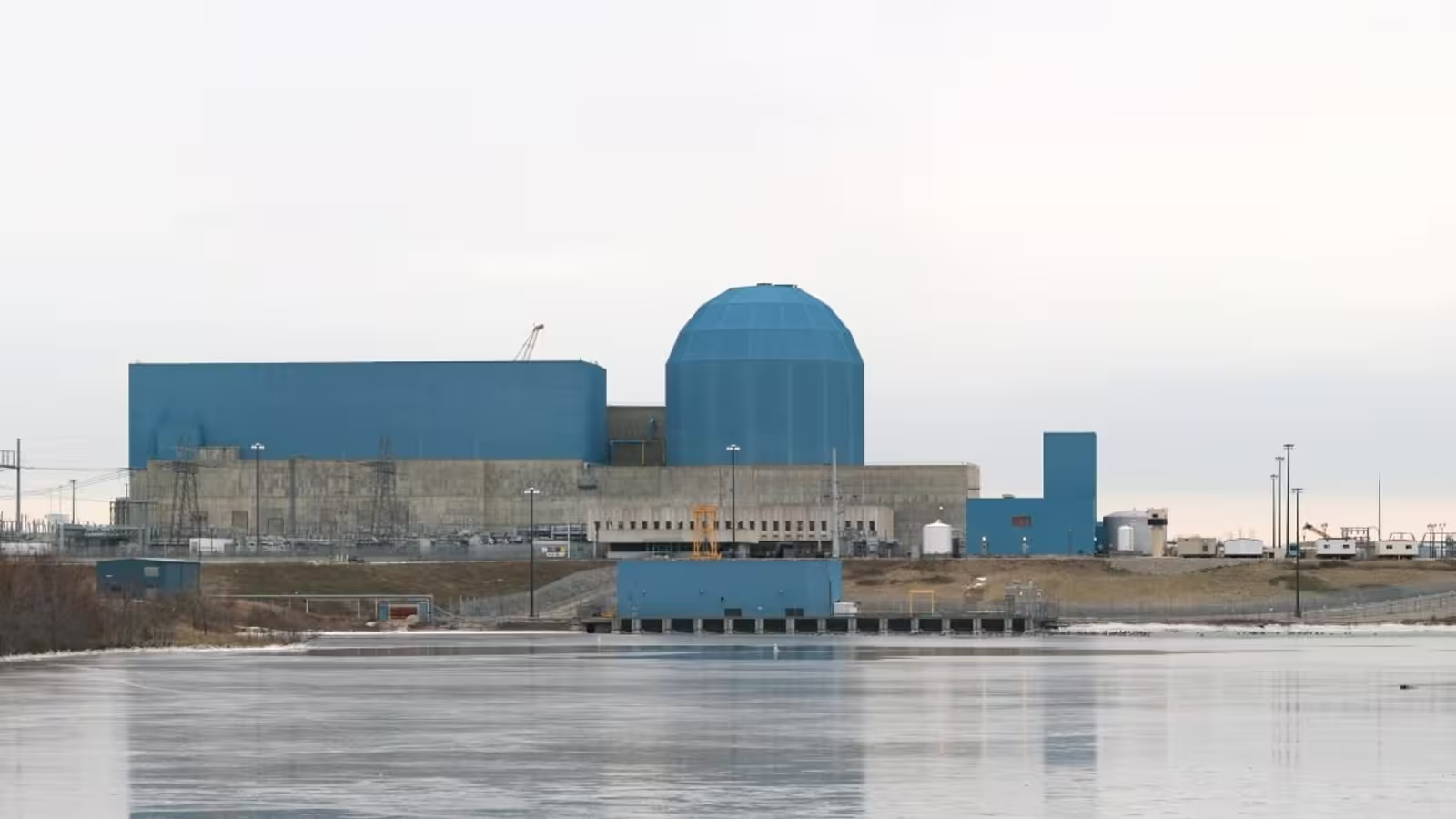
The point is not that “the atom is back in fashion”. The point is that the AI race has become a race for basic resources: energy, cooling, land, grid connections, permits, construction. And in this world, it’s not just those with the best models who win, it’s those who can build and negotiate faster.
The point is that the AI race has become a race for basic resources: energy, cooling, land, network connections, permits, construction.
2025 has taught the market a simple thing: any talk about “AI everywhere” automatically becomes talk about power plants and substations. And it’s one of the most grown-up turns the tech industry has taken in years.
Cosmos: second heavy rocket changes the market more than a hundred press releases
2025 is proving to be an important year for space precisely because there’s less loneliness out there. The successful launch of Blue Origin’s heavy rocket into orbit isn’t just a “company achievement.” It is the emergence of an alternative that is changing the bargaining power of customers and the structure of the launch market.

When a second adult player emerges in an industry, cost and terms are no longer the dictates of one company. Launches become logistics rather than heroic stories: schedules, reliability, insurance, production cycles. Space is increasingly becoming a mere infrastructure market, where those who can do serialized and predictable wins. And this is an important sign of 2025: technological breakthroughs are increasingly judged by rhythm and scalability, not by a single “wow.”
And that’s why it’s important to recognize that we’re not just talking about a single “wow”.
Ultra-thin smartphones: iPhone Air and Galaxy S25 Edge show the limit of “beauty”
One of the most high-profile consumer stories of the year is the ultra-thinness race. Apple and Samsung are betting in 2025 that users are tired of heavy “bricks” and will want a phone that feels like an accessory. The problem is that 2025 is the era of AI features, 120Hz, constantly active background processes, heavy cameras, and perpetual connectivity. In this reality, thinness is not a feature, but a compromise knife that cuts at two places at once: battery and heat.
So thinness is not a feature, but a compromise knife that cuts at two places at once: battery and heat.
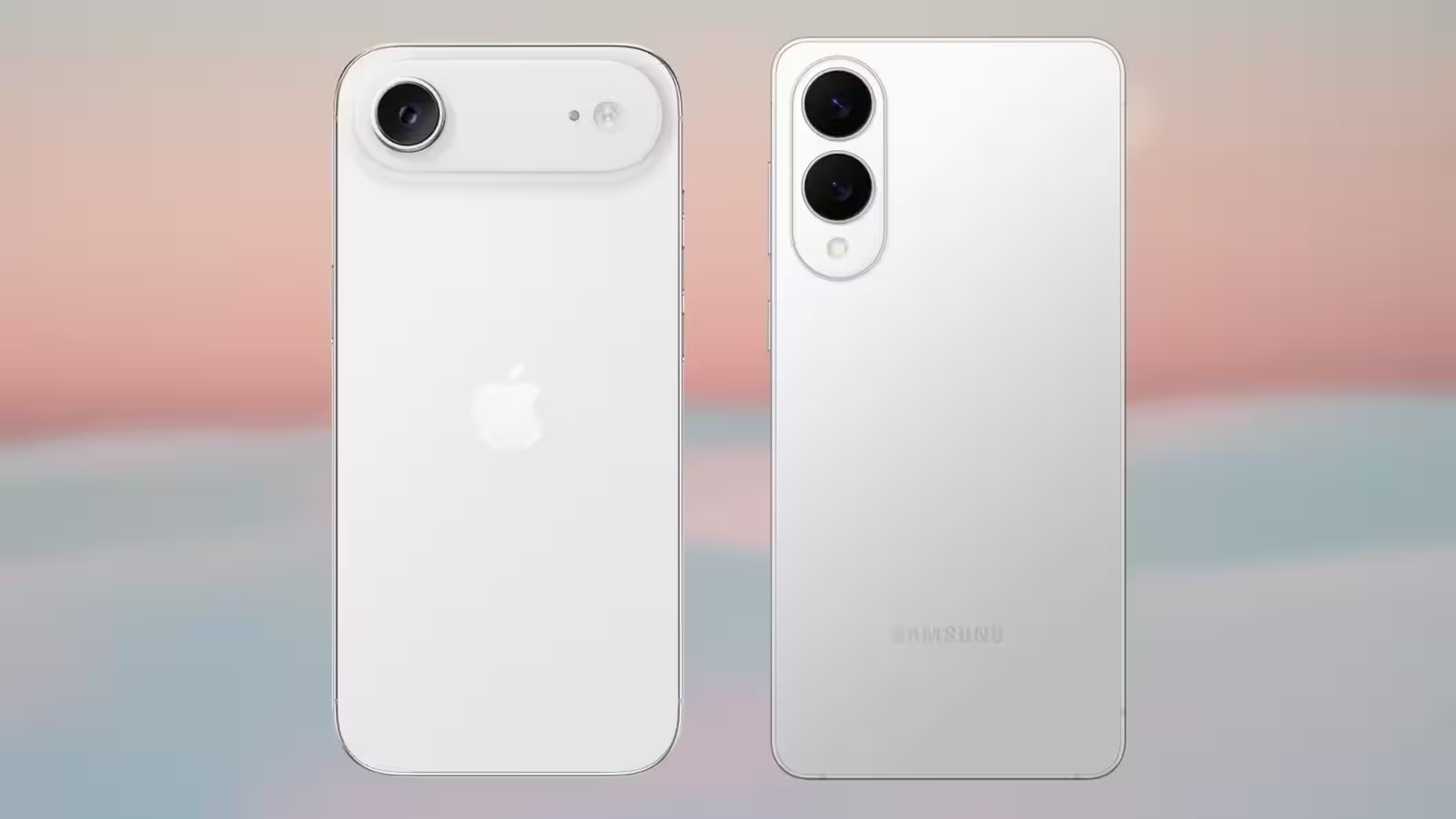
The year’s reviews and tests revealed this over and over again: somewhere autonomy turned out to be obscenely scenario-dependent, somewhere thermal stability limitations manifested themselves, somewhere the question “why would I want this for this kind of money” simply arose. For a part of the audience, thin models became a beautiful object, but not a reliable tool for every day. And this is the main conclusion of 2025: thinness is no longer an independent value. In 2014, “thin” meant “technological.” In 2025, “thin” means “at what cost.” Against a backdrop of an energy crisis, memory scarcity and general fatigue with constant charging, users have voted for practicality.
Bitcoin at $120,000: boring maturity instead of anarchy
The main paradox of cryptocurrency in 2025 goes like this: the higher the price, the less romantic. Bitcoin was once again breaking records and making headlines, but it no longer felt like a “weapon against the system” but an asset within the system.
Bitcoin is no longer a “weapon against the system” but an asset within the system.
The story of the year is institutionalization. Bitcoin is increasingly tied to expectations of regulatory decisions, sentiment in traditional markets, political agendas and corporate strategies. This makes it a tool to hold in a portfolio alongside gold and equities, rather than a counterculture symbol.
If we’re being honest, Bitcoin has matured in 2025. And adulthood is boredom. But it’s boredom that means the asset has become systemic and impossible to ignore.
Epilogue: Editor’s Choice
Smartphones of 2025
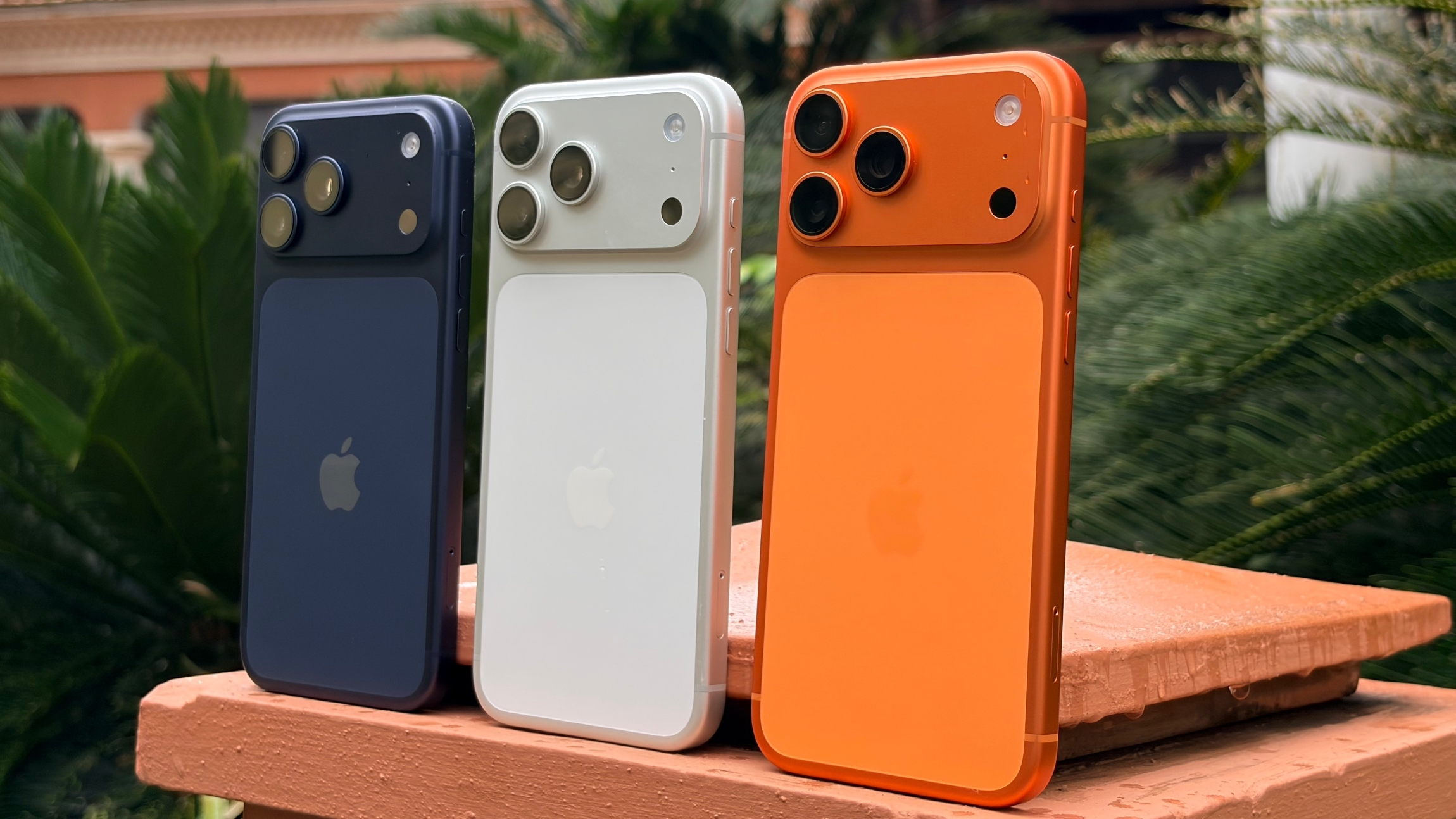
iPhone 17 Pro Max. They say “evolution, not revolution” about it, but it was the 2025 that complimented it. The year showed that the user is tired of risky experimentation and values predictable excellence: autonomy, camera, sustained performance, ecosystem quality and a “take it and it just works” feel. Against the backdrop of the failure of ultra-thin models, the iPhone 17 Pro Max is perceived as the opposite philosophy: better a little less showiness, but more reliability.
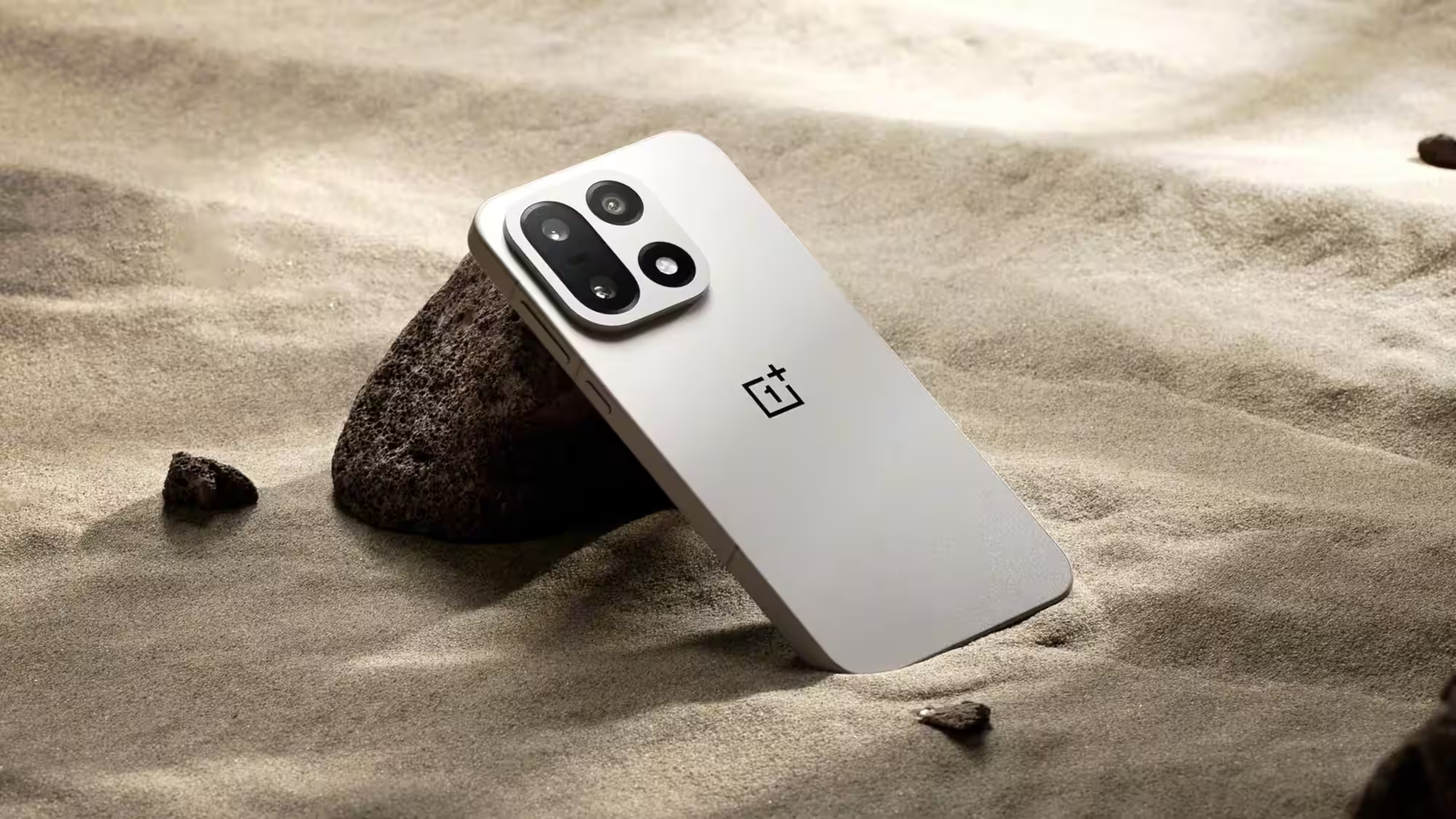
OnePlus 15. It won the year by solving the most household pain of the modern smartphone: battery anxiety. Its large capacity, really strong battery life and fast charging made it a phone that takes the psychological edge off: you don’t have to think about percentages all the time. In 2025, where even data centers lack power, a smartphone with “energy chutzpah” looks like an unexpectedly logical king.
A smartphone with “energy chutzpah” looks like a surprisingly logical king.
Service 2025
Agent AI platforms as a class. Not one brand, but the “commissioned – get results” model itself. 2025 showed that the main product of the next few years is not another app, but a layer of delegation on top of all apps at once.
The 2025 Game

Clair Obscur: Expedition 33. In a year when the industry often looked like a combination of remakes and endless sequels, this project made the argument that auteur style and strong production could beat “budget size.” It was visible not only in the media, but also in industry polls and awards year totals.
Budget 2025
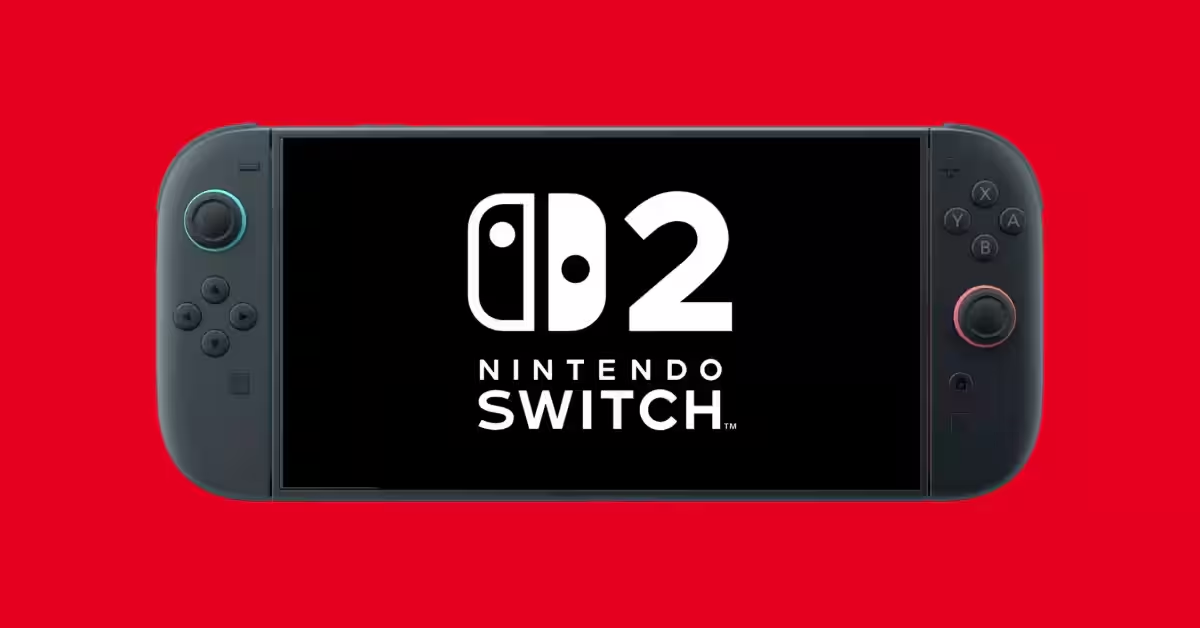
Nintendo Switch 2. This device hit the nerve of the times perfectly: people don’t want maximalism of features, but joy of use. With its hybrid format, game modes, and support for modern picture standards, the Switch 2 is the kind of thing that explains technology in simple, “turn it on and get high” terms.
Failure 2025

The race of ultrathin. The lesson of 2025 is brutal and useful: if a device has gotten prettier, but living with it has gotten worse, it’s not progress, it’s a design disaster.
Prediction Toward 2026
If 2025 was the year of the “gag,” 2026 looks like the year of trying to unclog it: new capacity, new delivery schemes, new market rules, new standards of control for agents, and a new battle over who will own attention – websites, search, or AI answers.