11 differences between AirTag 2 and the first generation: what Apple changed in five years
 By ForGeeks
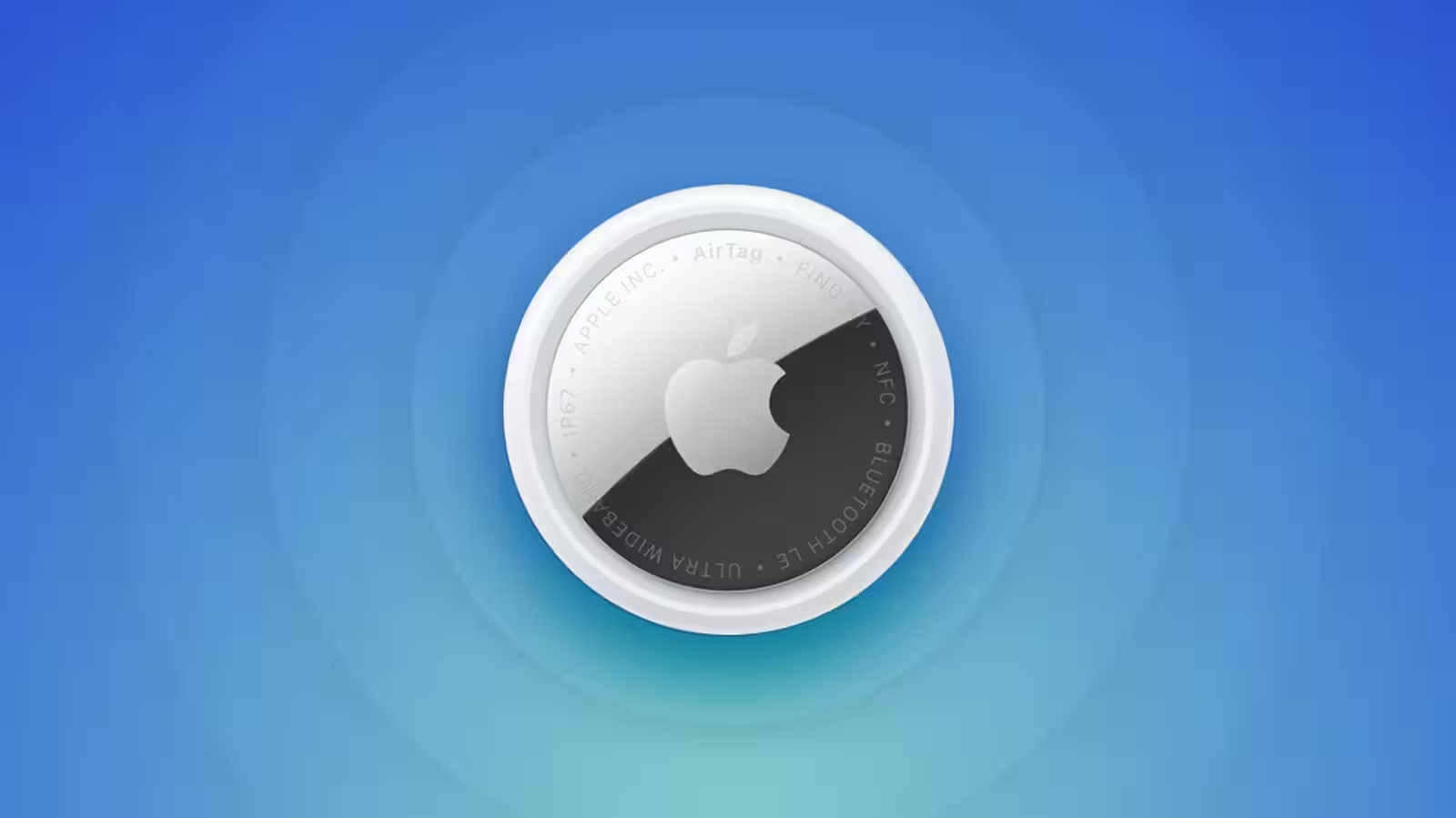
Apple unveiled the second-generation AirTag five years after the original tracker launched. While the devices look identical externally, the new model packs significant technical upgrades under the hood — from a next-gen Ultra Wideband chip to a louder speaker and Apple Watch support.
- The second-generation UWB chip extends Precision Finding range by 1.5 times
- The speaker is 50% louder for easier locating and to deter covert tracking
- Precision Finding now works on Apple Watch Series 9 and newer
Second-generation Ultra Wideband chip
The AirTag 2 features the second-generation ultra wideband chip — the same used in the iPhone 17 and the latest Apple Watch models. This upgrade underpins many of the tracker’s other enhancements.
Precision Finding range increased by 1.5 times
Thanks to the updated UWB chip, Precision Finding now works at 1.5 times the range of the original AirTag. This feature helps you locate the tracker indoors at close distances by guiding you with haptic feedback, visual cues, and sounds on a compatible device.
Precision Finding support on Apple Watch
Previously limited to the iPhone, Precision Finding is now available on the Apple Watch Series 9 and later, as well as on Apple Watch Ultra 2 and newer. These models’ UWB chips let users track lost items directly from their wrist.
Speaker volume increased by 50%
The AirTag 2’s built-in speaker is 50% louder than the original model. This makes it easier to find when buried in bags or under furniture. It also serves as an additional measure against covert tracking — a louder sound is harder to muffle or conceal.
Improved Bluetooth with longer range
Apple upgraded the Bluetooth specification to extend the tracking range. This lets the AirTag connect with devices over greater distances than before.
Redesigned internal layout
To fit the louder speaker, Apple reworked the AirTag’s internal design. Rumors suggested the company made the speaker harder to access to prevent tampering, though this hasn’t been confirmed without a teardown.
Weight increased by 7%
The AirTag 2 weighs 11.8 grams (0.42 ounces), which is 7% heavier than the original. The weight gain is due to internal structural changes.
Revised text on the casing
The text on the back of the AirTag 2 is now fully capitalized, making it easy to distinguish from the first generation. It now clearly states the IP67 water and dust resistance and mentions NFC and Find My support—features that were present before but not listed on the original device.
Not officially intended for tracking pets
Apple’s announcement and product page specify that the AirTag 2 is designed for tracking items, not people or pets. Despite this, many users employ the tracker for locating their animals.
Changed reset procedure
To reset the AirTag 2, you must remove the battery, wait at least five seconds, and then reinsert it. This must be repeated four times. Apple notes that the final sound confirmation may take up to 12 seconds. The first-generation AirTag did not require a pause between battery removals and reinsertion.
Requires iOS 26.2.1
The AirTag 2 requires iOS 26.2.1 or later to function. This means it’s incompatible with devices that can’t update to iOS 26.
What remains unchanged
The AirTag 2 retains all the core features of the original tracker, using the Find My network. When it’s out of Bluetooth range, it sends signals to nearby Apple devices, which relay its location back to the owner, enabling long-range tracking.
The device supports Lost Mode with NFC for identifying the owner of a found item, allows location sharing with others (useful in airports with participating airlines), and still runs on a CR2032 battery. Apple claims the battery lasts over a year before needing replacement.
Pricing remains unchanged at $29 for a single AirTag or $99 for a pack of four, with free engraving included. The new tracker is available to order starting today, with deliveries beginning Wednesday, January 28.



![Outcomes 2025: the memory crisis, agent-based AI and the failure of ultra-thin smartphones + [bonus] ForGeeks Podcast](https://forgeeks.pro/wp-content/uploads/2025/12/exkwmm9t33zyr1hfbeeq.avif "Outcomes 2025: the memory crisis, agent-based AI and the failure of ultra-thin smartphones + [bonus] ForGeeks Podcast")