Samsung raises DRAM and HBM prices amid memory shortages
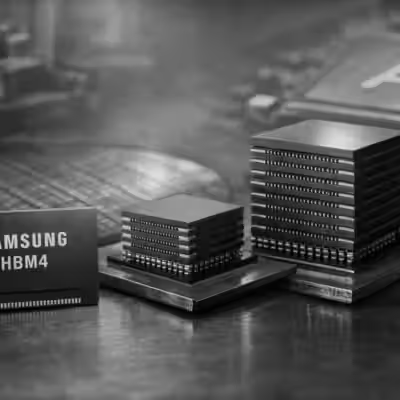
source type=”image/avif” srcset=”https://cdn.itzine.ru/wp-content/uploads/2025/12/hero-image.fit_lim.v1704902440-180×180.avif 180w, https://cdn.itzine.ru/wp-content/uploads/2025/12/hero-image.fit_lim.v1704902440-400×400.avif 400w, https://cdn.itzine.ru/wp-content/uploads/2025/12/hero-image.fit_lim.v1704902440-600×600.avif 600w, https://cdn.itzine.ru/wp-content/uploads/2025/12/hero-image.fit_lim.v1704902440-640×360.avif 640w, https://cdn.itzine.ru/wp-content/uploads/2025/12/hero-image.fit_lim.v1704902440-800×450.avif 800w, https://cdn.itzine.ru/wp-content/uploads/2025/12/hero-image.fit_lim.v1704902440-1200×675.avif 1200w, https://cdn.itzine.ru/wp-content/uploads/2025/12/hero-image.fit_lim.v1704902440-1600×800.avif 1600w, https://forgeeks.pro/wp-content/uploads/2025/12/hero-image.fit_lim.v1704902440.avif 1699w”> According to Korean industry media, Samsung and SK Hynix are demanding a 50% higher price from existing customers when renewing contracts to supply 12-layer HBM3E. Sources say the supply of such chips has not kept pace with demand, allowing the manufacturers to renegotiate terms in their favor. Samsung’s DRAM memory also rose in price at the same time. Prices for these chips reportedly rose by about 50% in the fourth quarter. This is due to the fact that the global memory market is facing an imbalance: manufacturers are focusing on more profitable solutions for AI, reducing the production of classic DRAM. The growing interest in generative AI has led to a surge in demand for AI gas pedals and HBM memory. At the same time, HBM margins are traditionally higher than DRAM. Against this backdrop, Micron and SK Hynix have focused on HBM and reduced DRAM production, further exacerbating the shortage of the latter. Samsung, unlike its competitors, has reportedly not significantly reduced DRAM output and continues to produce more DRAM than SK Hynix. This has allowed the company to capitalize not only on HBM shortages, but also on rising DRAM prices. In the backdrop of the current situation, Samsung recorded a record profit in the fourth quarter of 2025. It was the memory division that played a significant role in this, as it was able to monetize the shortfall of two key products at once. Analysts expect Samsung’s memory business profitability could grow even stronger in the near future if demand for AI gas pedals and HBM memory continues to outpace supply.Rising AI demand and memory shortages
Why Samsung is winning more than its competitors
Financial impact for Samsung