Realme C75 review: an affordable ‘people’s’ smartphone with flagship-level protection
 By Arthur Berg
Realme C75 manages to pack the price of a basic smartphone with flagship-grade protection. Imagine a phone that won’t break the bank and that you can confidently take to the pool or even use in the shower without worry — that’s exactly what the C75 delivers. It looks like your average phone but turns out to be an “amphibian” among budget devices. But Realme’s new release offers more than just water resistance. Positioned as a typical budget-friendly member of Realme’s C-series, the C75 replaces last year’s models and aims to challenge rivals like the Redmi 13C and Tecno Spark 20. So, how does it stack up? Let’s take a closer look.
Design and ergonomics of Realme C75
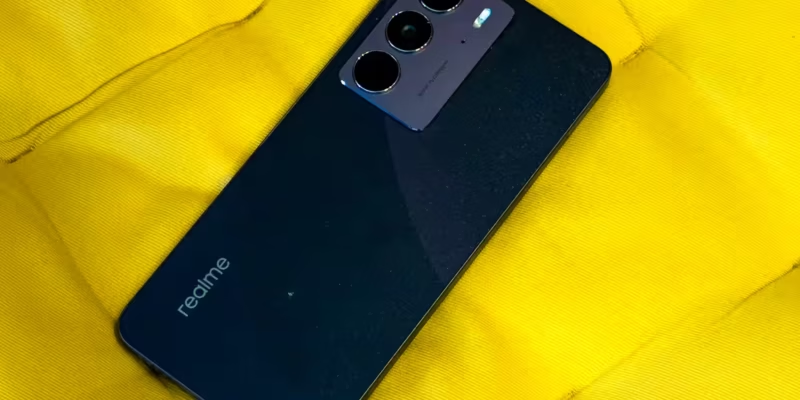
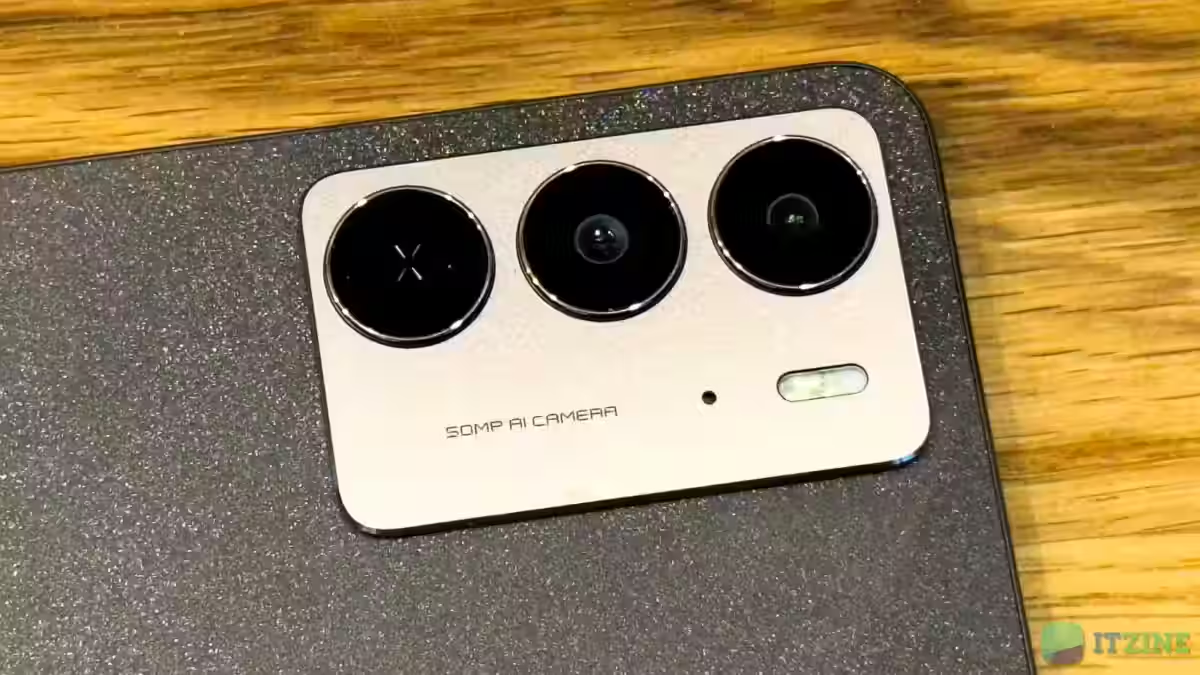
At first glance, the Realme C75 doesn’t shout uniqueness — its design is fairly restrained. The body is built from sturdy plastic with a matte finish that feels solid to the touch. In Russia, it’s available in two colors — a classic black and a striking gold. The back features a neat metal plate matching the body color, housing the triple camera “lenses.” But a quick heads-up: only one of those three is a functional lens. The phone is slim at just 8 mm thick, with minimally rounded corners and flat sides following current design trends. Weighing 196 grams, the well-balanced heft gives it a reliable feel — it definitely doesn’t come across as a cheap “toy.”
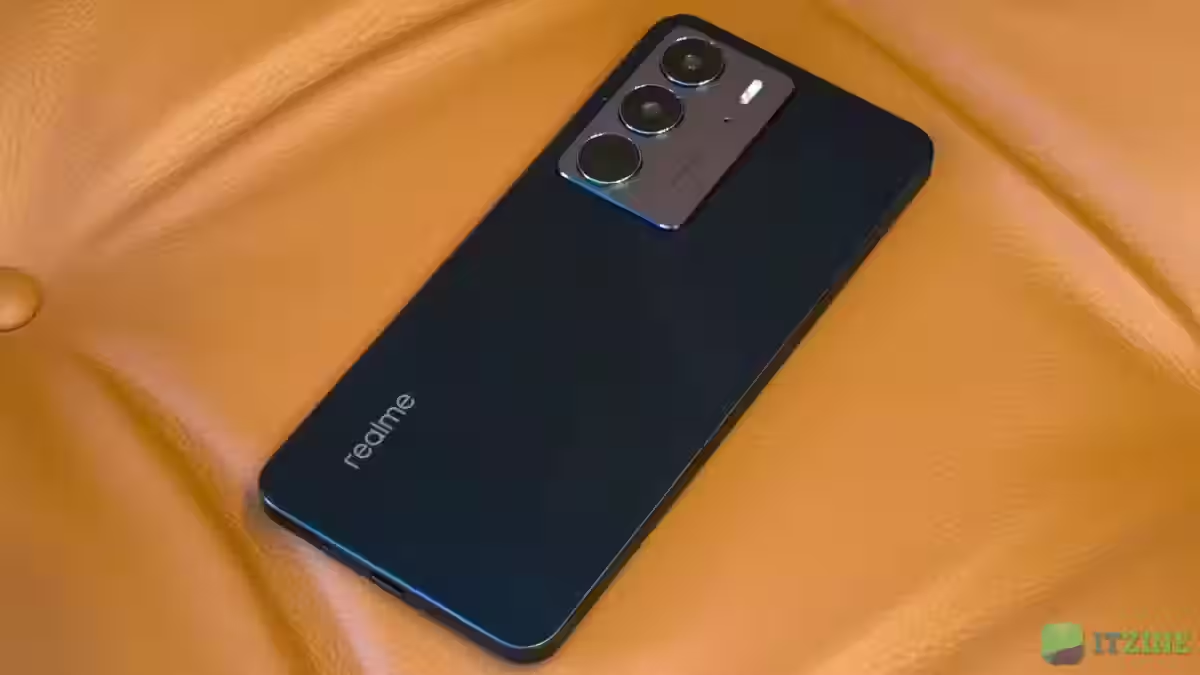
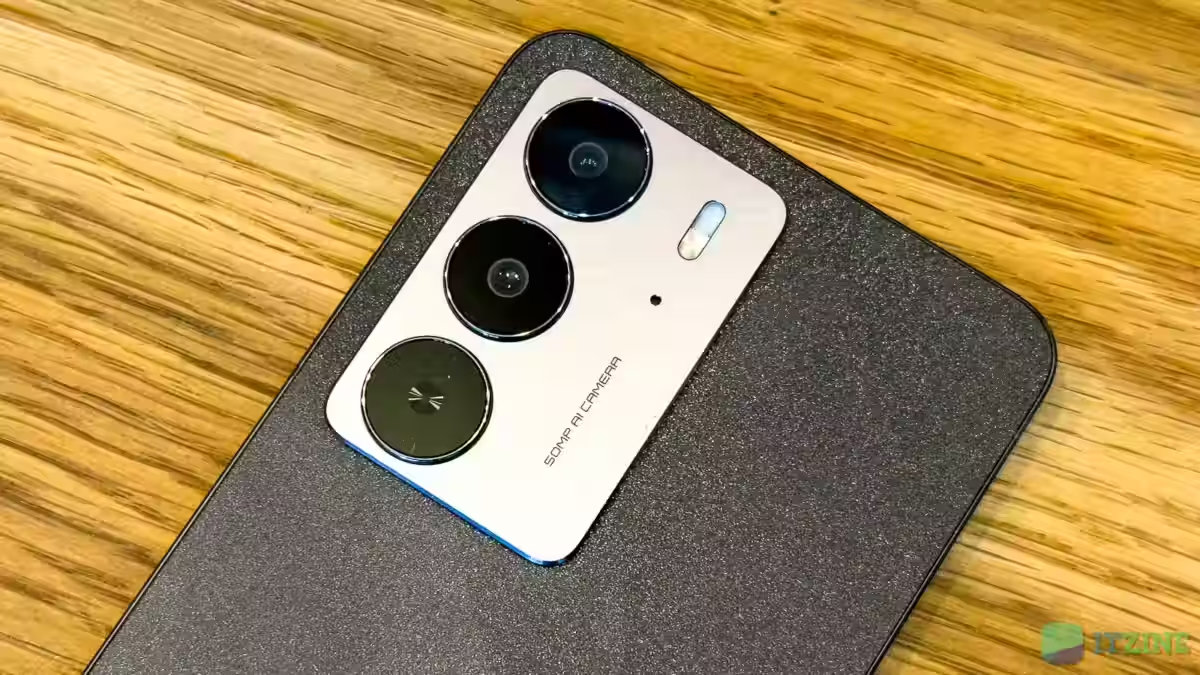
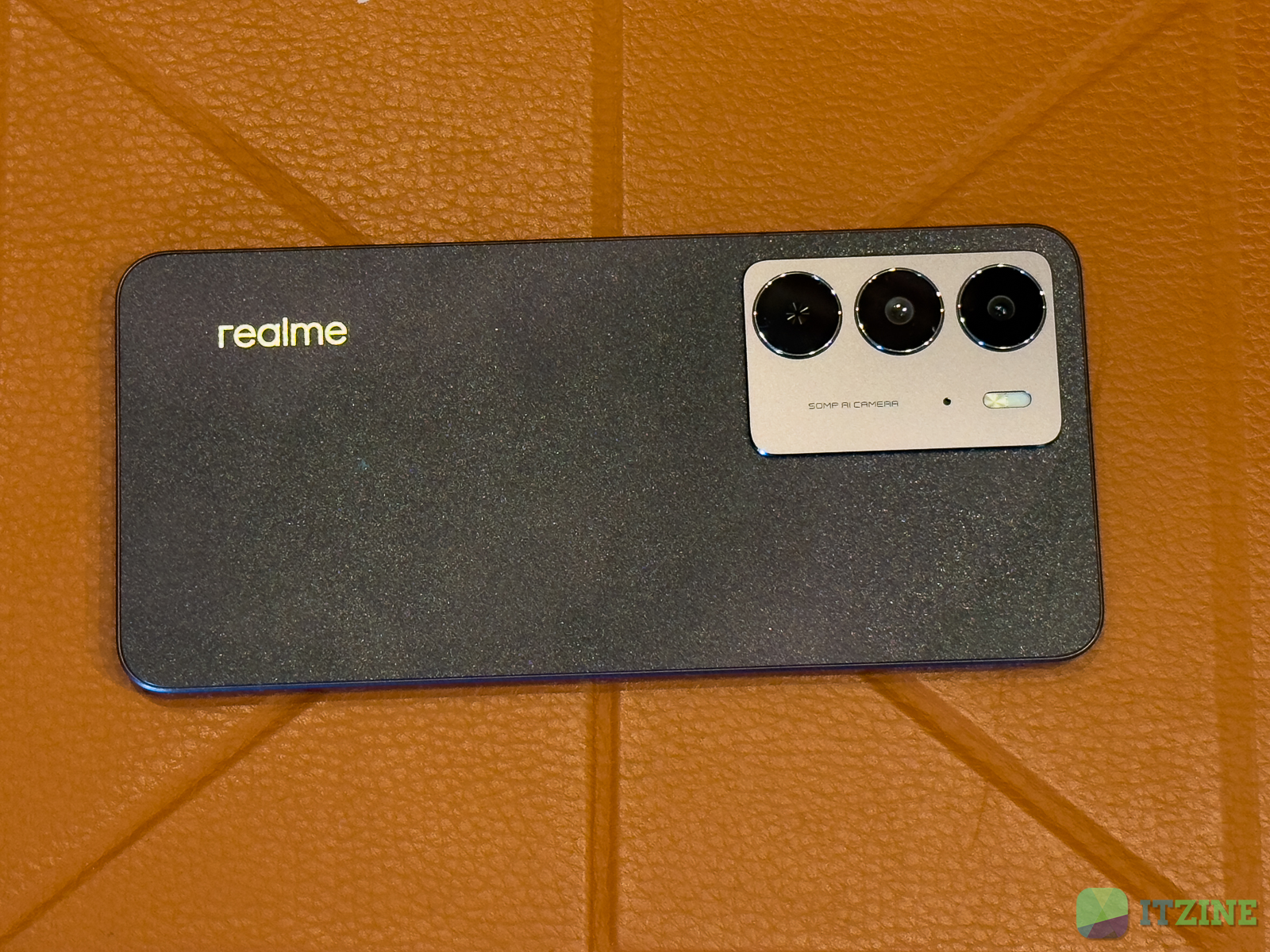
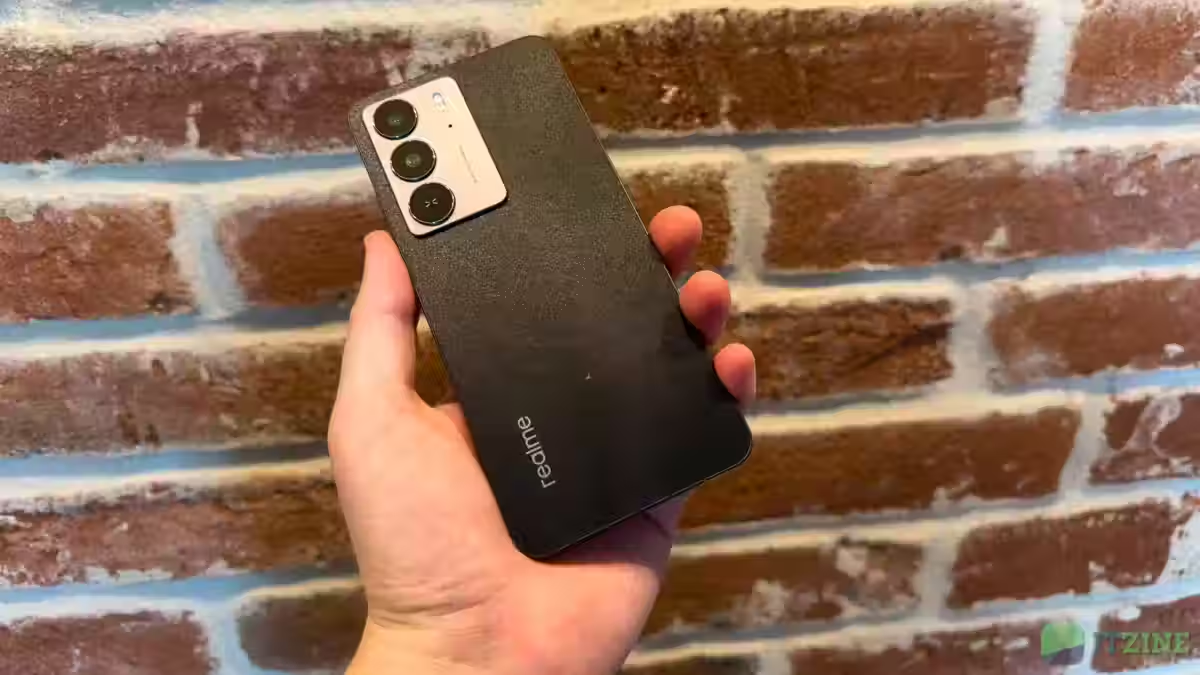
Realme has paid attention to the details. The build quality is excellent — no creaks or flex, and ports and slots are kept to a minimum to maximize water and dust tightness. The power and volume buttons are on the right side, comfortably positioned under your thumb with a satisfying click. The fingerprint scanner is integrated into the power button, so your finger naturally lands on it, enabling quick unlocking. On the left side, there’s a SIM tray that surprisingly doesn’t skimp on essentials: it’s a triple-slot design (two Nano-SIMs plus a dedicated microSD card slot).
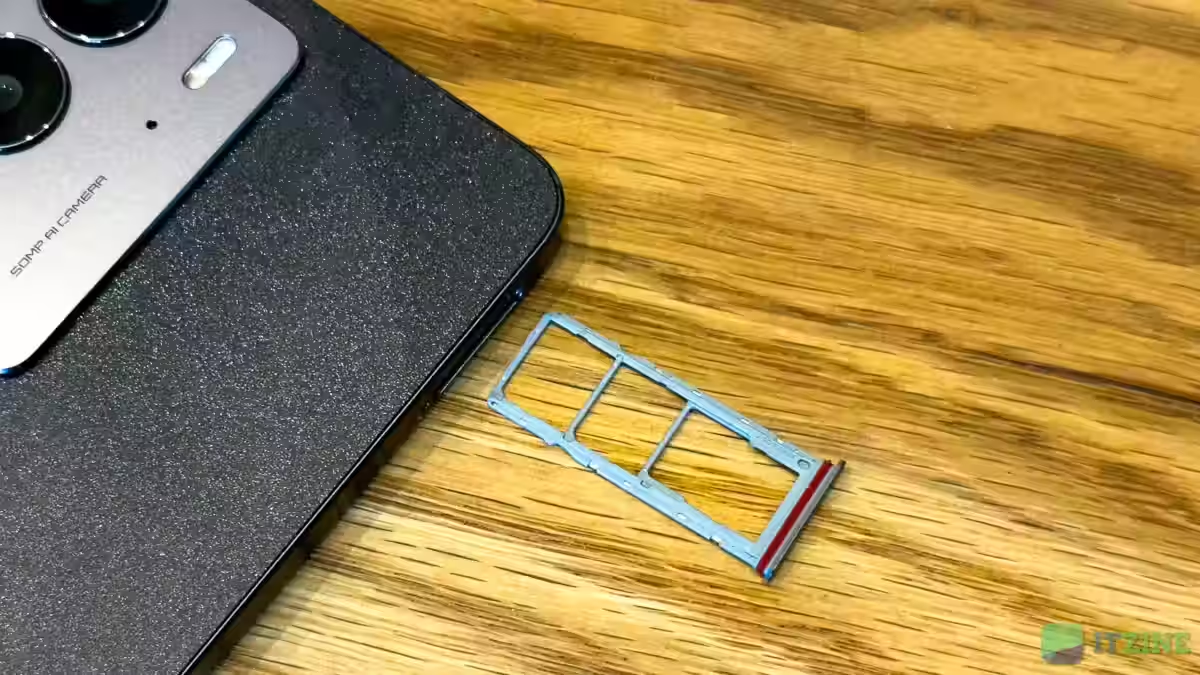
You can expand storage and use two SIM cards simultaneously without compromising. The tray has a rubber gasket to seal things up nicely. On the bottom edge, you’ll find just the essentials: a USB-C port (2.0 standard) for charging and data transfer, a microphone, and the main speaker.
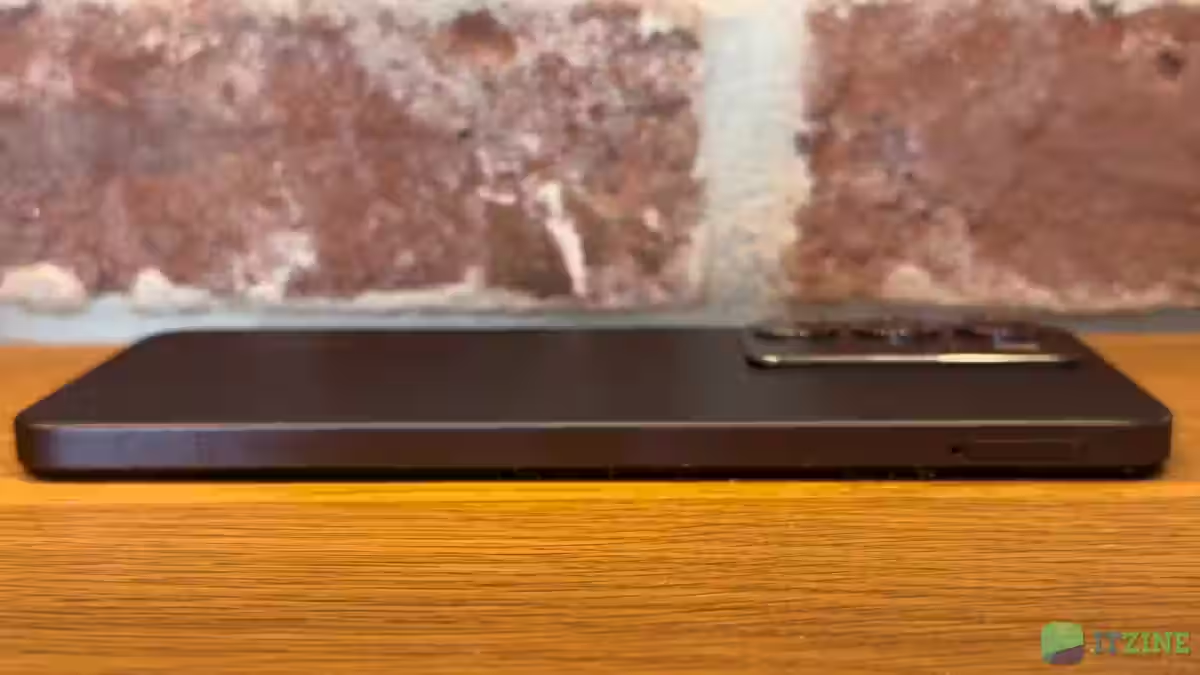
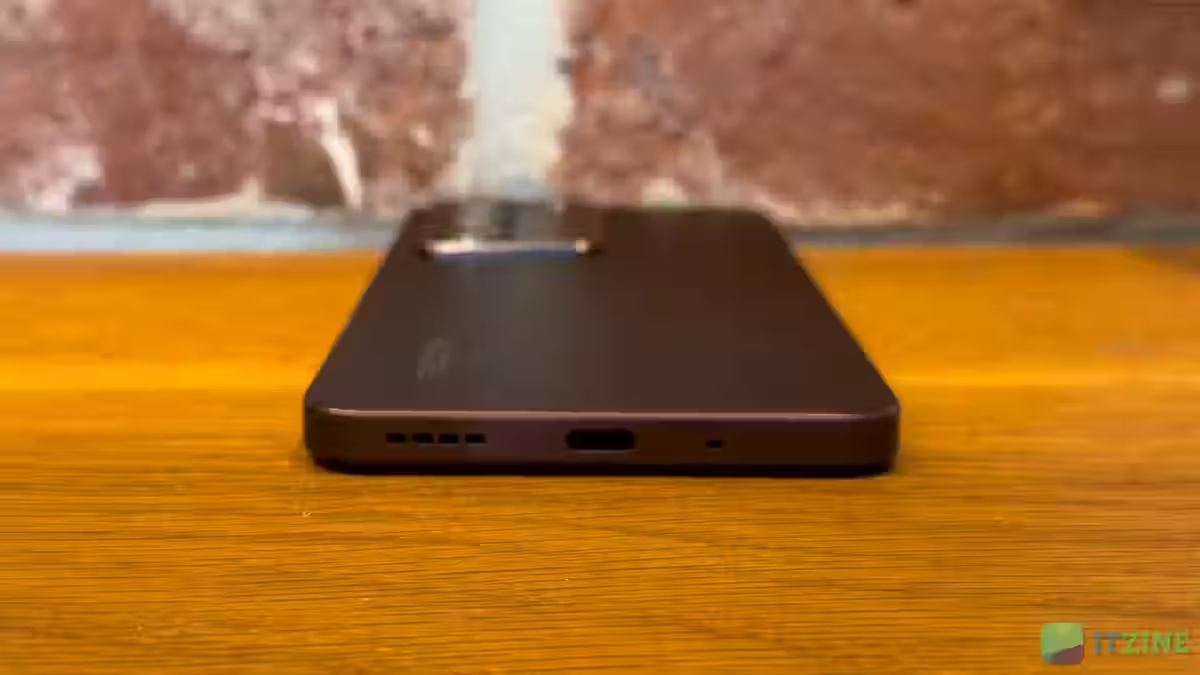
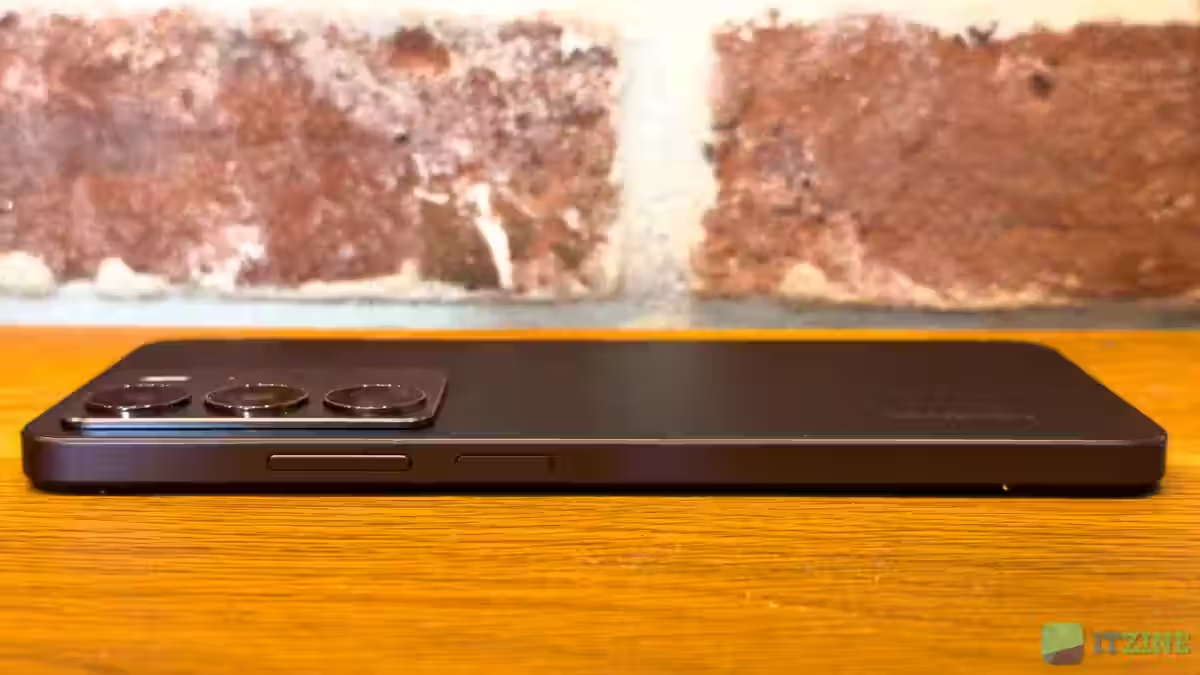
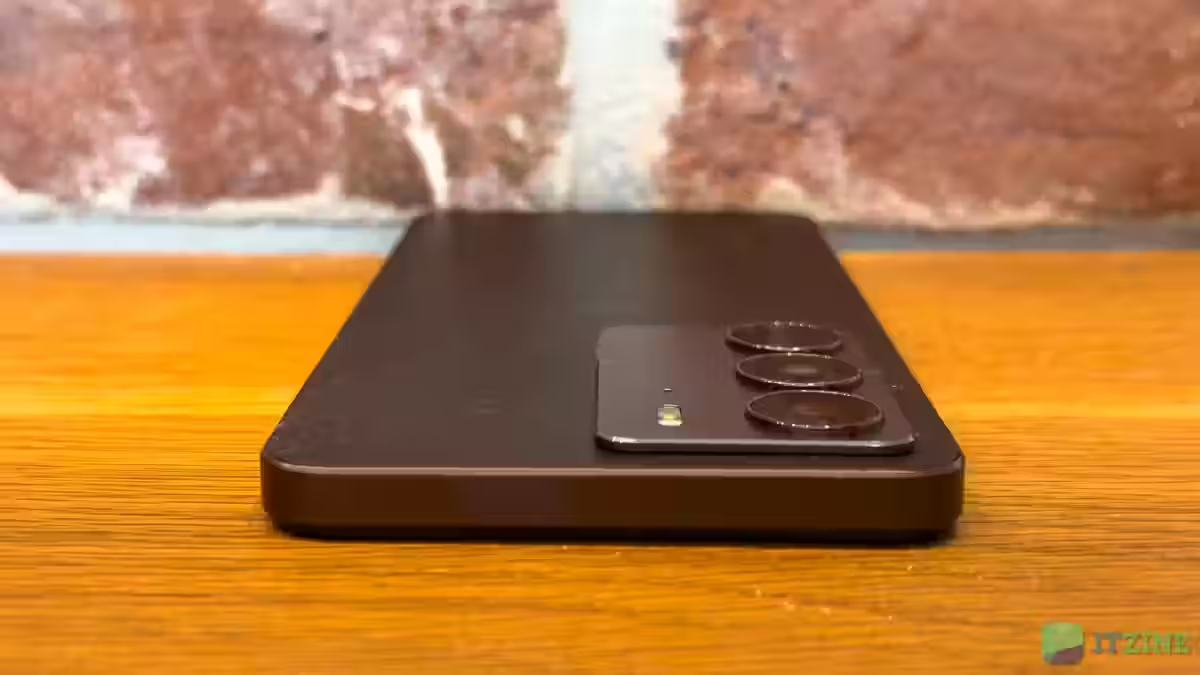
There’s no 3.5mm headphone jack here — an unfortunate casualty of waterproofing and a slim profile. You’ll need to use wireless headphones or a USB-C adapter. This might disappoint headphone purists but is an understandable trade-off: every extra hole in the body is a potential leak point, which would compromise the IP69 rating. On the bright side, the box includes some nice extras: a clear silicone case and a pre-applied screen protector.
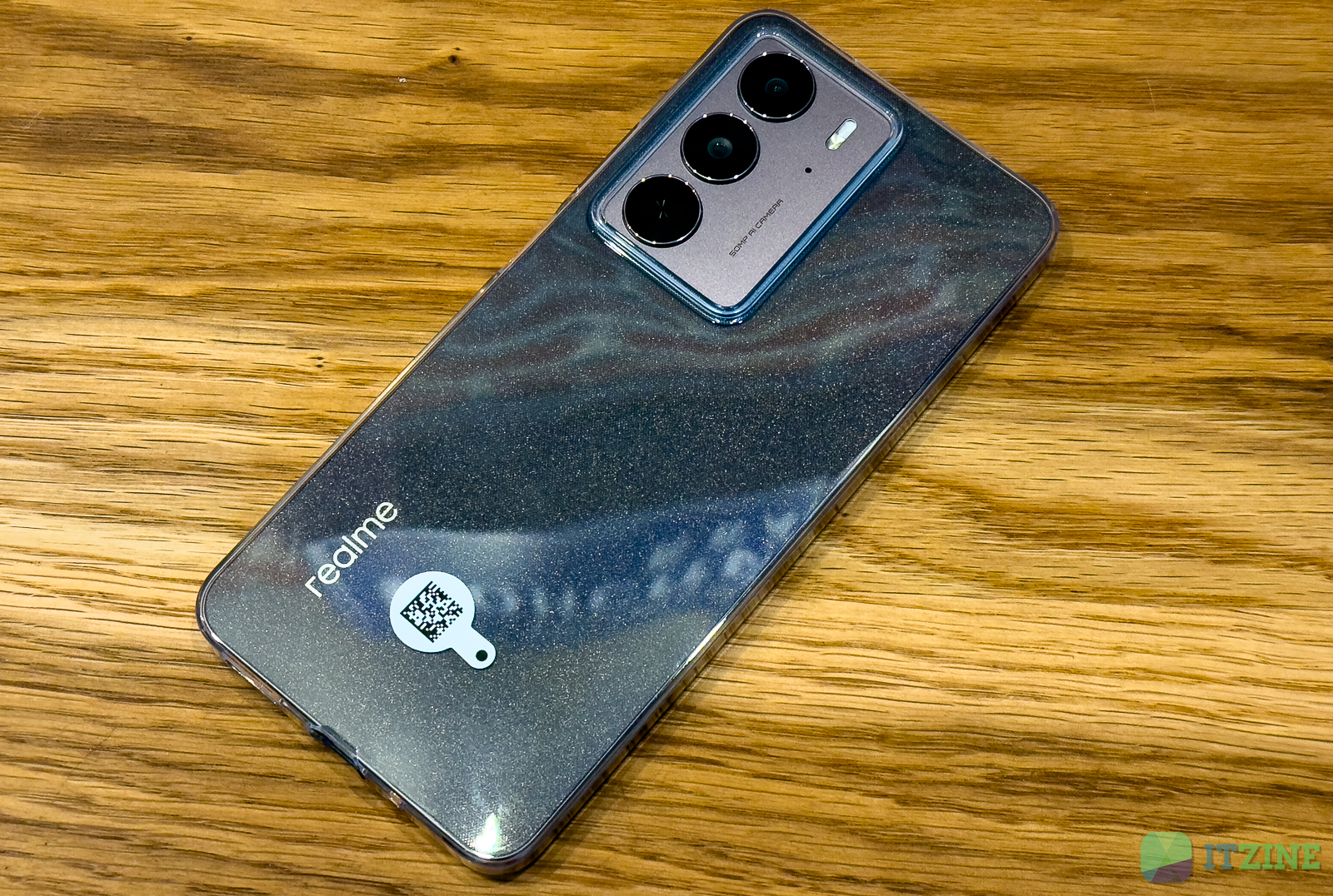
All in all, the Realme C75’s design can be summed up as “practical minimalism.” It doesn’t boast fancy flourishes but also doesn’t look cheap. The phone feels solid and well-built. You can toss it in your pocket alongside keys without worry: the plastic resists smudges, fingerprints on the back are barely noticeable, and the screen is protected by ArmorShell glass. Realme claims this is a reinforced glass offering enhanced resistance to scratches and impacts. We didn’t test its limits intentionally, but after extensive use, not a single new scratch appeared. With the included screen protector, you should be set against minor abrasions for a long time.
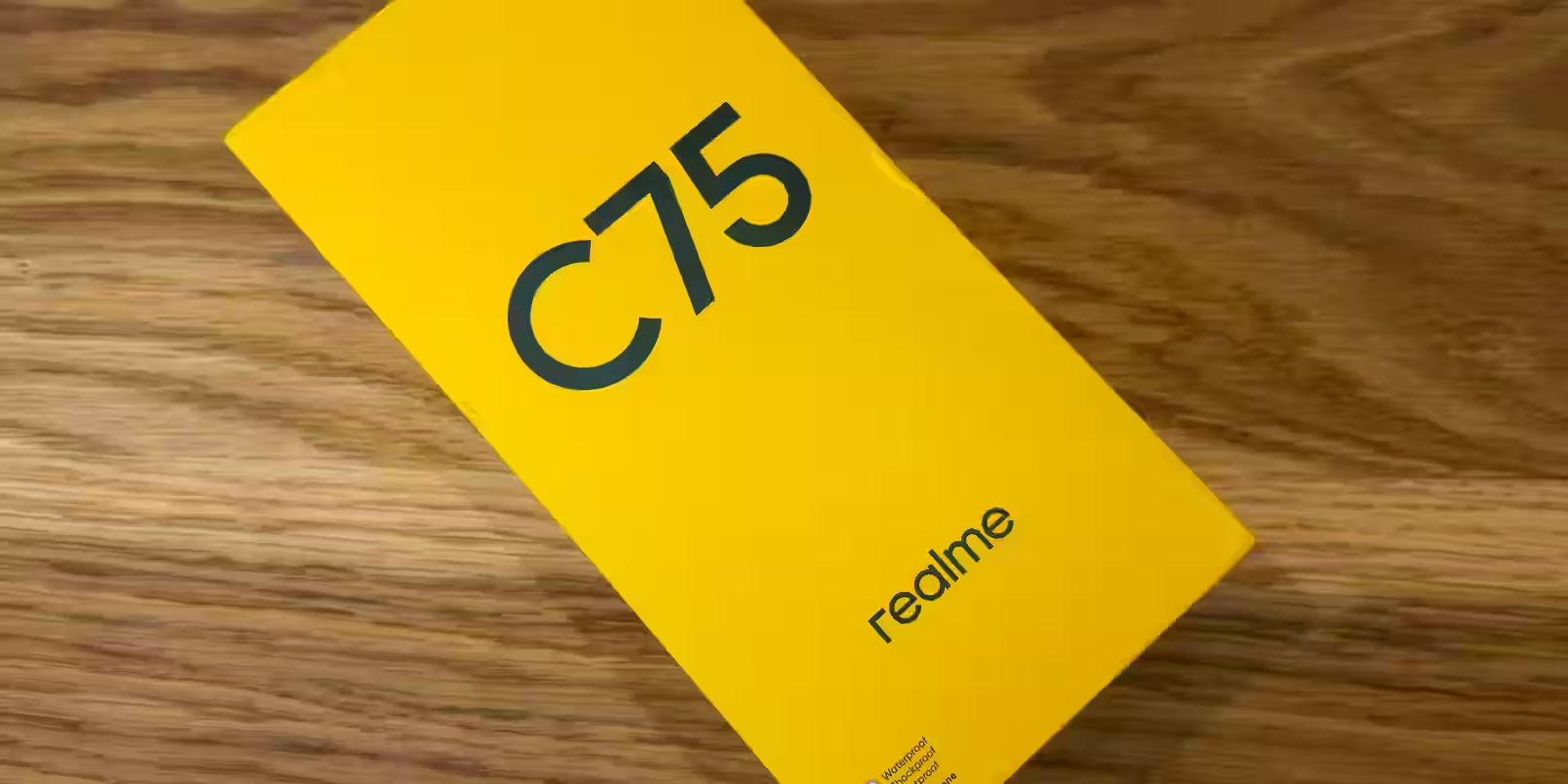
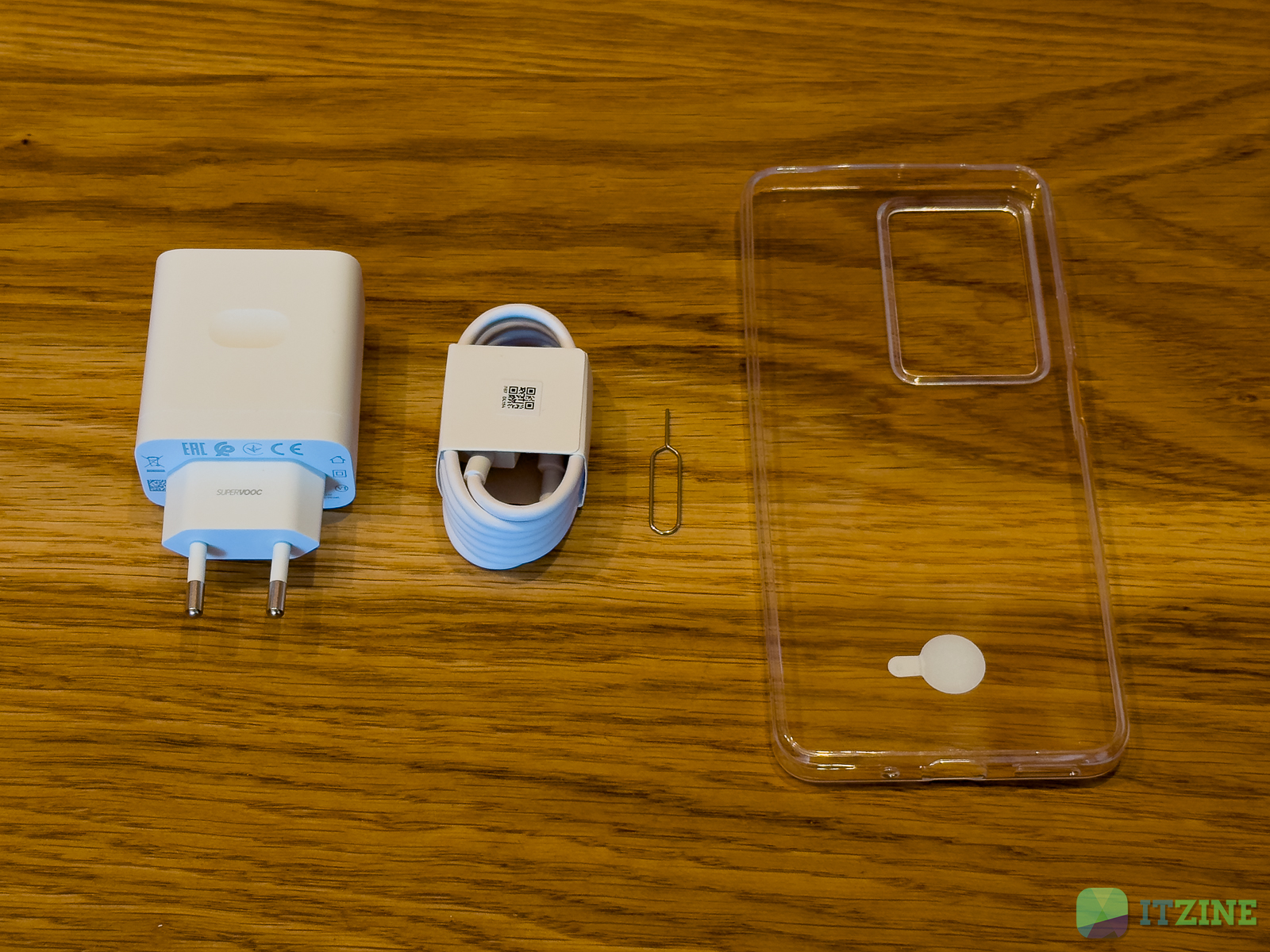
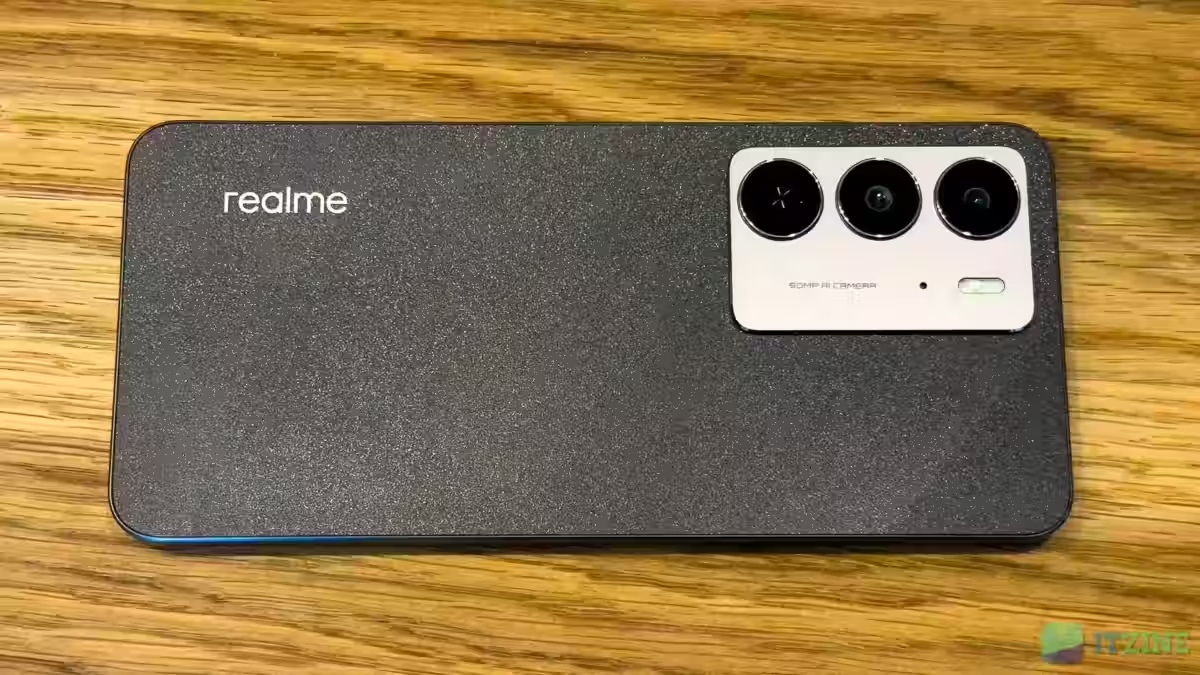
Last but not least: despite its rugged protection, the Realme C75 doesn’t feel bulky or clunky. Unlike some beefy “brick” phones from AliExpress wrapped in rubber and metal, this one looks like an ordinary smartphone — slim, neat, and even stylish.
Realme C75 display
The display on the Realme C75 is a pleasant surprise in the budget segment. It sports a large 6.72-inch IPS panel with a Full HD+ resolution (2400×1080). While many affordable phones still stick to HD screens, here the image is sharp with a pixel density of about 392 ppi — the pixels aren’t noticeable to the naked eye. Color reproduction is close to natural straight out of the box: colors are rich without being oversaturated, with neutral whites. Brightness is rated at 580 nits typical and up to 690 nits peak, which means readability under sunlight is decent — not record-breaking, but enough. On bright summer days, you might need to shade the screen with your hand or crank the brightness to max, but text and videos remain visible.
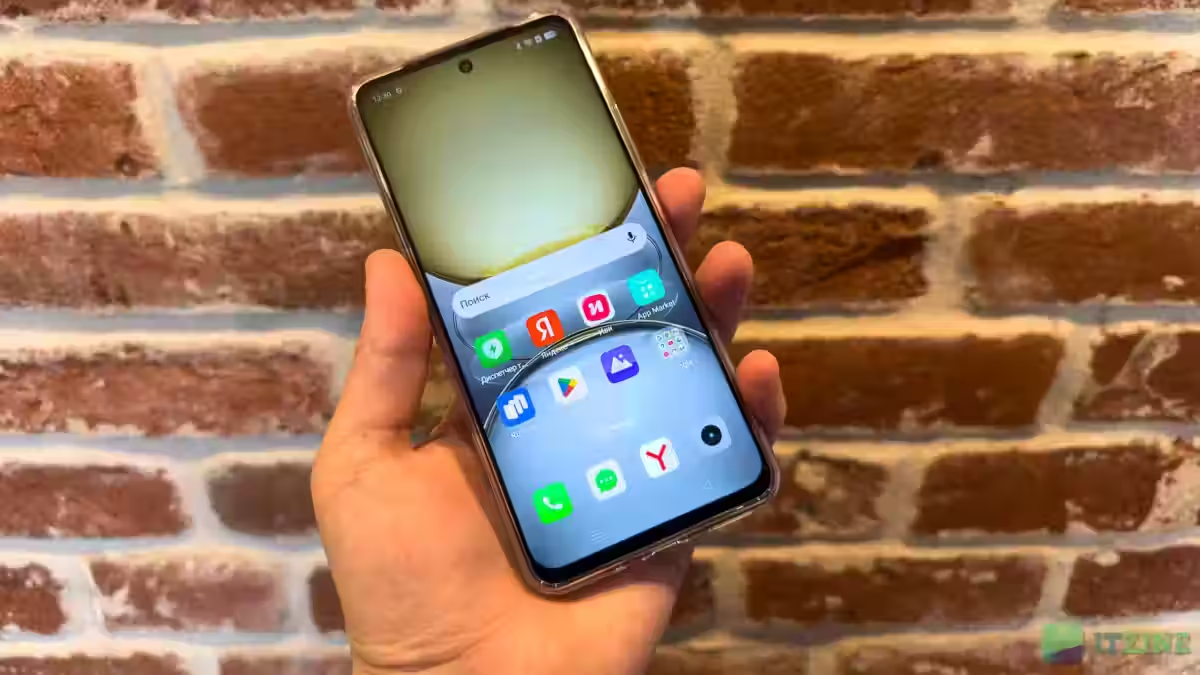
One big plus is support for a 90Hz refresh rate. Sure, flagships now boast 120Hz and above, but seeing 90Hz on a budget phone is still a treat. You can toggle between 60Hz and 90Hz in settings. The 90Hz mode makes scrolling and animations noticeably smoother — news feeds glide without stutter, and the UI feels lighter.
In daily use, the C75’s screen performs well. For watching videos or gaming, the size is just right — nearly 6.72 inches lets you enjoy movies on the go or catch fine details in games. The Full HD+ resolution ensures crisp images, with small text in browsers or chat apps easy on the eyes. Even fast-moving scenes hold up thanks to the 90Hz refresh and good matrix response time, preventing ghosting. No flicker (PWM) was detected at low brightness, so your eyes don’t tire even after long nighttime reading sessions (especially with dark mode and reading mode enabled). That said, it’s not an AMOLED panel, so blacks aren’t true black.
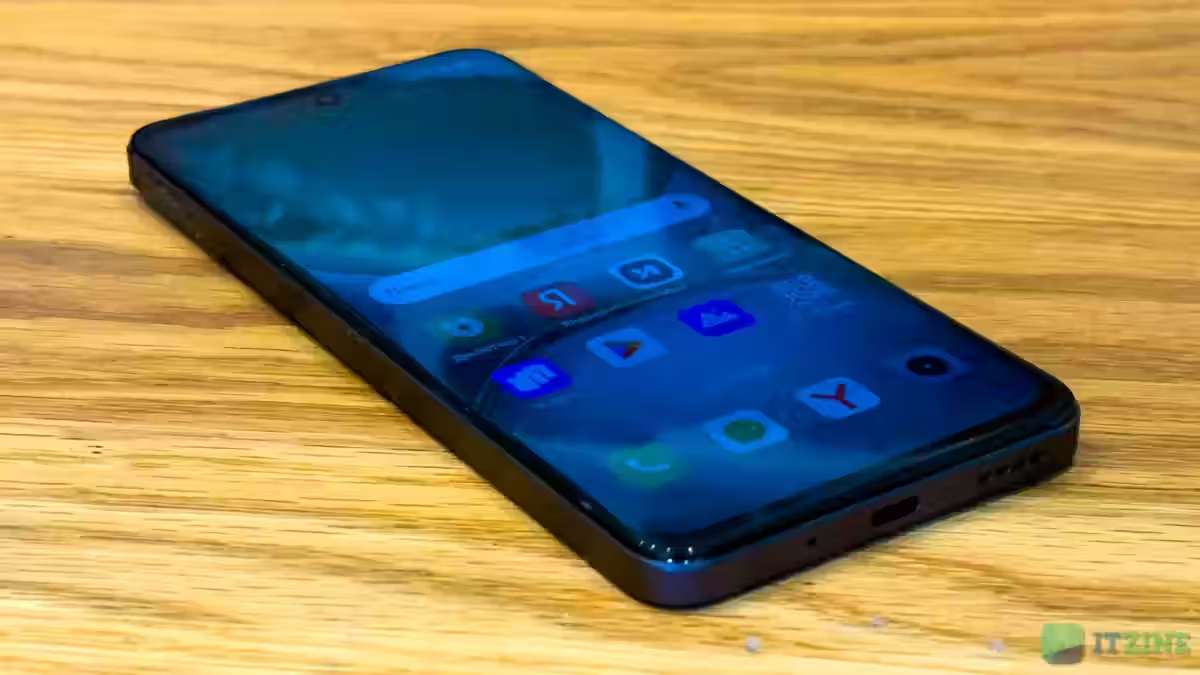
The only downside on the display is the relatively thick bottom bezel, which is wider than the others. This is common with budget phones, so if you want perfectly symmetrical bezels, you’ll have to look higher up the ladder. Otherwise, the C75’s screen impresses — in clarity and smoothness, it’s closer to a mid-ranger than an ultra-budget model. Among competitors still rocking HD panels, the C75 has a serious edge. If you love scrolling TikTok or flipping through photo-heavy social media feeds, this display won’t disappoint — crisp, smooth, and bright enough outdoors.
Realme C75 hardware and performance
Under the hood, the Realme C75 runs on the tried-and-true MediaTek Helio G92 Max chip, essentially a slightly boosted version of the Helio G96 from previous years. The 12nm octa-core CPU includes two Cortex-A75 cores clocked up to around 2.0 GHz and six power-efficient Cortex-A55 cores ticking at about 1.8 GHz. Graphics are handled by a Mali-G52 MC2 GPU — not new, but still capable of casual 3D gaming. It’s not a cutting-edge Dimensity or 2025 Snapdragon, but Realme backs it with 8GB of LPDDR4X RAM, available in both 128GB and 256GB storage configurations. Paired with a relatively light user interface, this setup offers smooth performance in most scenarios. There’s even dynamic RAM expansion: the system can allocate up to 8GB of internal storage as virtual RAM, boosting total memory up to 16GB. Don’t expect miracles though — raw CPU power remains the limiting factor.
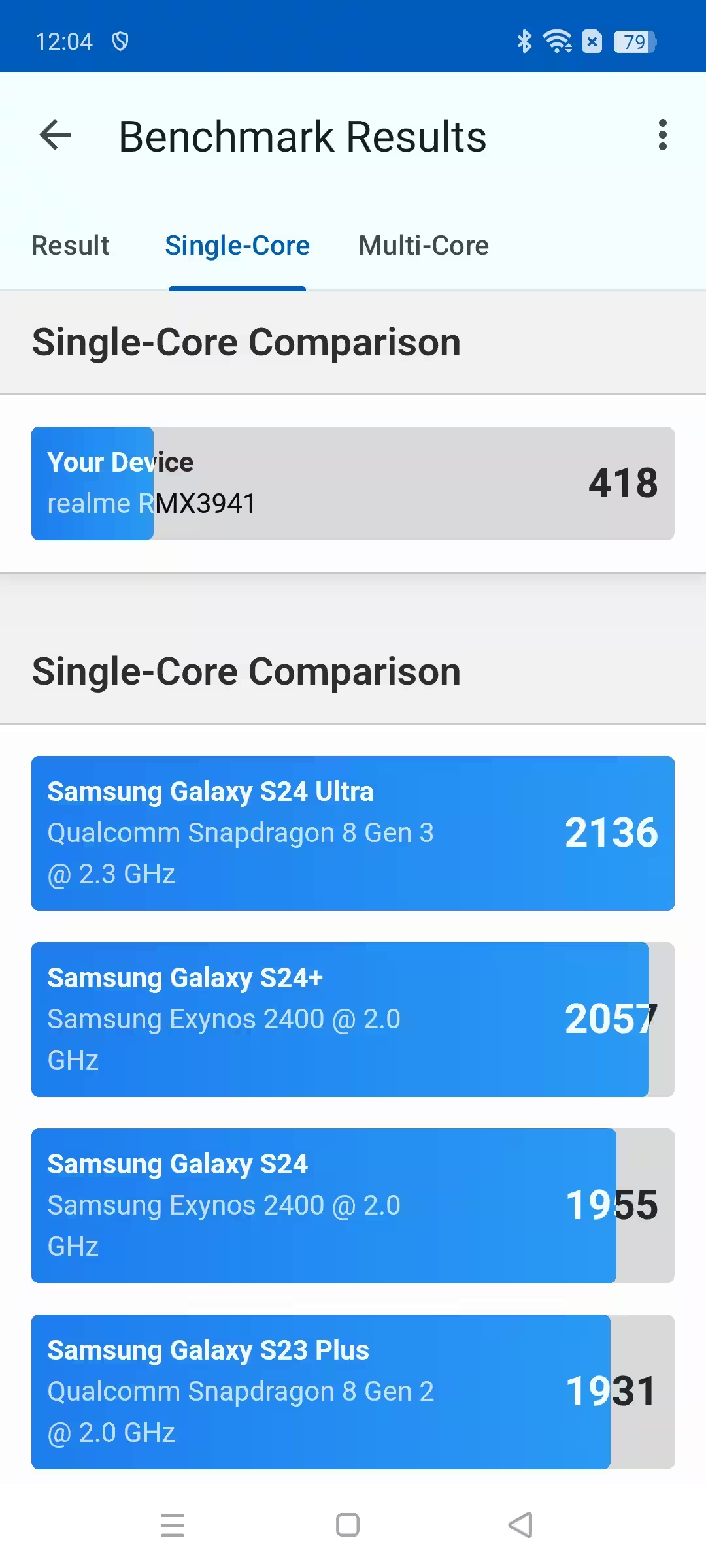
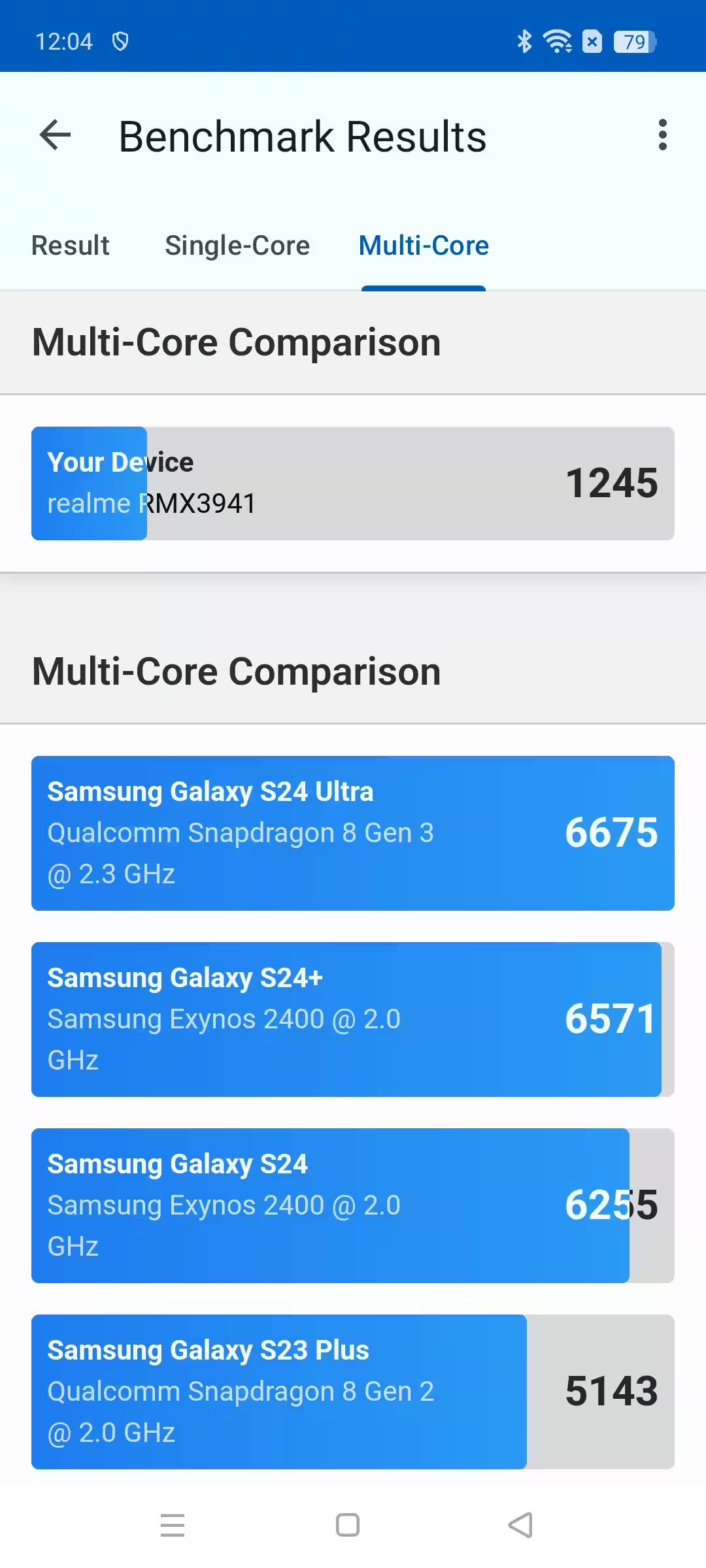
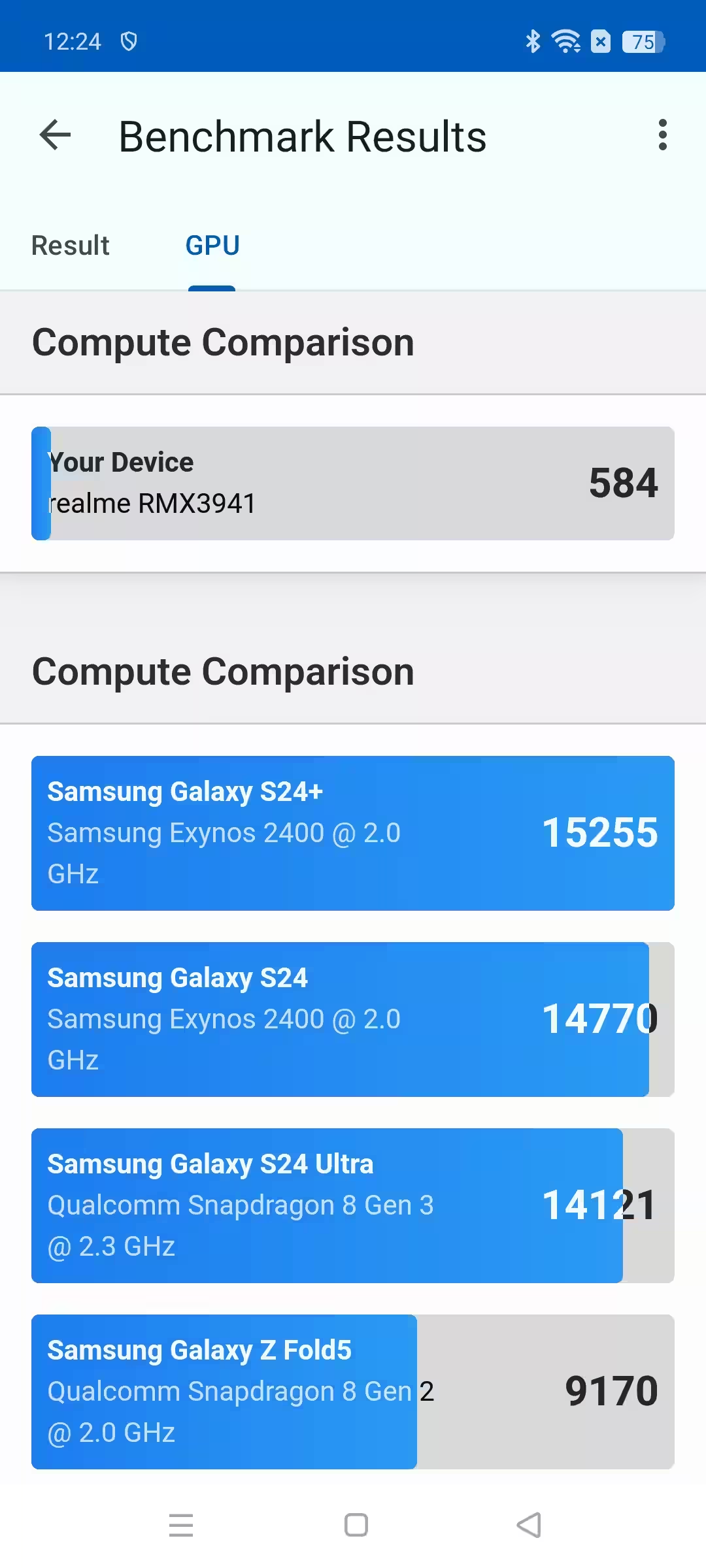
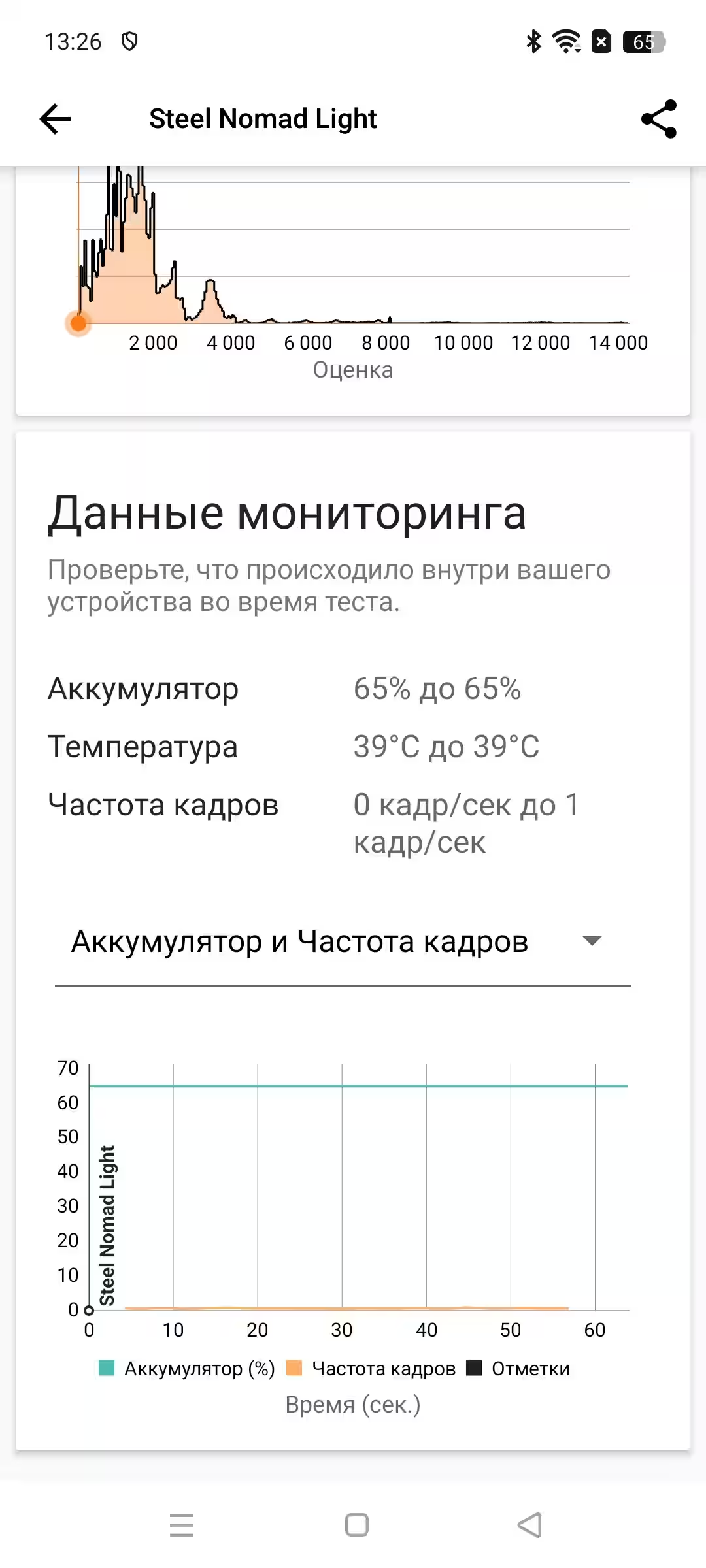
In benchmarks, the C75 plays it safe but doesn’t wow. On AnTuTu v10, it scores around 280-290k points, typical for Helio G9x series chips. By comparison, competitors like Redmi 13C and Spark 20 (with their Helio G85) hover near 220k — a noticeable difference, but not a game changer. GeekBench results land around 420 single-core and 1245 multi-core, as expected for mid-2022 hardware.
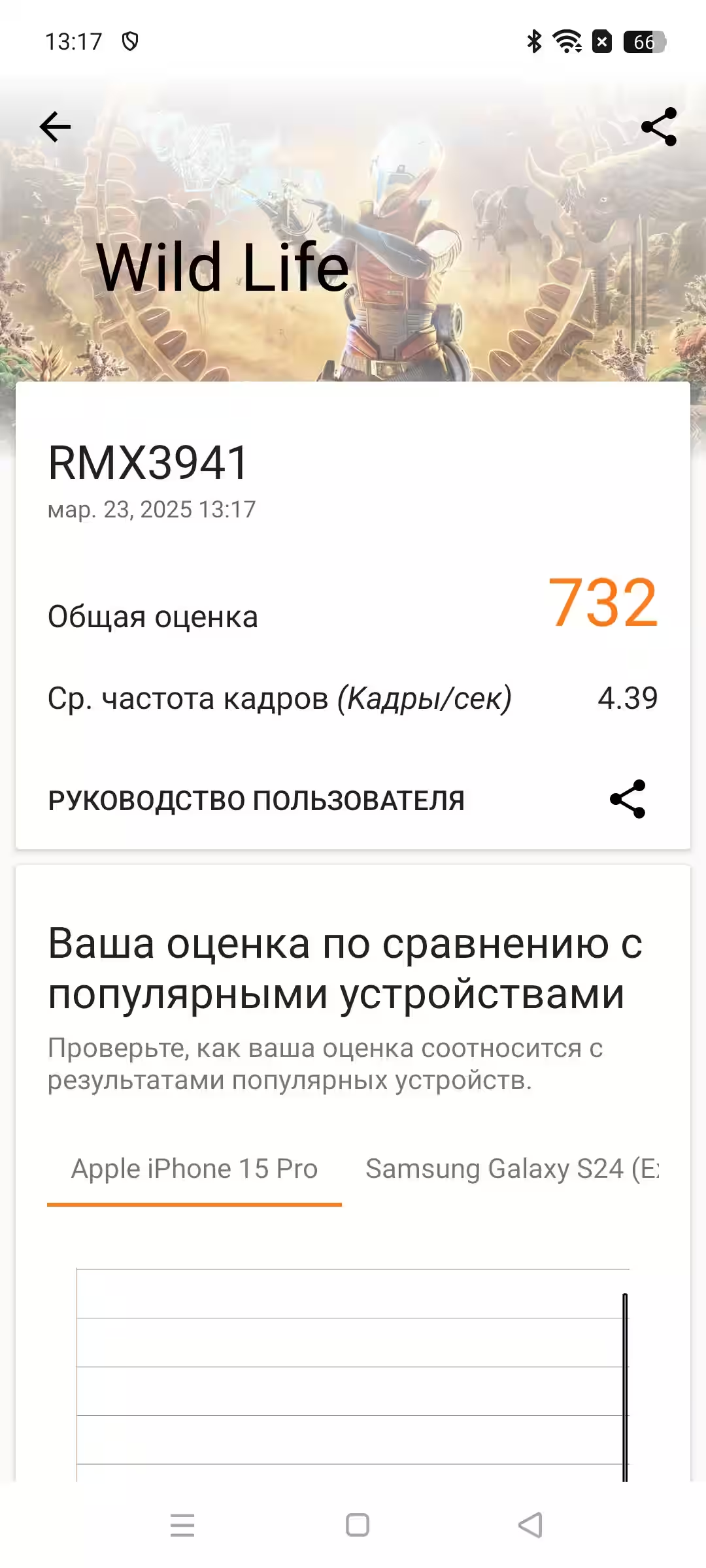
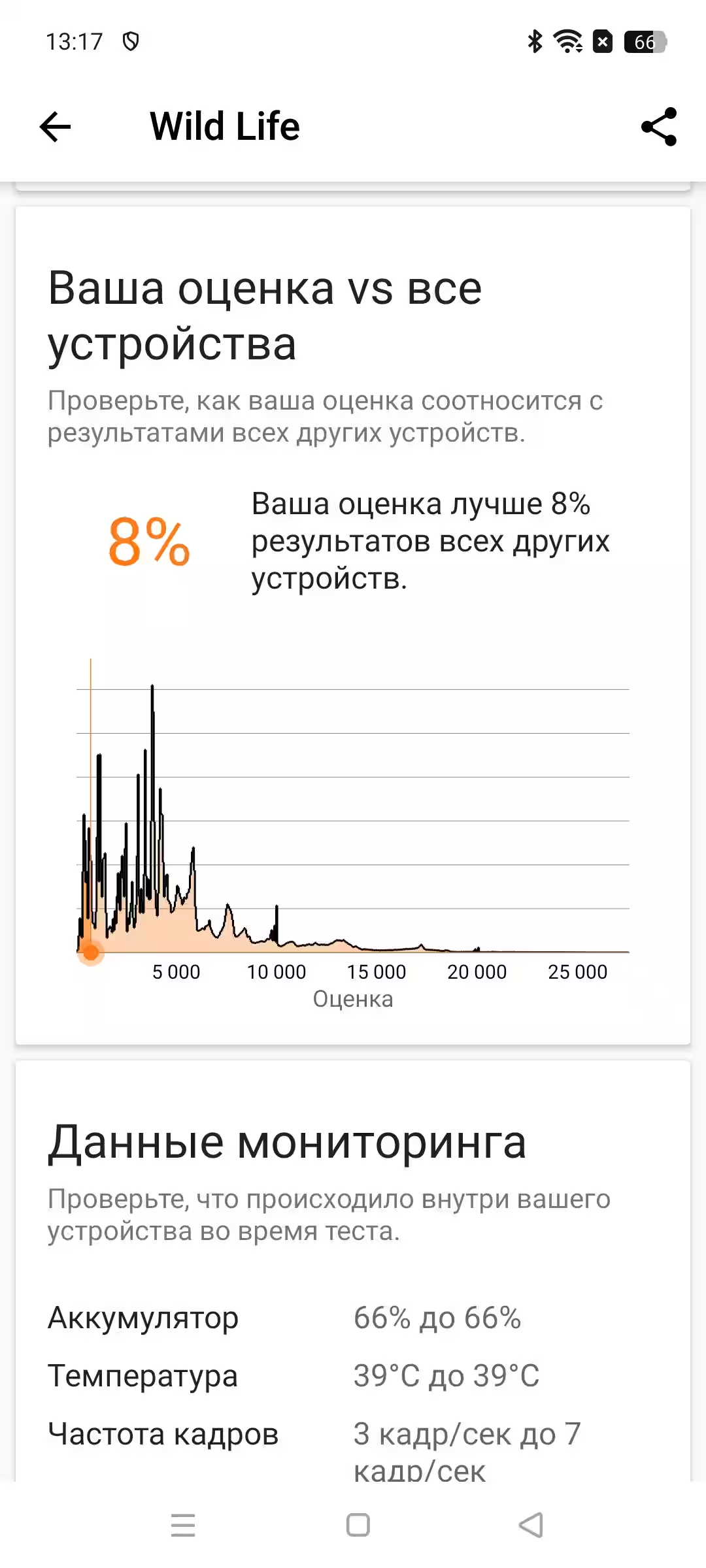
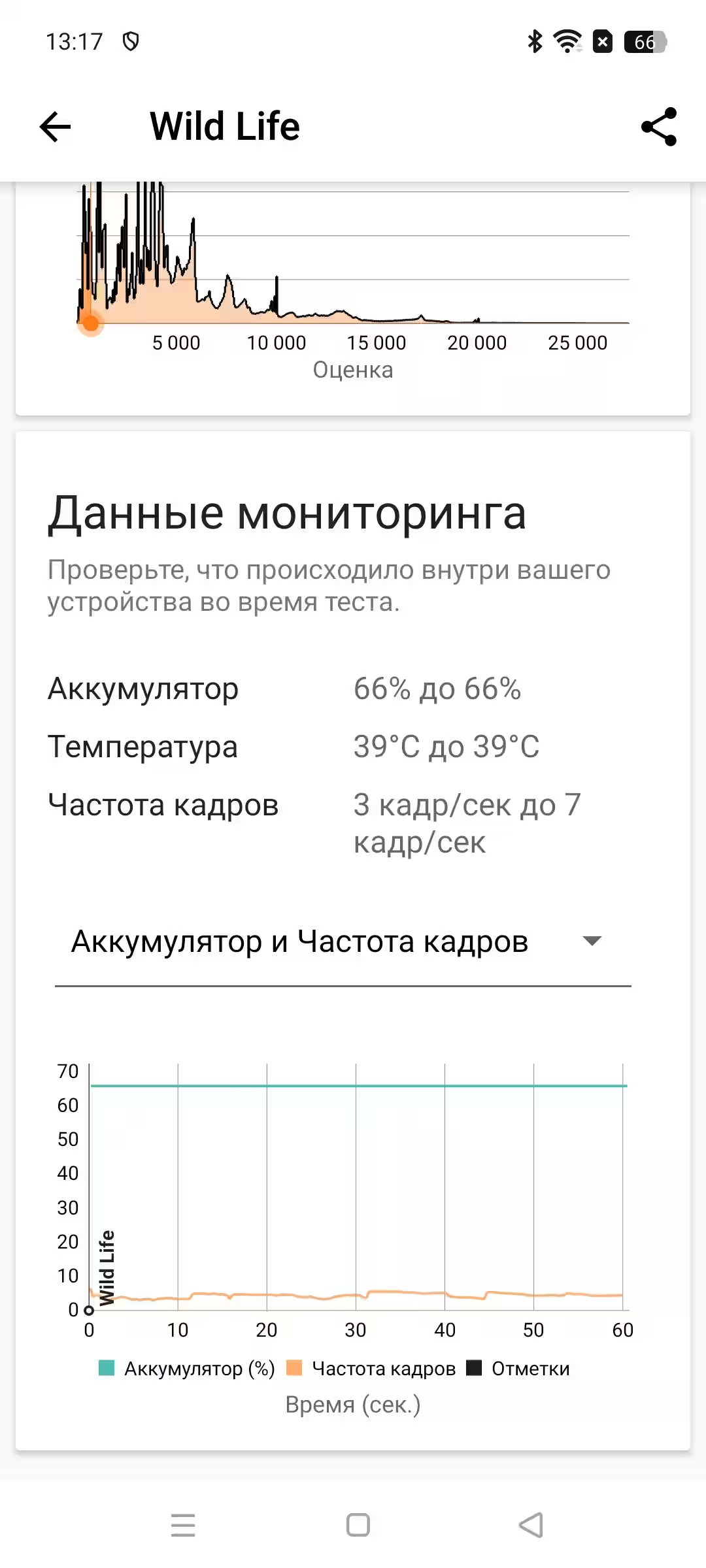
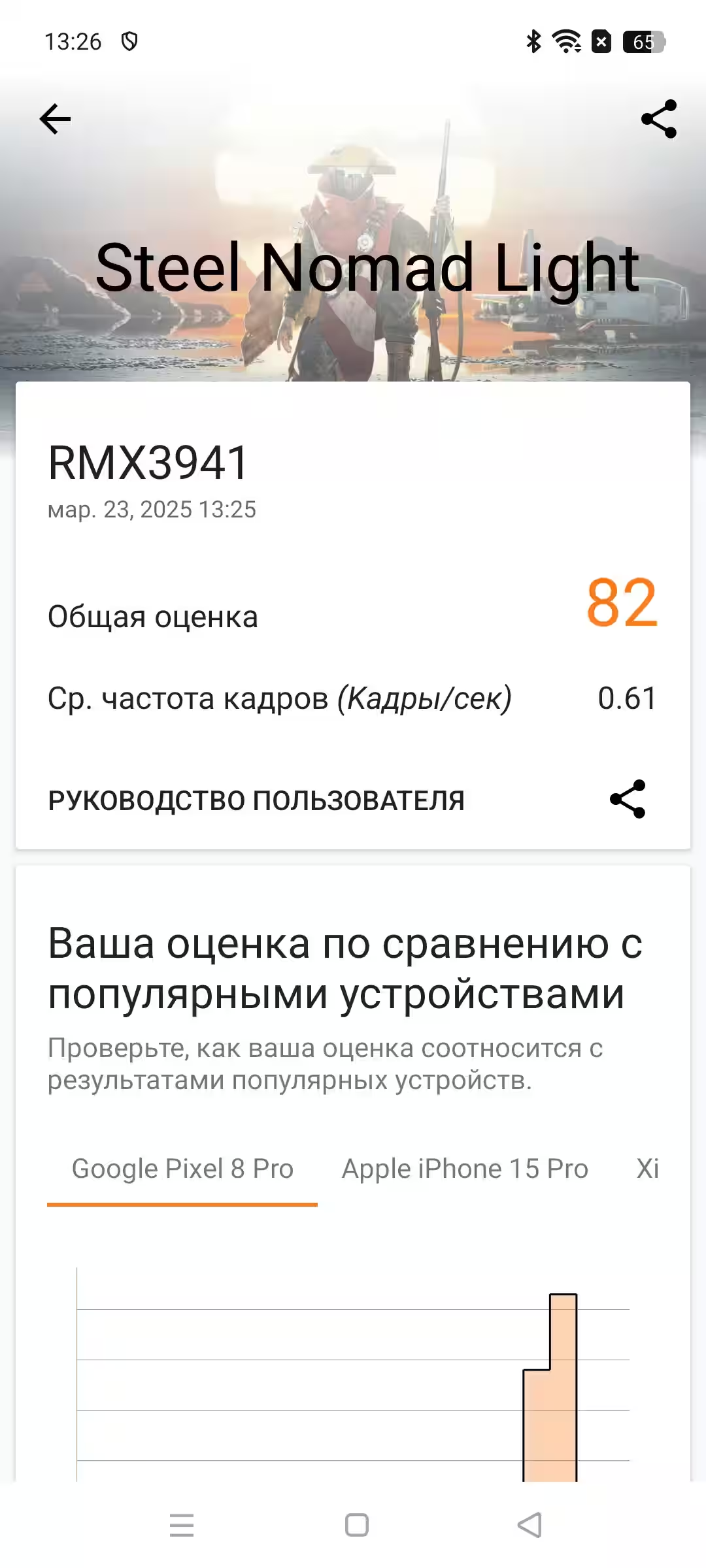
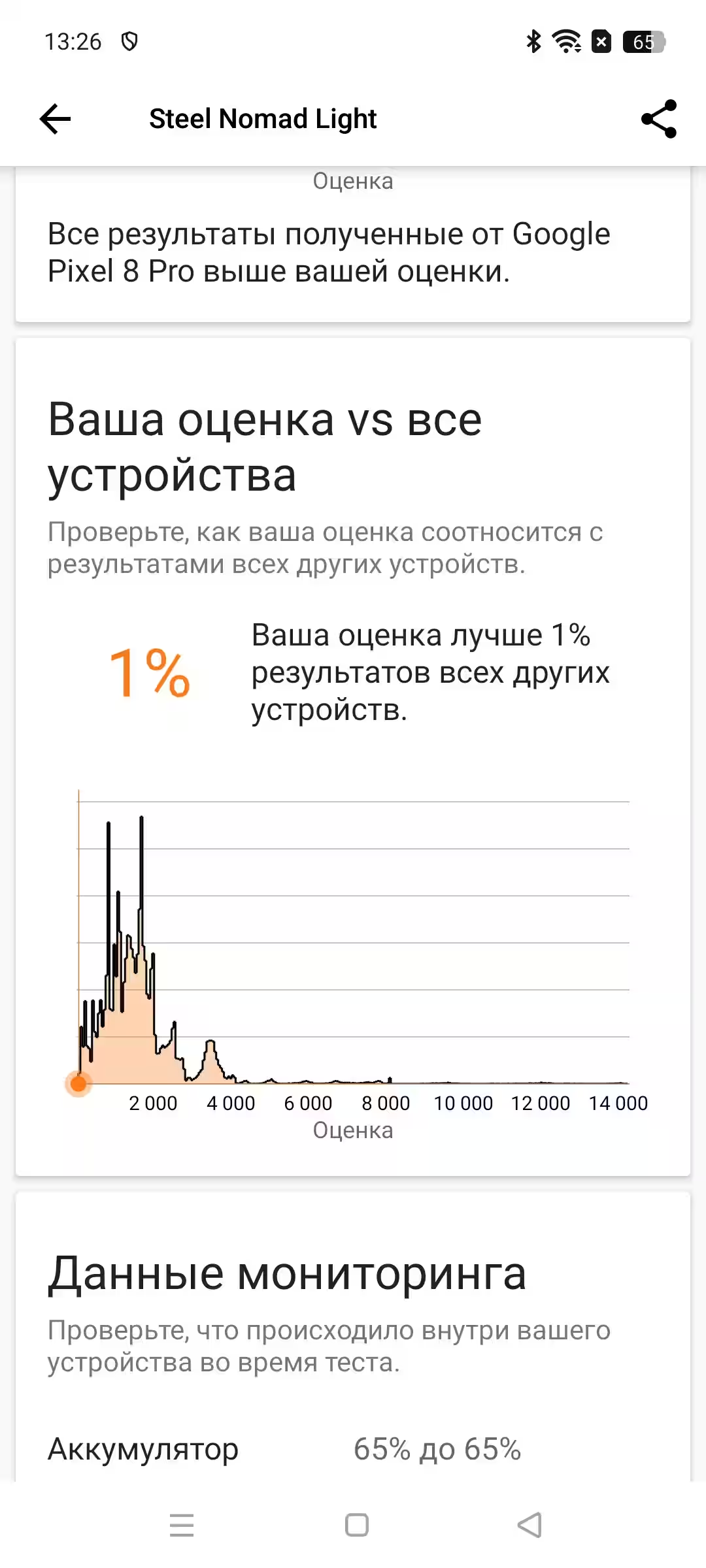
In daily use, the C75 handles common tasks smoothly. Social media apps, messengers like Telegram, WhatsApp, and VK work responsively. Thanks to the 90Hz display, scrolling is smooth and the keyboard keeps pace with fast typing. Browsers (Chrome and built-in ones) manage 5-7 open tabs without sluggish reloads. Heavy sites can lag a bit but stay within acceptable limits — for example, image-heavy news sites load in 2-3 seconds.
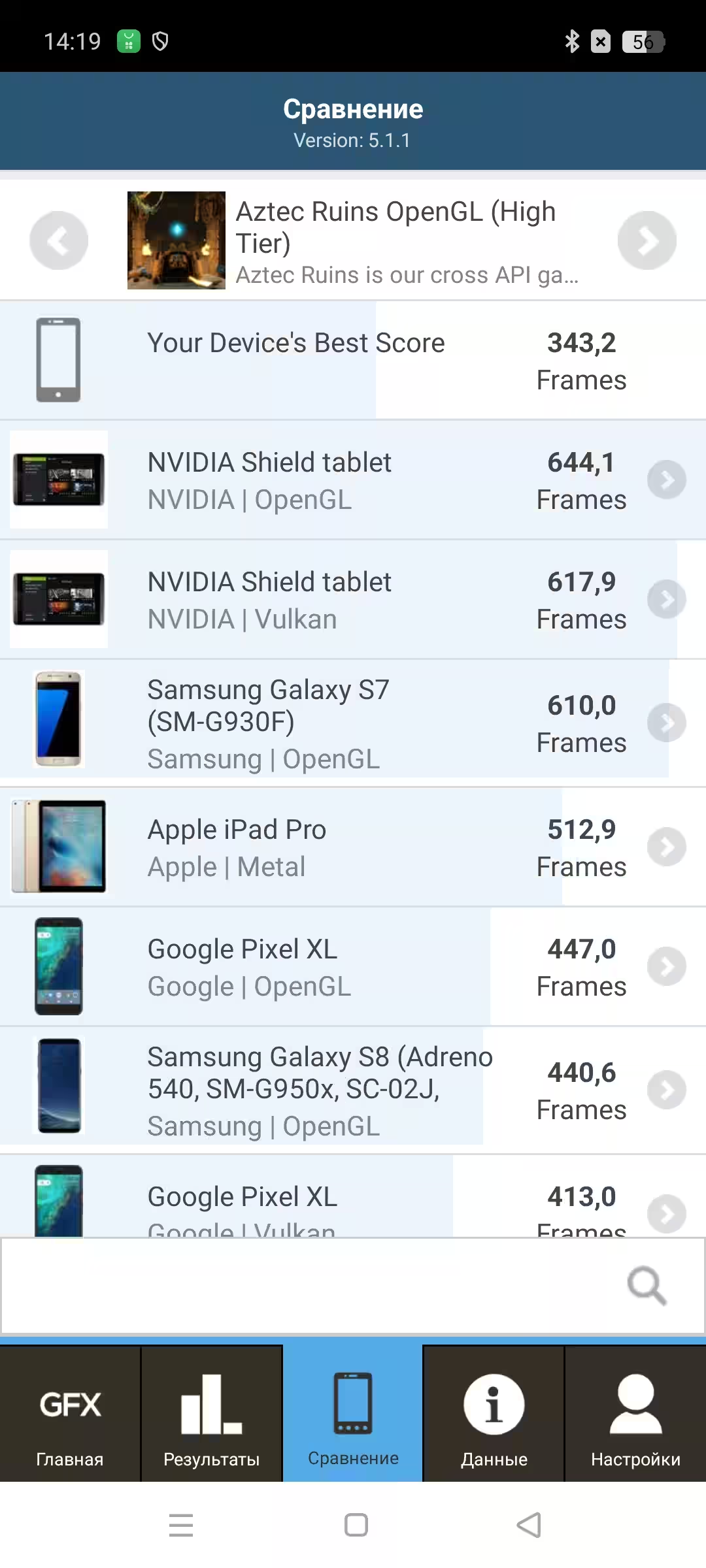
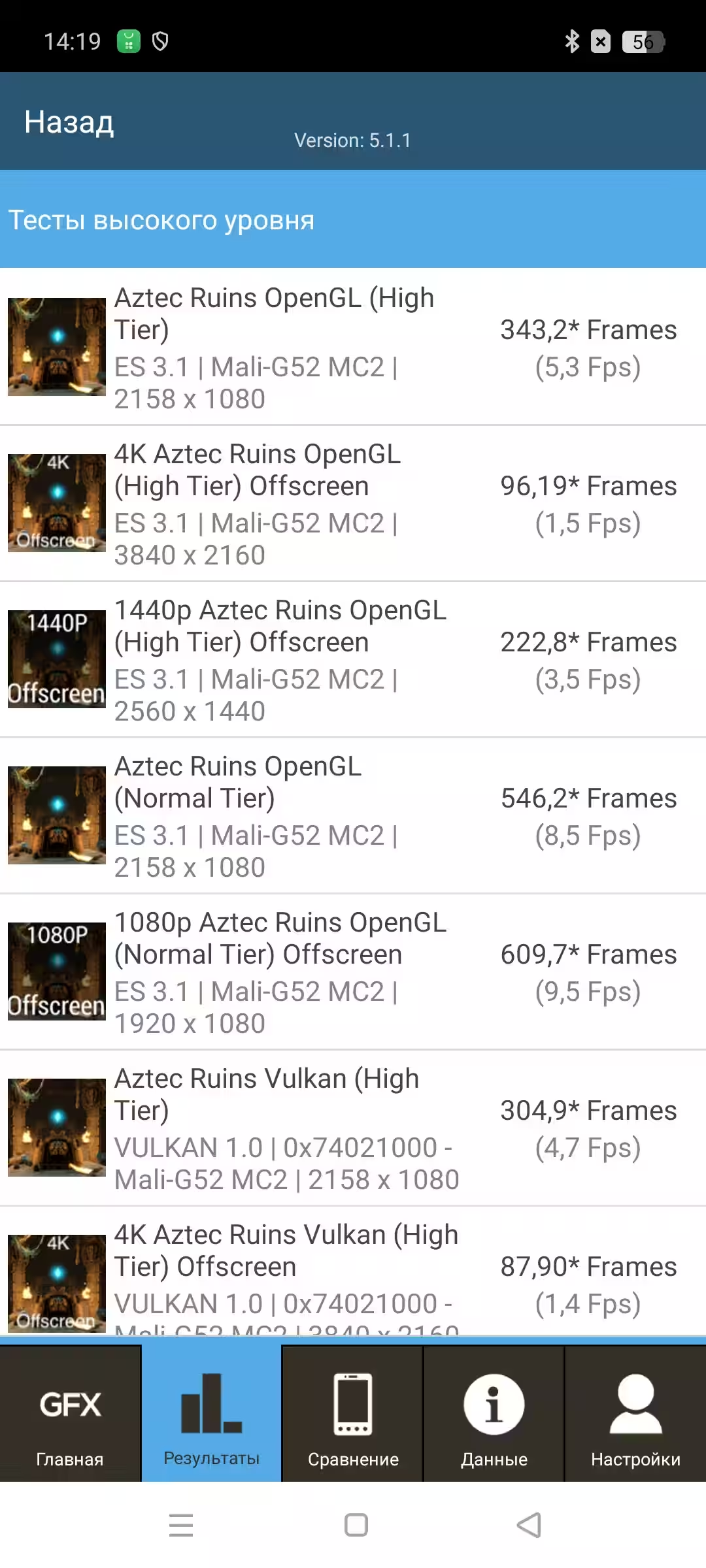
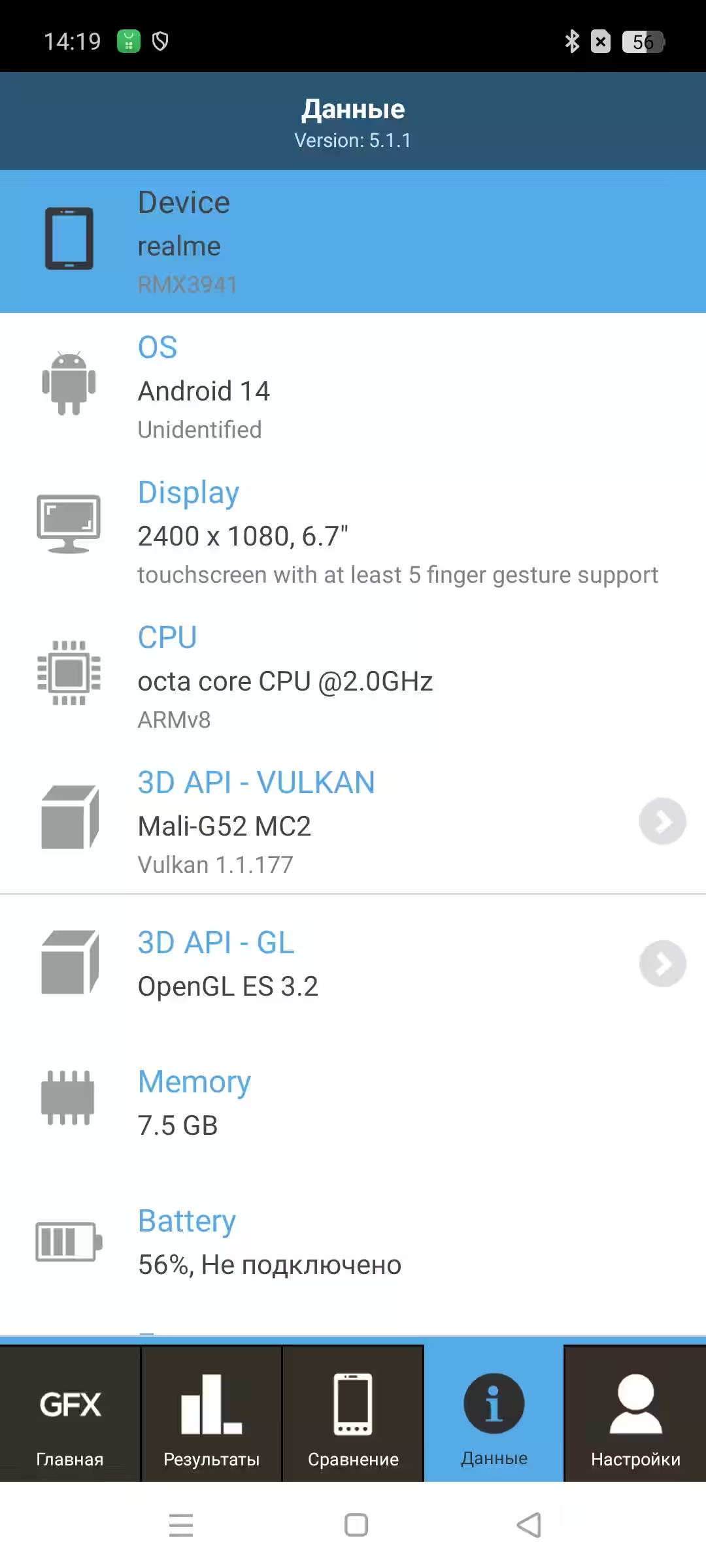
The camera app launches in about a second. Shots save almost instantly — you don’t get that frustrating delay waiting for the phone to “think” like on some low-end models. The camera interface is fluid, switching modes and cameras happens without hiccups. The phone confidently records Full HD video at 30fps, with no dropped frames. Overall, the C75 performs admirably for everyday use: no lag when scrolling menus, animations don’t turn into slideshows. We even caught ourselves forgetting about the “hardware” — it doesn’t annoy with stutters, which is enough to call it snappy for the price.
However, it’s important to know its limits. Gaming isn’t Helio G92’s strong suit, but you can still play. Casual titles like Subway Surfers, Candy Crush, or Clash Royale run perfectly fine. Popular MOBA and shooters fair okay: PUBG Mobile runs on medium-low settings at about 30 fps without major dips. Call of Duty: Mobile is similar — playable at medium settings. Demanding titles like Genshin Impact or Fortnite are tougher: even on the lowest settings, Genshin clocks 20-25 fps with occasional stutters during fights. The hardware simply isn’t built for these games, and heat becomes noticeable — after 20-30 minutes gaming, the area around the camera warms up. Throttling is present: a 15-minute CPU stress test showed performance dropping by around 20%. But under normal use, the phone stays cool — the plastic body and modest clock speeds help. No overheating was observed; the device gets warm but never hot, even after an hour of YouTube or navigation. So it won’t turn into a hand warmer.
The storage is eMMC 5.1, not UFS, marking the main compromise. In practice, this mostly affects installing large apps and file transfers, which feel slow. Launching already installed apps isn’t hugely impacted. Flagship phones read gigabytes in seconds, but eMMC remains common in budget gear (Redmi 13C base models use eMMC too). That said, available storage is generous: 128GB or 256GB variants mean you won’t have to clear photos every month. Plus, you can always add a microSD card (supporting up to 1-2TB), and Realme scores extra points here with a dedicated slot separate from the dual SIM tray — no hybrid compromises.
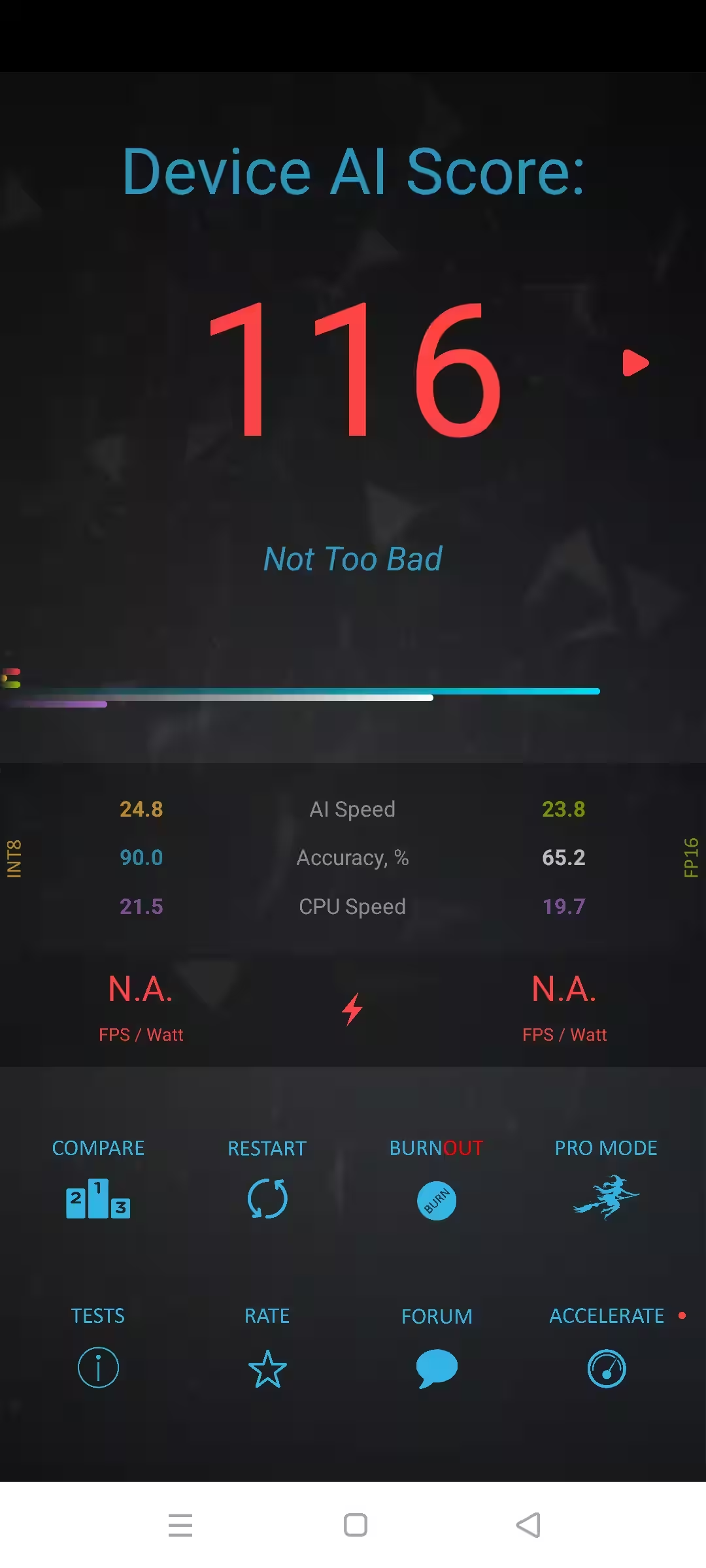
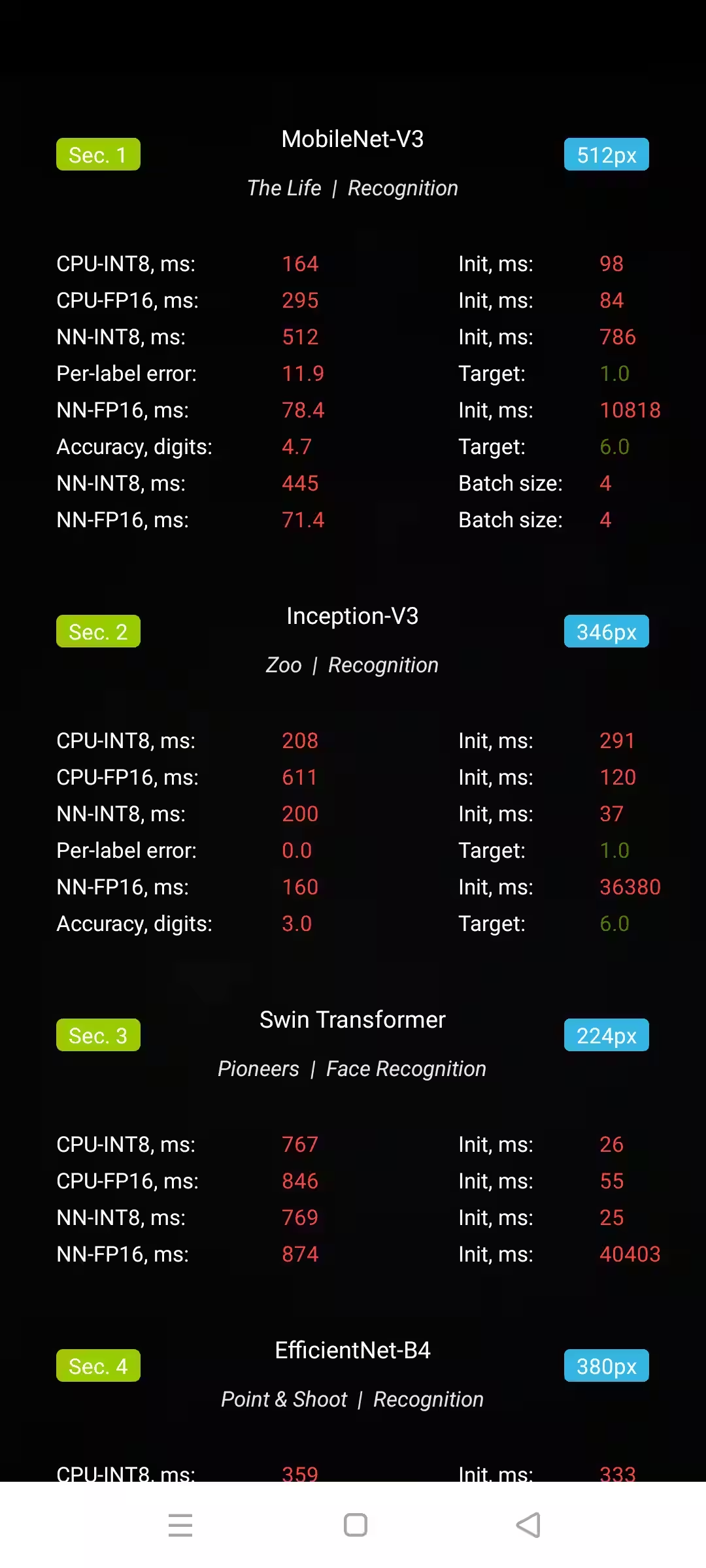
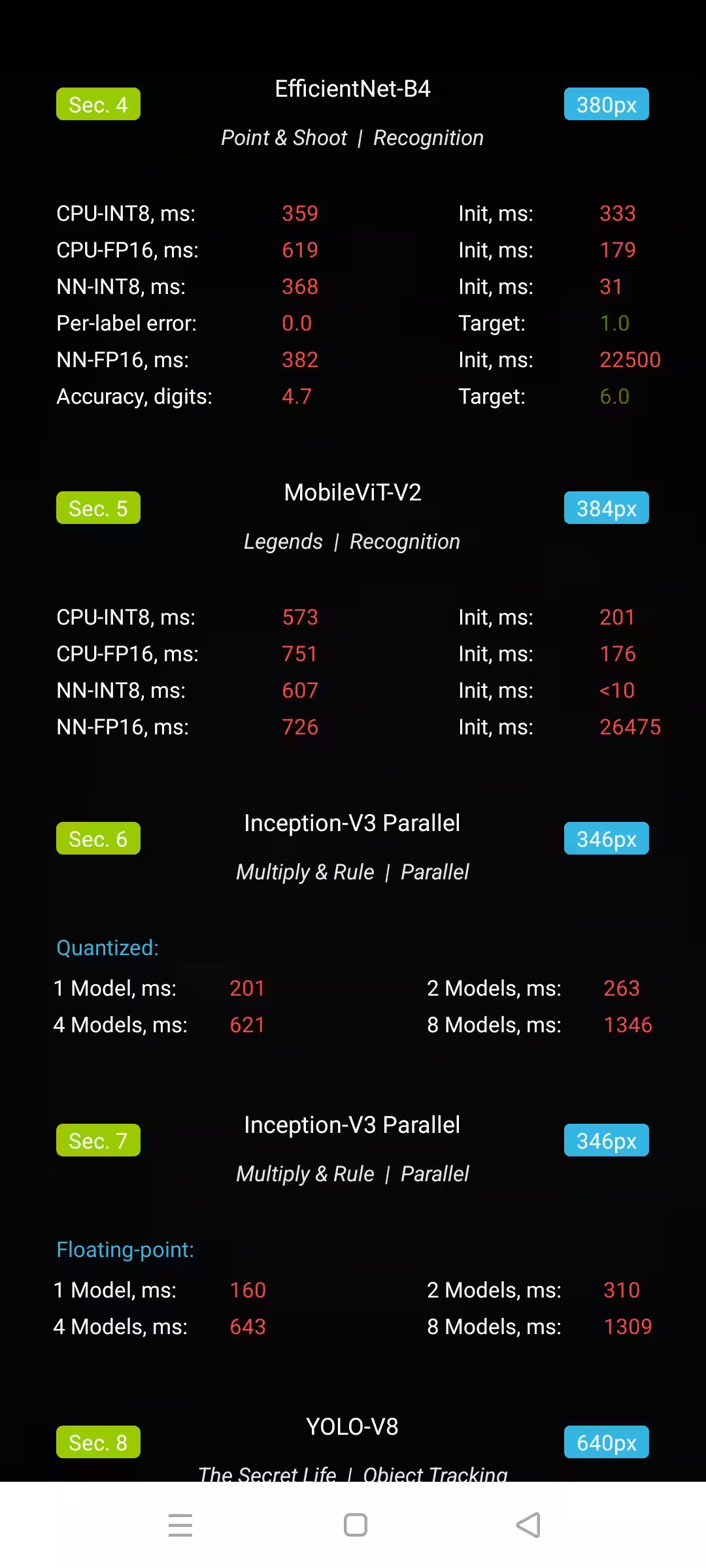
Let’s also highlight some AI perks in the Realme C75. In the performance settings, there’s an “AI Boost” mode promising faster operation in resource-hungry tasks. We toggled it on and off — the difference was subtle, mostly a few percent bump in benchmarks. It might help if you’re editing video or gaming, as it tries to keep chip frequencies higher (at the cost of more heat and battery drain). The system also optimizes itself by shutting down unnecessary background processes and regularly cleaning RAM. These smart touches are invisible but effective, keeping the OS smooth without noticeable hiccups despite the older processor.
To sum up: performance-wise, the Realme C75 is a solid mid-ranger. It outperforms direct rivals (Helio G92 vs. Helio G85 gives roughly 20-30% extra headroom) but doesn’t beat any same-price 5G phones based on Dimensity or Snapdragon. However, the C75 is cheaper than those 5G devices, and its focus is more on durability and battery life. In everyday life, it won’t frustrate with slowdowns, handles popular apps well, offers smooth Full HD video playback, and lets you game casually. Lags appear only if you push it like a flagship — opening tons of heavy Chrome tabs, live streaming, and rendering video all at once, but that’s not the target scenario for a budget phone. Most users will find its capabilities more than enough: calls, messaging, meme browsing, and even some casual PUBG in the evenings. Hardcore gamers… well, they’d be better off saving for something like the Realme GT 7 Pro.
Realme C75 camera
Despite the visually impressive triple-camera array, the Realme C75 actually has just one real shooter: a 50MP main sensor with an f/1.8 aperture. The other two lenses are purely cosmetic. Some might bemoan this fakery — better to ditch the fake lenses altogether than tease users. The phone lacks an ultra-wide, telephoto, or dedicated macro lens — not surprising in this price range.
During the day, you can capture decent shots. Under good lighting, the 50MP sensor delivers a good level of detail. The dynamic range is surprisingly solid for this class: auto HDR works well to balance tricky exposures. Usually, skies don’t blow out into a milky white, and shadows retain detail. Still, don’t expect miracles — extreme contrast scenes, like a subject backlit by bright sun, will lose some details. Overall, HDR saves the shots. Photos look nicely contrasted and saturated but not gaudy — social media-ready without heavy filters, though a slight push to sharpness or exposure can be helpful. AI Scene Enhancement is a nice touch: it detects the scene (food, nature, text, etc.) and subtly boosts saturation or sharpness. It does this gently, without the cartoonish overkill so common in some AI algorithms. Grass turns greener, sky gets bluer, all within natural bounds. If you don’t like AI’s tweaks, you can easily disable it with a tap.

Daytime photos in default 12MP mode (using 4-in-1 pixel binning) weigh about 3-4MB, with a resolution around 4080×3072. Noise is practically absent in daylight. What really limits camera quality is the lack of optical image stabilization (OIS) — but you can’t really expect that at this price.







You can switch to a full 50MP capture mode in the camera app, shooting at maximum resolution. Frankly, the practical benefits are marginal: 50MP files weigh a hefty 15-20MB, and detail gains are minimal. On the phone screen, there’s no visible difference; on a computer at 100% zoom, there are barely noticeable extra details in the center, but corners soften noticeably. We recommend sticking to 12MP for a balance of quality, speed, and storage.
Portrait mode is available but remember: there’s no dedicated depth sensor. Background blur is software-driven. When photographing people, the blur effect is generally tidy, with the AI doing its best to outline subjects’ edges. Occasionally, it slips — complex elements like hair or hands sometimes get blurred partially. For casual portraits, it’s acceptable: the bokeh looks natural (you can even adjust blur strength).


Zoom is digital only. The camera UI offers 2x and 5x zoom buttons, but these are software approximations. Up to 2x, photo quality remains acceptable, but 5x and beyond are mostly playful. Images get blurry, lose detail, and show ugly noise-reduction artifacts. For emergencies, it’s okay, but don’t expect artistic shots with the 5x zoom — it’s mostly nominal here.
Night shots are possible but with plenty of compromises. At dusk, the automatic mode keeps ISO low and shortens exposure, but without a dedicated night mode, photos come out dark and noisy. Exposure tends to be pushed a bit high, detail vanishes, and noise runs rampant. If you want good night photos, you’ll need to look at flagships — budget phones just don’t deliver.

The front-facing camera features an 8MP sensor with an f/2.0 lens, no autofocus, housed in a small notch at the top of the screen. Daytime selfies are decent: detail is acceptable and colors look natural. There’s also a portrait mode on the selfie cam — background blur is software-driven and sometimes roughly handles hair edges, but it’s fine for video calls and casual social posts. The camera app includes traditional beautification options: smoothing skin, enlarging eyes, slimming faces — a full suite for selfie fans.


Video recording maxes out at Full HD (1080p) at 30fps on the main camera. 4K or 60fps capture isn’t supported — the processor can’t handle it. Video quality is standard: sharp and colorful during the day, with smoothly adjusting auto exposure when scenes change. Electronic image stabilization (EIS) is present, cropping slightly to smooth shakiness, but don’t expect to run and shoot — heavy shakes translate into “jelly” effects. Audio records in stereo with average quality: voices come through clearly, though bass is weak. Wind noise is somewhat suppressed, though strong gusts still leave artifacts. The front camera also records 1080p at 30fps, sufficient for video calls with decent lighting. No stabilization on the front, so keep your hand steady.
Battery life and charging
If flagship-grade protection is the Realme C75’s main highlight, its battery life is the second ace up the sleeve. It packs a massive 6000mAh battery (technically 5828mAh nominal, but close enough to call it a “power bank” inside). By 2025 standards, more phones are shipping with 6000+ mAh, pushing past the older 5000mAh norm. The C75 comfortably sits among these long-lasting devices. In practice? You can basically forget where the charging plug is. Our tests showed it easily lasting two days with mixed use. Heavy users glued to their phones should be happy too: according to Realme, the C75 delivers up to 25 hours of continuous video playback or 7 hours of nonstop gaming. Those are impressive numbers.
In real-world use, YouTube video streaming over Wi-Fi at medium brightness drained about 4% battery per hour, suggesting a theoretical runtime of 20-24 hours of continuous playback. Phone calls were easy on the battery — only 1-2% drop per hour of conversation. Navigation mode (screen on, GPS active, cellular connected) consumed roughly 10-12% per hour, still enough to use the device all day as a car navigator without recharging. Charging speeds get a boost too: the C75 supports SuperVOOC at 45W, a rarity in budget phones. Many rivals still settle for 18W or even 10W chargers.
Software and interface
The Realme C75 runs Android 14 with Realme UI 5.0. This skin has matured over recent years and now stands shoulder to shoulder with competitors like MIUI and One UI. It’s lightweight, attractive, and user-friendly. Literally from the first boot, it feels familiar: home screens, app drawer (optional on or off), notification shade with quick toggles — no radical changes or experiments. Those used to stock Android will also find it intuitive: while Realme UI tweaks icons and menus, it retains a logical flow.
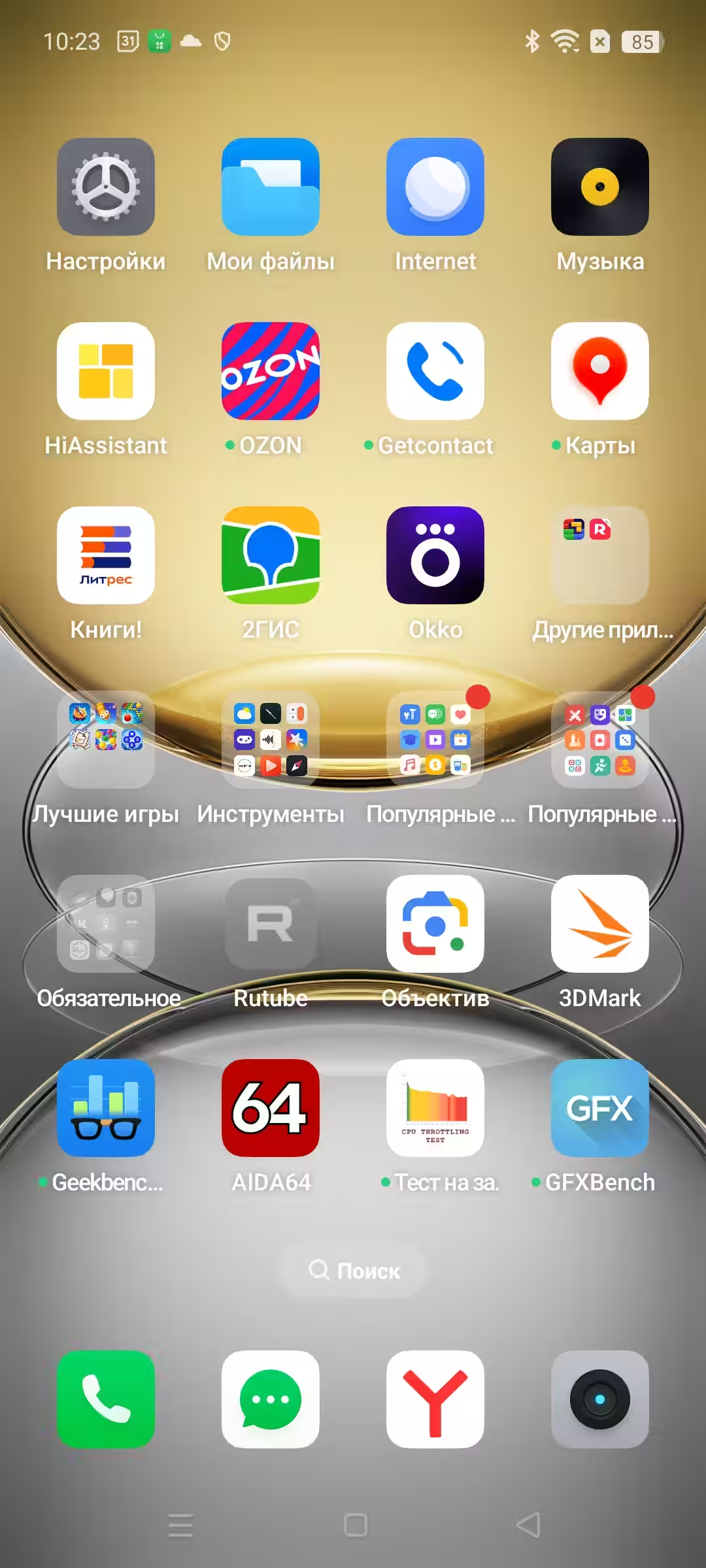

The skin boasts plenty of extra features. Realme has even ported some tricks previously reserved for pricier models. For instance, there’s the interactive Mini Capsule 3.0: animated accents around the front camera cutout can show charging status, step count, data usage, and more. It’s a charming little detail making the phone feel like it “talks” to you through the camera ring light.
Another handy addition is the side smart panel. Swiping in from the edge opens a narrow bar where you can pin apps or shortcuts for quick access. But Realme adds a twist: you can drag files — photos, text snippets — onto it for temporary storage, making it easy to attach them later in messaging apps. Think of it as a “shelf” for quick copy-pasting tasks. It’s perfect for grabbing several photos from your gallery and sending them in a chat — just drag, switch apps, and drop. Realme UI 5.0 also supports flexible floating windows: any app can be minimized into a small movable window overlaying the screen. Watching a video while chatting or keeping the calculator handy over a browser is no problem. It all runs smoothly, with windows effortlessly collapsing into bubbles and expanding again.
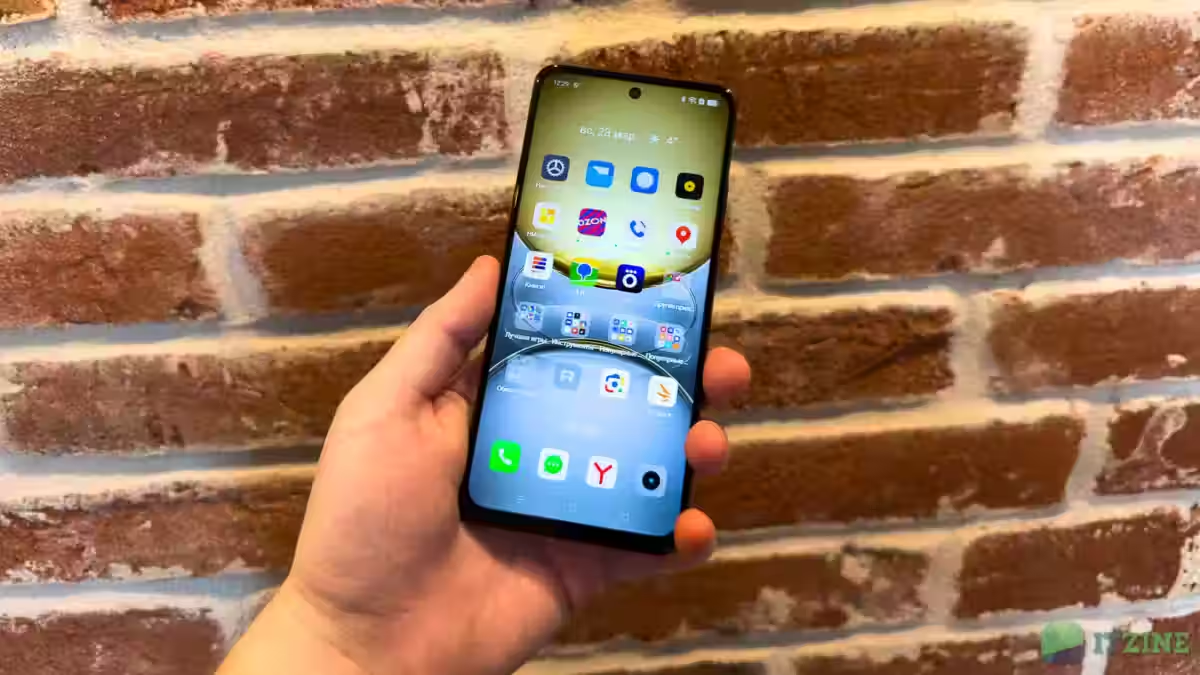
The interface is well organized: settings are categorized, and there’s a convenient search function if you don’t want to dig manually. The Russian language translation is clean, with no awkward machine phrases. Dark mode is supported, scheduling on or off, coloring system apps and many third-party ones consistently. The skin also includes Realme’s signature features: gestures, one-handed mode, plus a dedicated gaming mode that blocks notifications, optimizes resources for play, and can display an FPS counter.
Realme UI 5.0 is based on Android 14 and will probably receive an update to Android 15 in the future (no solid guarantees from the brand, but typically the C-series gets one major OS upgrade). Security patches also arrive regularly: during our two weeks of testing, one bug-fix update with fresh security patches was pushed through. This bodes well for first-year software support.
Connectivity and other features
Realme C75 comes equipped with all essential connectivity modules, except 5G, which isn’t operative in Russia anyway. Let’s start with cellular: it supports GSM, 3G, and 4G LTE across multiple bands, easily catching 4G in Russian and European bands like B3, B7, B20, etc. Signal quality is solid — in areas where other phones drop from LTE to 3G, the C75 maintains 4G connections. It also supports VoLTE and VoWiFi if your carrier offers these services.
Wireless-wise, it features dual-band Wi-Fi 5 (802.11ac), connecting to both 2.4GHz and 5GHz networks. Reception range is standard — stable signal through two walls from the router. No Wi-Fi 6 here, but that’s forgivable at this price. Bluetooth 5.1 is included — nearly latest (5.3 is out, but differences are subtle). Wireless headphones pair quickly and hold connection up to 8-10 meters even through walls. Codec support is limited to AAC and SBC — no AptX (common on MediaTek devices), no LDAC. Notably, there’s no NFC module, so contactless payments won’t work. Realme likely dropped NFC to cut costs or save power.
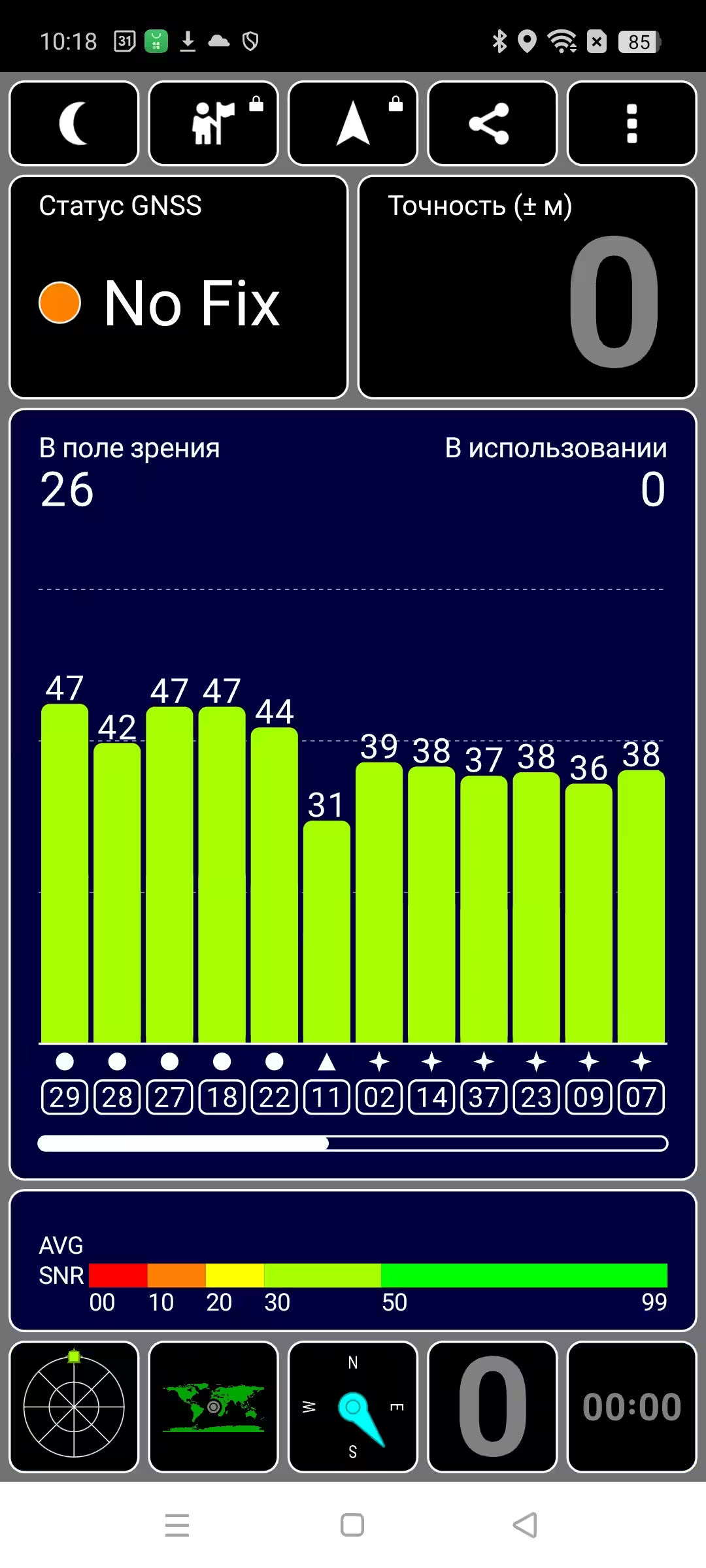
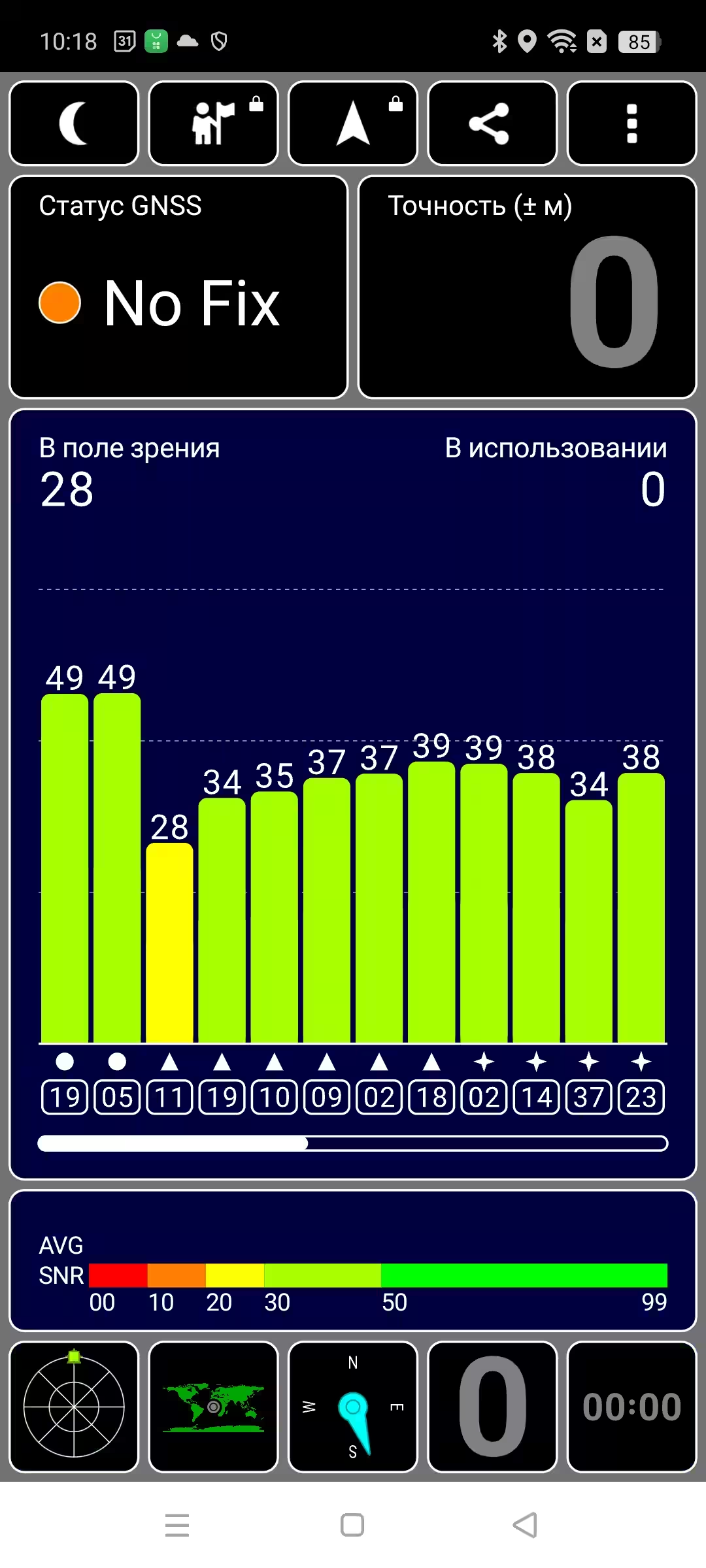
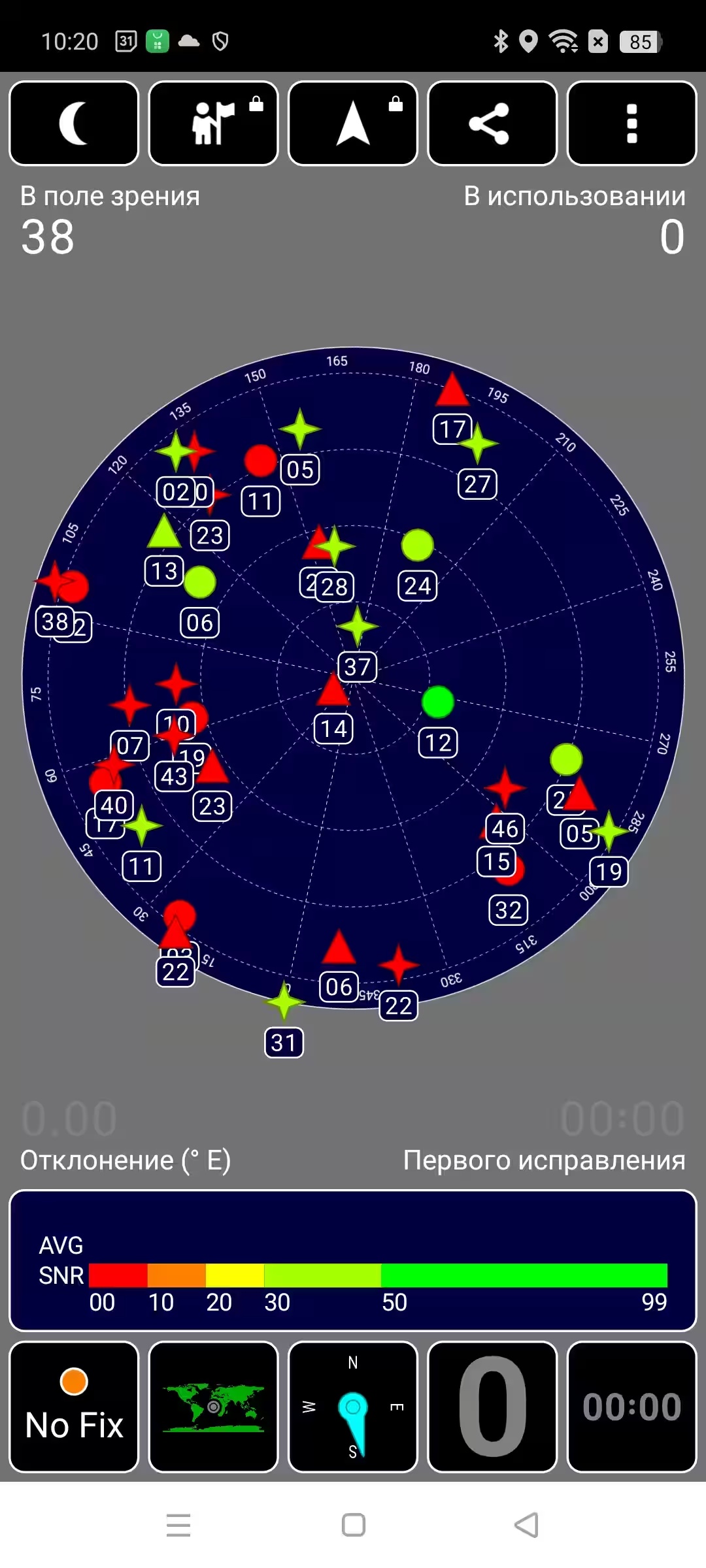
Navigation relies on GPS, GLONASS, and BeiDou. Cold starts take about 5-7 seconds to lock satellites. Location accuracy is typically 3-5 meters. In-car use posed no issues — GPS and GLONASS work flawlessly. A digital compass is onboard, so maps orient properly according to the phone’s direction, handy for walking. The C75 includes all basic sensors: accelerometer, ambient light, proximity, and a virtual gyroscope that works well enough.
As mentioned at the start, the Realme C75 carries dust and water resistance official certifications of IP68/IP69. You can fully submerge it up to 1.5-2 meters for 30 minutes and withstand strong high-pressure water jets. Beyond that, it passes military-grade MIL-STD-810H tests, meaning it endures shocks and vibrations. Most cheap phones don’t offer this level of protection.
Competitors and alternatives to Realme C75
In the 15,000 to 18,000 ruble price range, the Realme C75 has some rivals.
Xiaomi Redmi 13C
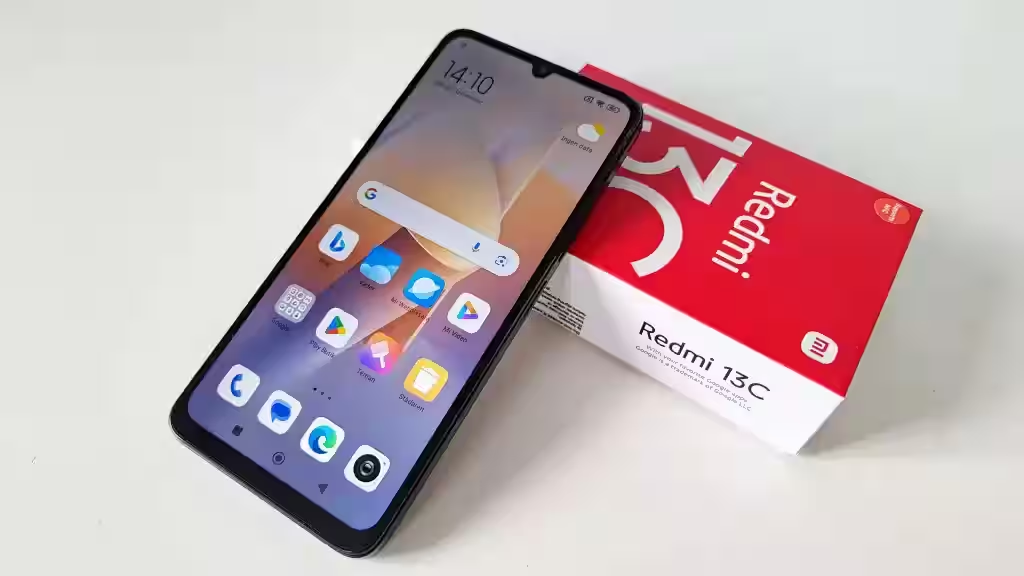
The main competitor from budget king Xiaomi. Redmi 13C offers a 6.74-inch IPS display at 90Hz but only HD+ resolution (720p) versus Full HD+ on the C75. That results in a noticeably less sharp screen, though scrolling is smooth. The processor is Helio G85, slightly weaker than the C75’s G92 Max. Both perform similarly in daily tasks, though Realme leads by about 25% in benchmarks and handles heavier workloads better. Redmi 13C includes NFC, a major plus for many, enabling mobile payments. Both phones use 50MP main cameras with comparable daylight photo quality; Realme’s night shots have a slight edge thanks to a night mode. Battery-wise, Redmi has 5000mAh vs. 6000mAh on Realme, and slower 18W charging vs 45W on the C75. Water resistance is near nonexistent on Redmi — only splash protection — while the C75 can actually be submerged. Redmi 13C is also a couple of thousand rubles cheaper (especially entry-level), making it a solid choice if NFC and MIUI appeal to you.
Tecno Spark 20

Another popular budget brand contender. The Spark 20 sports a similarly large ~6.6-inch IPS HD screen and a Helio G85 chip. Its 50MP camera produces comparable daytime shots, though Tecno’s software tends to blur details more aggressively and sometimes renders colors colder. Video maxes at 1080p. The battery is smaller at 5000mAh with about 18W charging. There’s no water resistance at all, and the build is standard plastic. Tecno phones often come preloaded with lots of apps and sometimes ads in the interface, whereas Realme UI is cleaner. However, Tecno can undercut rivals by several thousand rubles, making it attractive for budget buyers.
Final thoughts on Realme C75
We can genuinely call the Realme C75 the first true “people’s” smartphone with real water resistance. Its standout features are durability and long battery life. The large, bright screen with smooth 90Hz makes it excellent for video and social media. Performance is sufficient for everyday tasks. The single camera shoots well in good light but don’t bank on it for night shots. The main drawbacks include omissions in modern convenience: no NFC and no 3.5mm jack. The hardware is not cutting-edge — a 4G chip from 2021 and slower eMMC storage — so this isn’t a phone for those chasing the latest tech. Enthusiasts might find it boring. But its target audience is practical users who value longevity above all. In short, the Realme C75 is a genuinely solid mid-ranger ruggedized for survival. For reasonable money, you get a device that’ll forgive drops and wet encounters. At review time, the phone starts around 15,000 rubles for the entry-level 128GB model.
* Belongs to Meta, declared an extremist organization and banned in the Russian Federation.