Tesla Semi mass production kicks off – but it’s pricier than expected
 By Arthur Berg
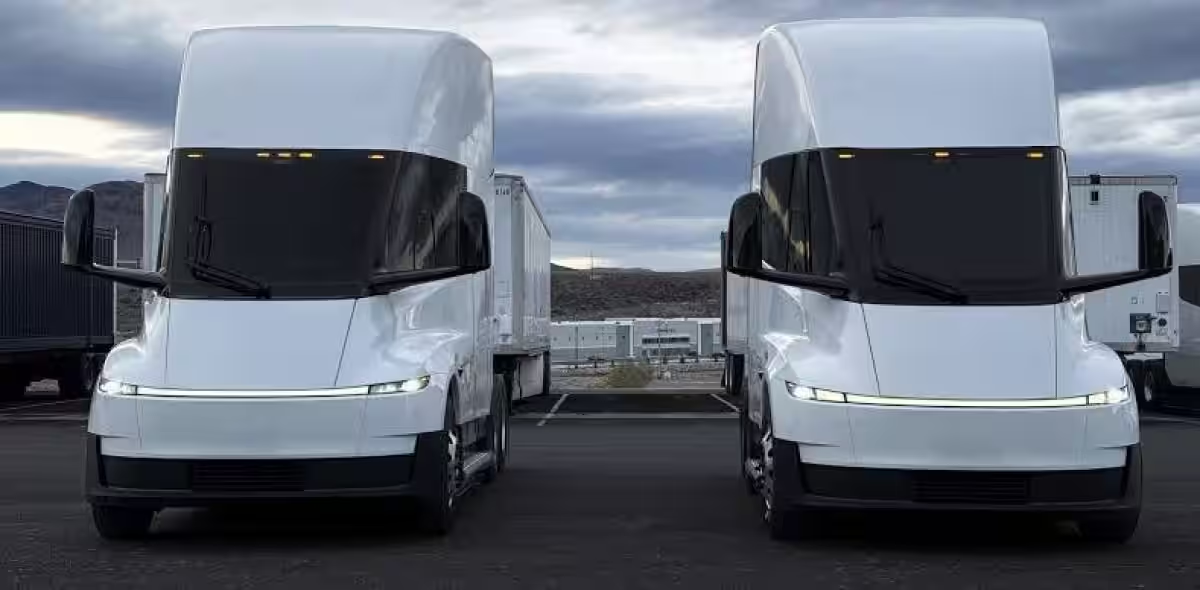
The wait for the Tesla Semi has been long and filled with anticipation. Nearly a decade has passed since the electric truck was first unveiled as a concept. For 98 months, Tesla fans and logistics companies alike wondered if the Semi would ever see real mass production. While several companies have already tested the truck on the road, Tesla is now officially ramping up for full-scale manufacturing. New details reveal the Semi is impressively powerful, but it also carries a noticeably higher price tag than initially promised.
One of the standout features of the Tesla Semi is its rapid charging capability. Thanks to Tesla’s proprietary Megawatt Charging System, the Long Range version can accept up to 1.2 megawatts of power. That means in just 30 minutes, the Semi can recharge with enough energy to power six Tesla Model 3 sedans. Both Standard and Long Range models can reach 60% charge within half an hour – a critical advantage for logistics companies aiming to minimize downtime.
Tesla currently offers two versions of the Semi. The Standard Range model covers roughly 523 kilometers on a single charge, while the Long Range stretches that to about 805 kilometers. These ranges are stated with the truck fully loaded. The combined gross vehicle weight rating (GVWR) for the truck and its cargo hits up to 37,195 kilograms.
While Tesla hasn’t disclosed exact battery capacities, it has shared energy consumption numbers. The Semi consumes about 1.06 kWh per kilometer (1.7 kWh per mile). Based on this, the Standard Range pack likely holds around 550 kWh, and the Long Range pack is estimated at a hefty 875 kWh.
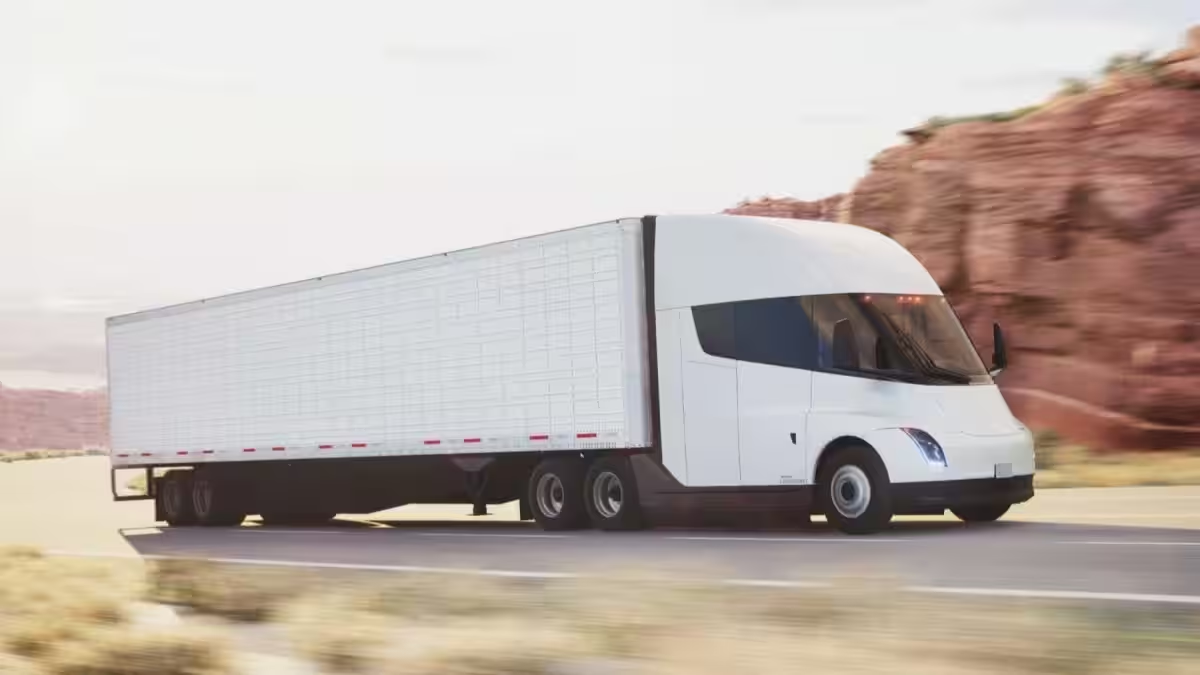
Despite the impressive specs, the price tag is significantly higher than early estimates. Back in 2017, Tesla quoted prices between €128,000 and €154,000. Now, the Standard Range is expected to cost around €213,000, with the Long Range version at roughly €248,000 – both figures excluding taxes and additional fees.
Tesla defends the steep price by pointing to lower operating costs versus diesel trucks. With fuel prices rising and complex diesel engines demanding costly maintenance, electric motors offer a simpler, more affordable alternative. Over several years, savings on fuel and service could be substantial – a key selling point for fleet operators.
Production of the Tesla Semi is finally gaining momentum. Tesla built a dedicated factory in Sparks, Nevada, with construction beginning in 2024 and nearing completion by late 2025. Once at full capacity, Tesla aims to produce up to 50,000 Semis annually, positioning itself to compete directly with established players like Volvo, which is already actively selling electric trucks to major customers.