KaOS drops KDE Plasma after 12 years
 By Arthur Berg
KaOS, the Linux distro that stuck exclusively to KDE Plasma for 12 years, has officially removed Plasma from its default installation starting with the 2026.02 update. It’s replaced by the Niri desktop environment and the Noctalia shell, a shift driven by the team’s desire to distance themselves from systemd. That said, the ISO still boots using systemd as the team tests a possible switch to Dinit.
Why KaOS dropped KDE Plasma
The reasoning is straightforward but politically charged: KaOS wants to stay a “Qt-focused” distro without accepting what they see as Plasma’s unavoidable architectural dependency on systemd. In their announcement, the developers confirmed that the new image no longer includes Plasma or KWin. This change stems from their determination to move away from systemd, while concurrently exploring Dinit as a potential alternative init system.
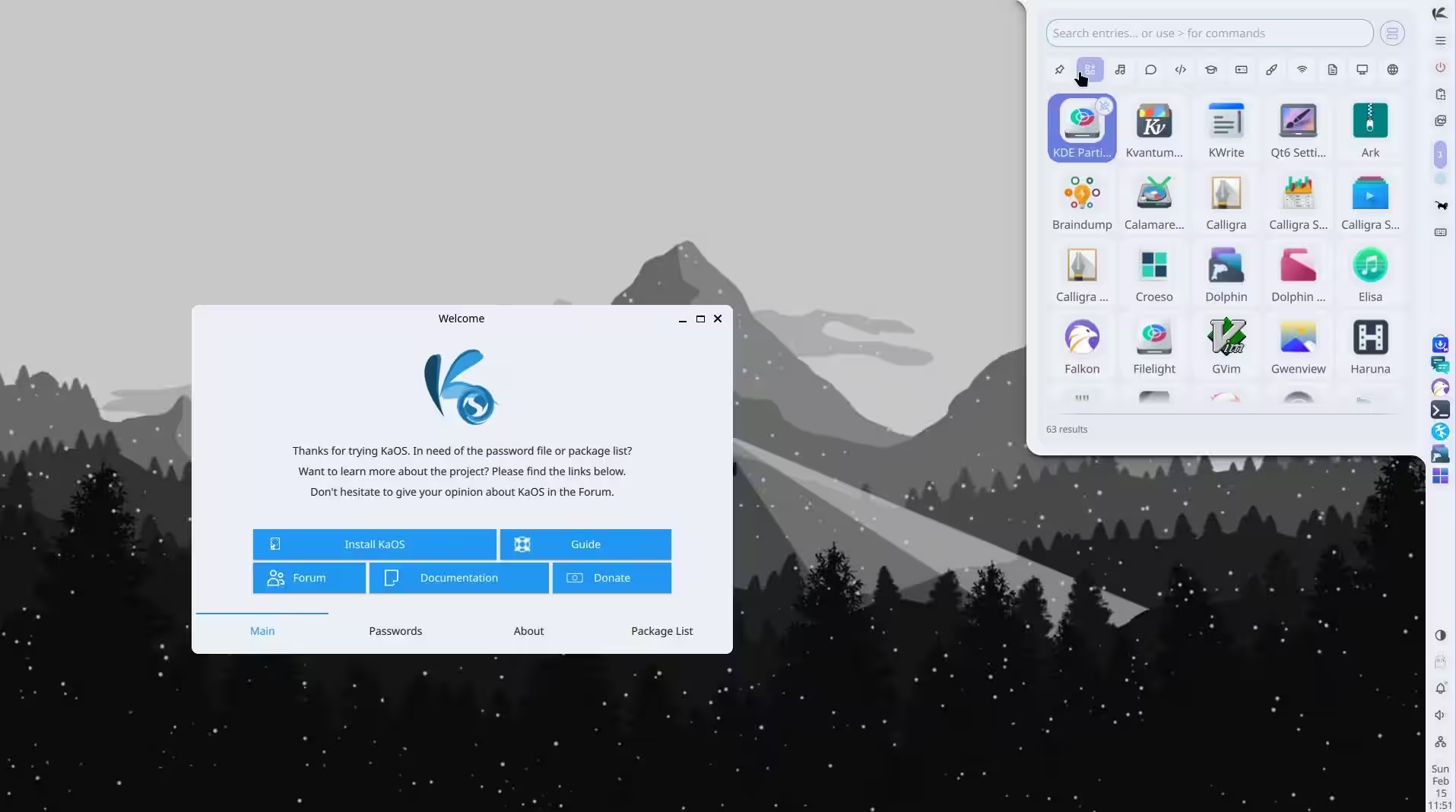
You won’t find Plasma or KWin in this ISO, even though KaOS has always been a KDE/Plasma-only distro. Instead, you’ll get a system based on niri/Noctalia. This change was driven by a desire to move away from systemd. Work on potentially switching to Dinit continues, but this ISO still fully uses systemd.
KaOS team
What’s new in 2026.02
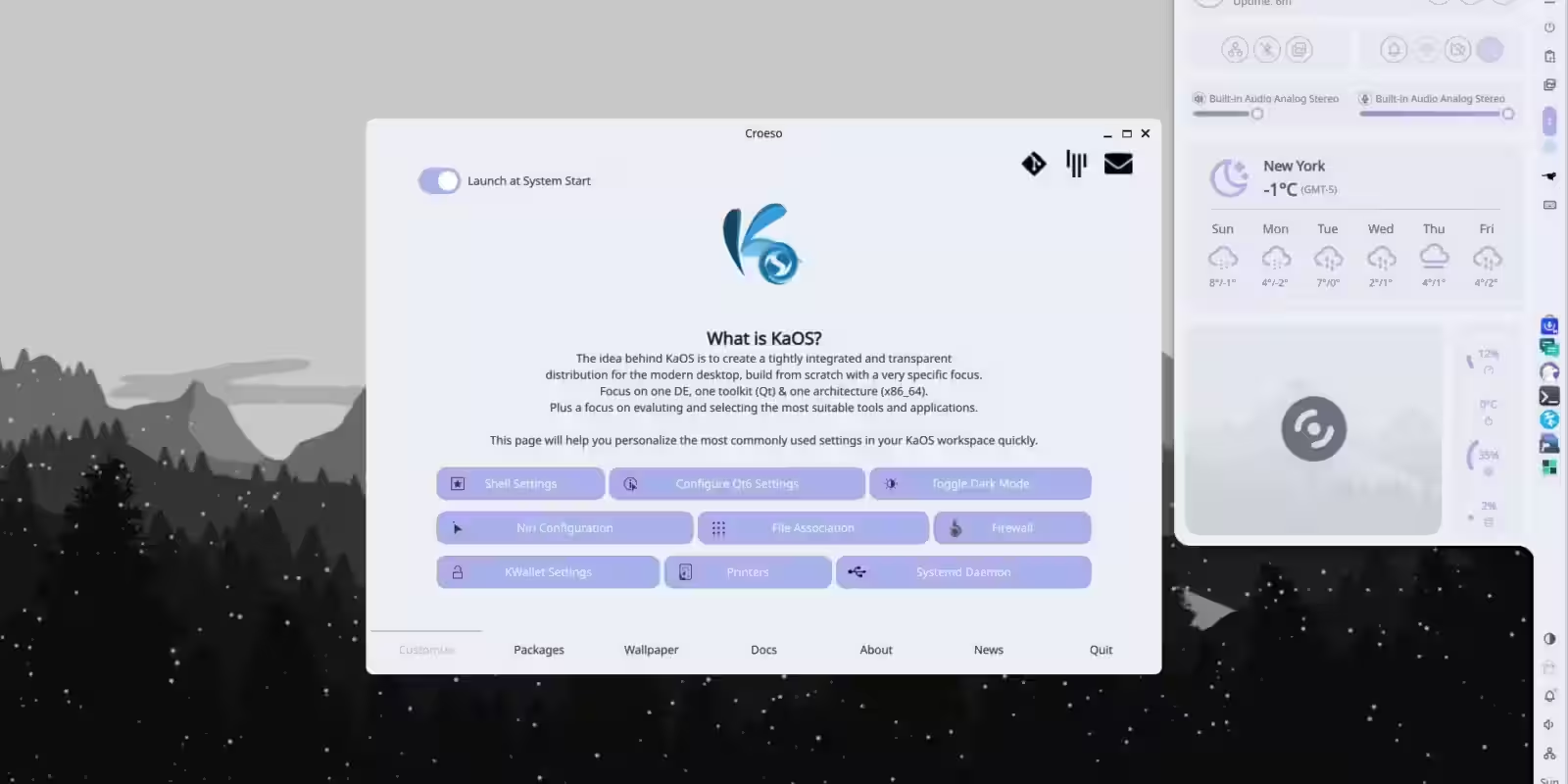
- A new default desktop: Niri 25.11 paired with Noctalia shell 4.4.
- Quickshell 0.2.1 integrated as part of the new environment.
- The bootloader has been switched to Limine.
- Plasma remains available in the repositories for those who want to manually reinstall it.
Important note: the ISO still uses systemd under the hood. So this isn’t a full break yet-it’s a gradual, tested step rather than an abrupt jump back to the past.
Who else is avoiding systemd
With this move, KaOS joins a growing group of distros that either reject systemd outright or let users pick alternatives. Examples include Devuan (a systemd-free Debian fork), Artix (offering OpenRC, runit, or s6 options for Arch users), and Void Linux (which uses runit). Each appeals to different audiences-from infrastructure traditionalists to those opposing the dominant projects’ architectural choices.
Who wins and who loses
The winners here are users who prioritize alternative init systems and minimal reliance on systemd. They get a distro that aims to keep working smoothly with Qt without the “baggage” of systemd. Meanwhile, KaOS strengthens its identity as an independent, “pure” Qt ecosystem.
The losers? Those who appreciated Plasma’s out-of-the-box conveniences and integrations. Features increasingly tied to systemd might become less accessible or require workarounds in the future. KaOS’s developers face the challenge of maintaining alternative integrations and tools-adding complexity and the risk of fragmentation.
On a technical note, switching to Noctalia/Niri and Limine changes not only the interface but also user workflows-from configuration settings to session and service management. This will be a fresh experience for some community members but could become an extra headache for others.
What’s next
KaOS’s move underscores that the choice of init system remains one of the few politically charged issues in the Linux ecosystem. In the coming months, watch for two key developments: whether KaOS can fully transition to Dinit without losing functionality, and whether KDE continues to deepen its reliance on systemd. This will shape whether the trend toward “alternative KDE” desktops spreads beyond niche circles.