TeamGroup Mag PD20M portable SSD review: small yet equipped with MagSafe
 By Arthur Berg
External SSDs have become an essential gadget for tech enthusiasts and professionals alike in recent years. With more data moving across devices—from work projects to high-res media files—speed is paramount. Traditional external hard drives and USB flash drives simply can’t keep up with the demands of today’s workflows; they fall short in both performance and reliability. That’s where portable SSDs come in. Thanks to USB 3.2 interfaces and NVMe technology inside, these drives offer significantly faster speeds, better shock resistance due to the lack of moving parts, and a compact size that makes them truly portable.
External SSDs are especially valuable for content creation. Videographers can record 4K footage directly to an external drive, bypassing limited internal storage on cameras or smartphones. Console users and gamers can launch games from these SSDs without encountering noticeable slowdowns. Plus, backing up large volumes of data regularly is far quicker on an SSD compared to old-school HDDs. In short, portable SSDs are no longer luxury accessories—they’re professional tools designed to save you time and protect your data.
Design and build
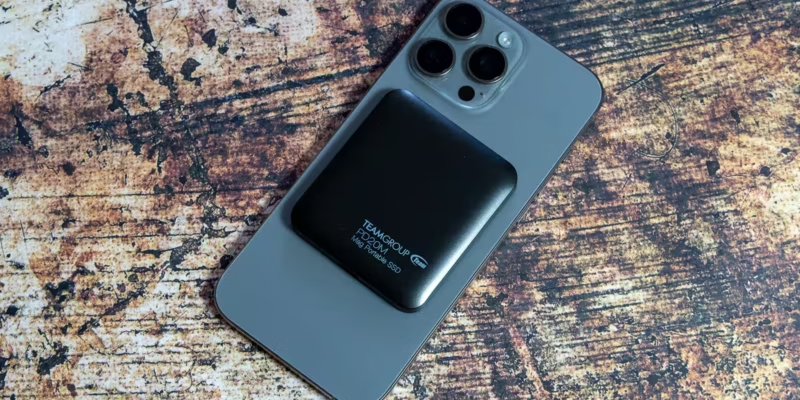
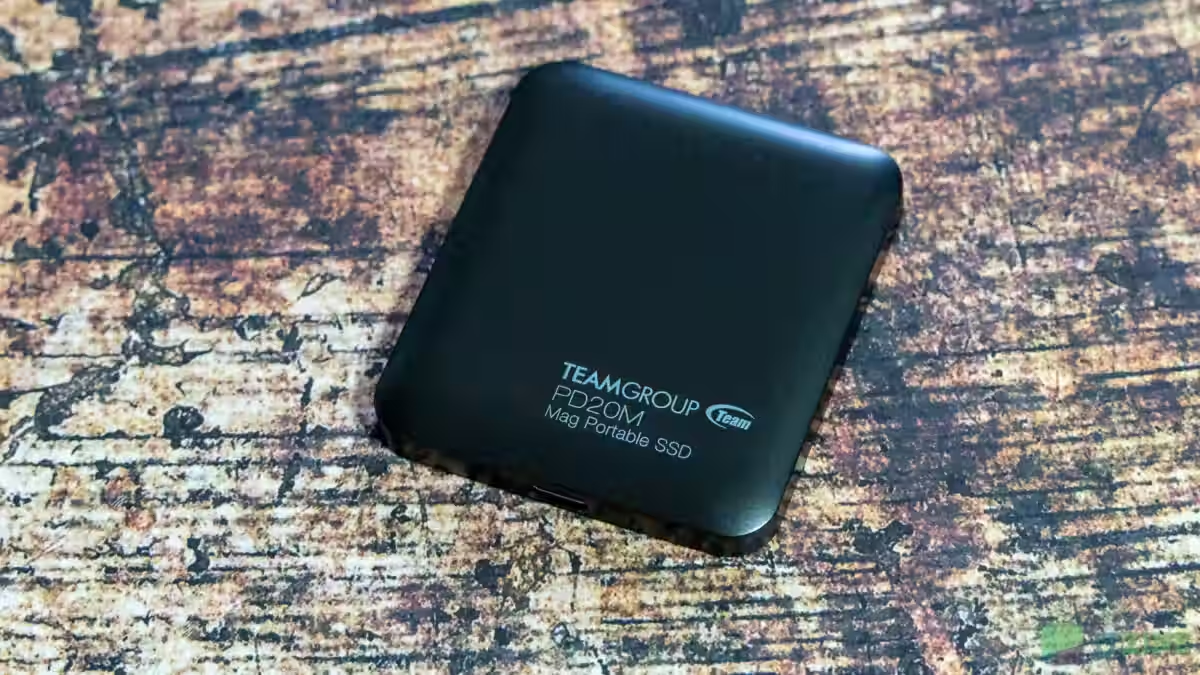
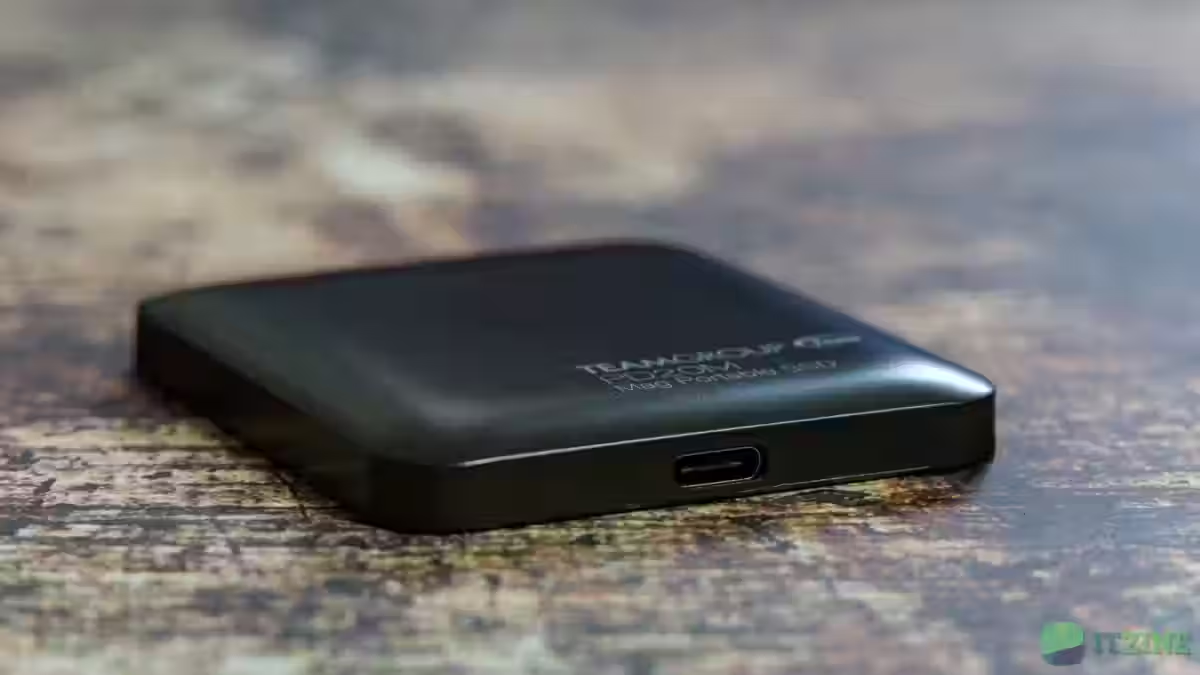
The first thing that stands out about the TeamGroup PD20M is just how compact and lightweight it is. The drive’s a roughly square slab measuring around 70 × 62 mm, with a slim 8.2 mm thickness. That puts it about the size of a credit card (slightly wider), and as thin as a slim smartphone. It weighs a mere 40 grams—about the same as a pack of gum. Holding the PD20M, you immediately get why the manufacturer skipped attaching any mounting loops or clips: it’s so featherlight you can just toss it atop your laptop or in a bag pocket without noticing.
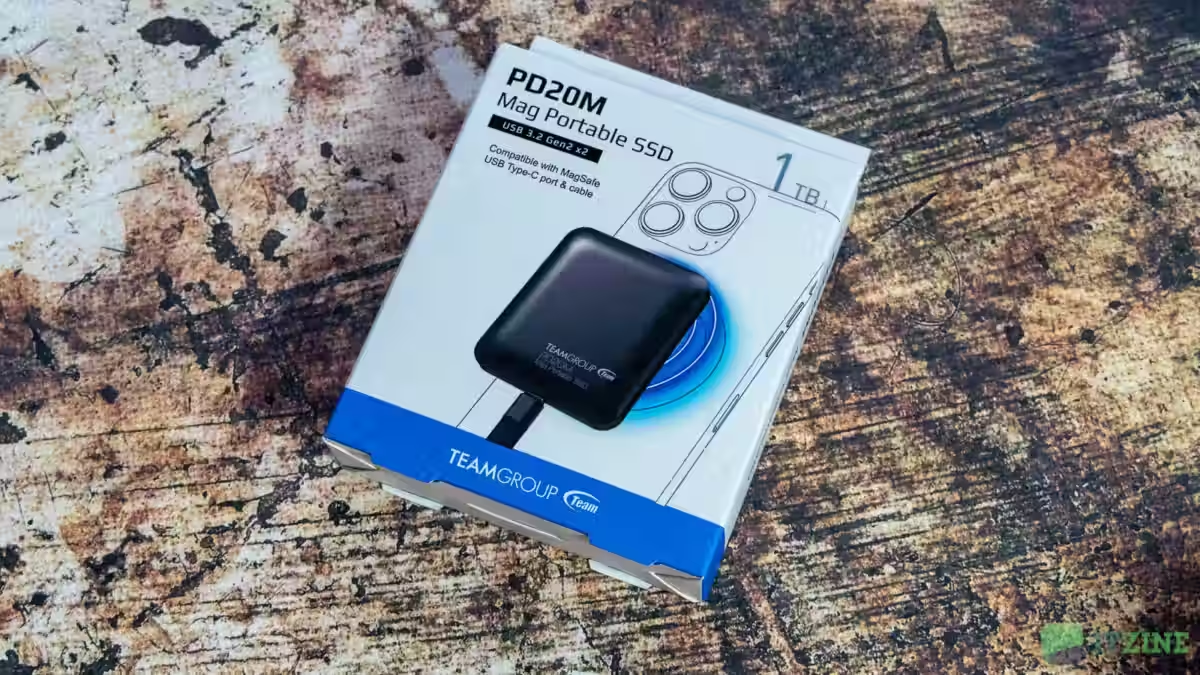
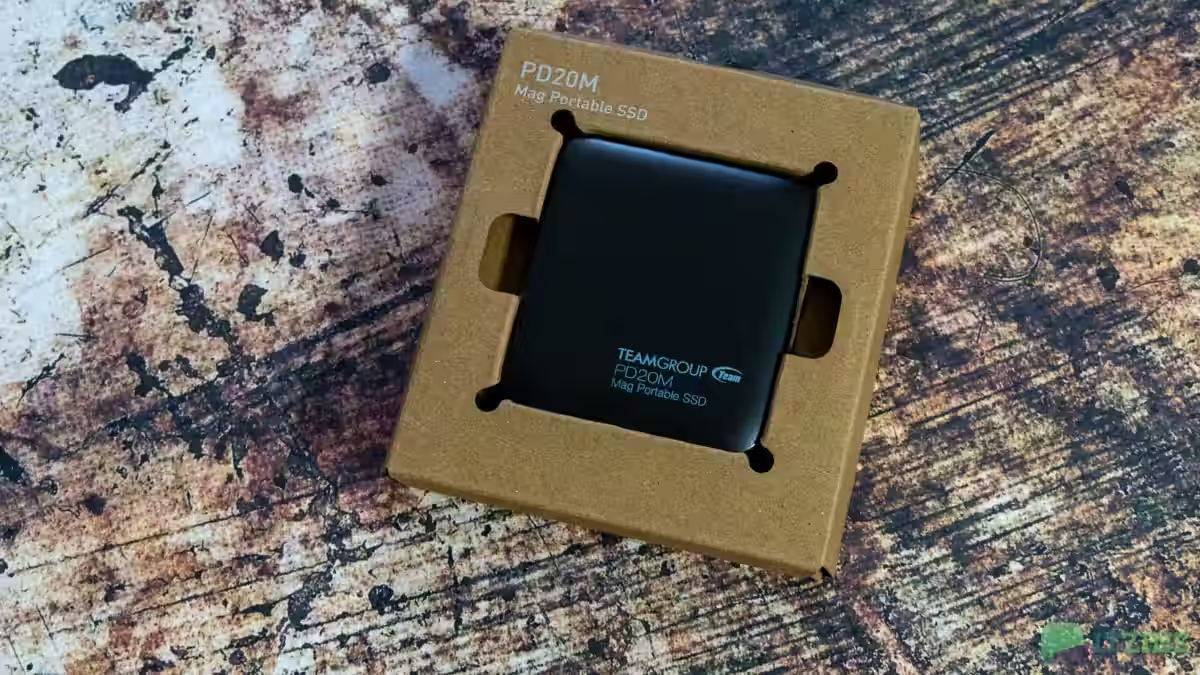
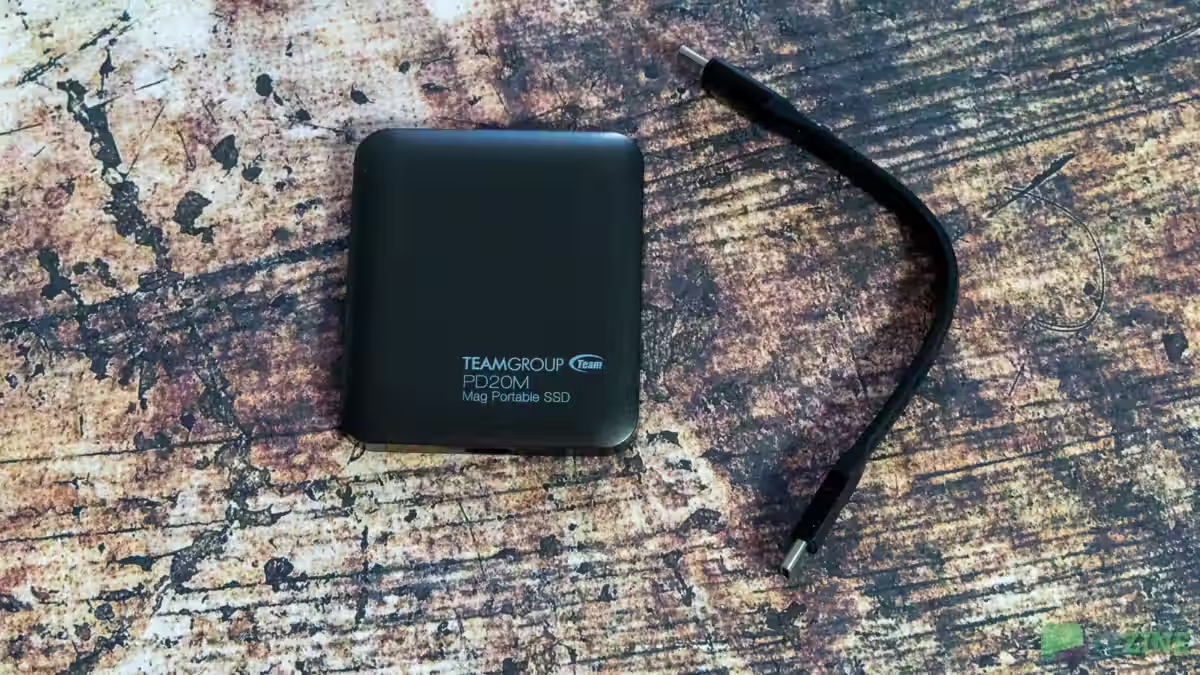
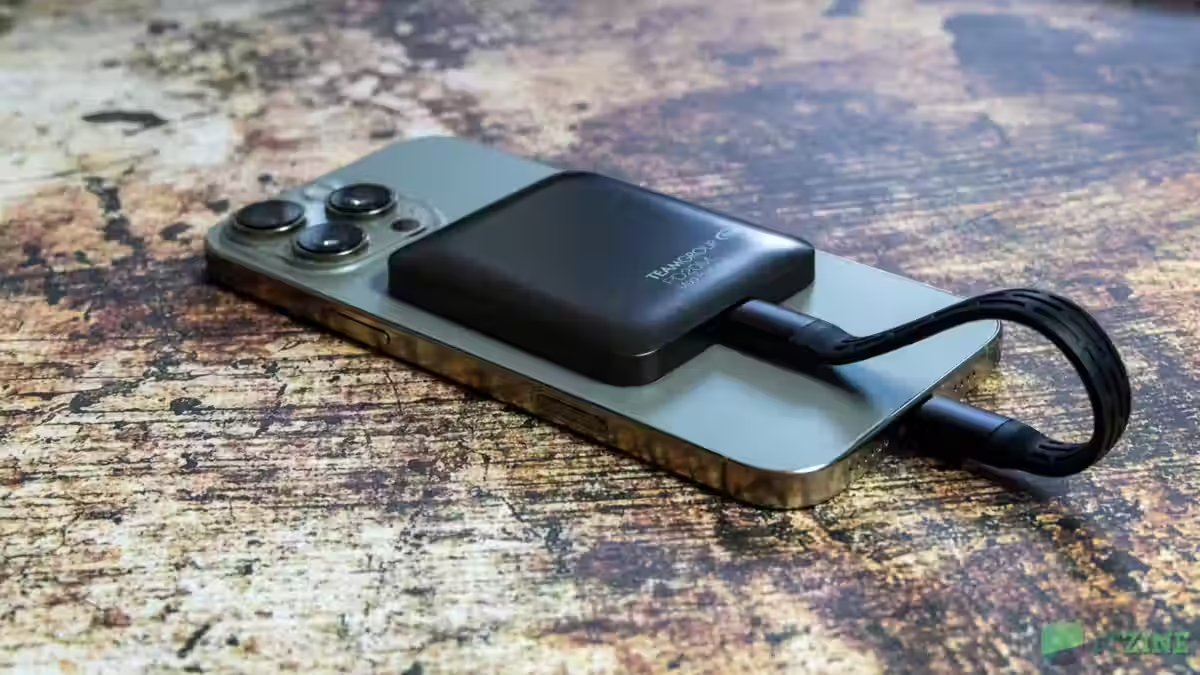
The casing sports a Titanium Gray finish—a dark gray tone close to Apple’s “space gray.” Made from an aluminum alloy with a smooth matte texture, the design is clean and minimalist: one side features the TeamGroup logo and “Mag Portable SSD” branding, while the edge houses a USB Type-C port and a tiny status LED. The top surface curves slightly with rounded edges, and the bottom is flat.
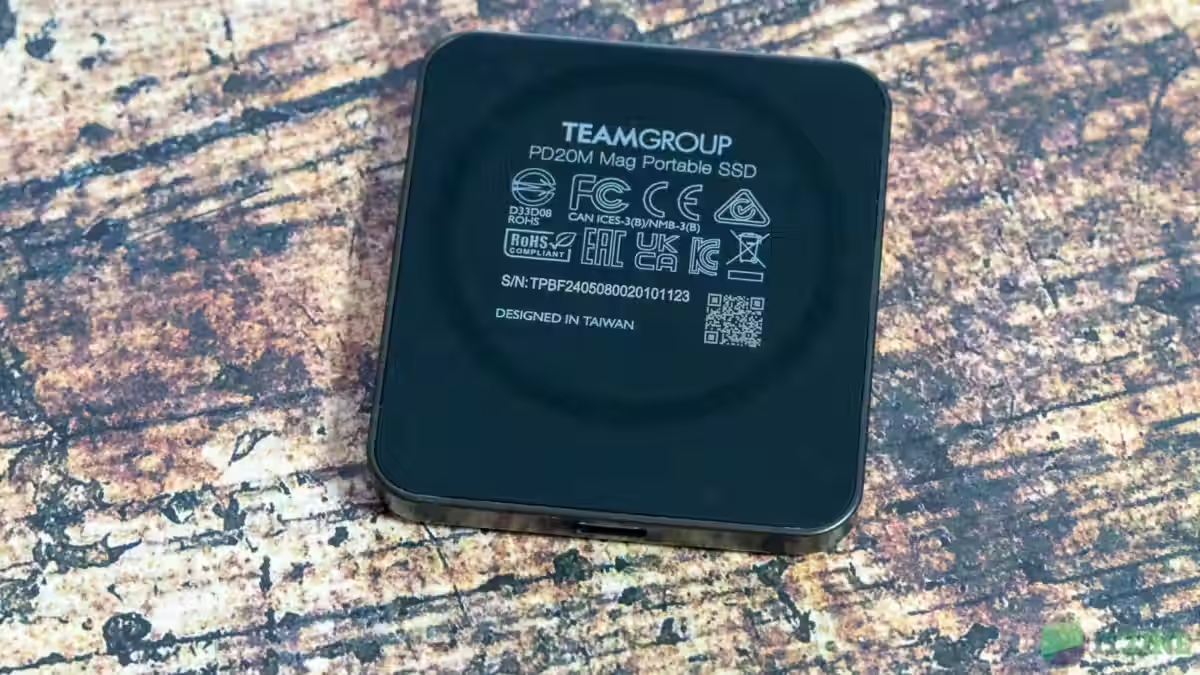
The bottom surface deserves special mention: it’s coated with a circular rubberized pad. This soft “sole” serves two purposes. First, it hides a MagSafe-compatible magnetic ring arranged in Apple’s standard pattern. The rubber protects both the SSD and your phone’s surface from scratches during magnetic attachment—especially handy if your iPhone isn’t in a case. Second, the rubber improves grip on slick surfaces. Without traditional feet or anti-slip stickers, the drive doesn’t slide around on desks thanks to this full-surface rubber ring. When magnetically attached to a phone, the rubber also prevents unwanted rotation or accidental shifts.
The magnetic mount is genuinely convenient in use. If you have an iPhone, the PD20M snaps right on like it was made for it. The magnets are strong enough to keep the SSD in place during normal walking or handheld video shooting without dropping—even with some jostling. Of course, a quick tug on the cable will pop it off, but when filming handheld or on a tripod, it’s reassuringly secure. At 8 mm thick, the phone with the SSD is still comfortable to hold; the drive protrudes only slightly from the back. The footprint of the SSD is a bit narrower than a modern smartphone’s width, so the edges don’t extend beyond your device—a thoughtful touch. TeamGroup also included a short (~30 cm) flat USB-C to USB-C cable with slim connectors that sits close to the devices without awkward loops like round cables do. You can use a longer cable if needed, but the bundled one is optimal for both flexibility and data speed.
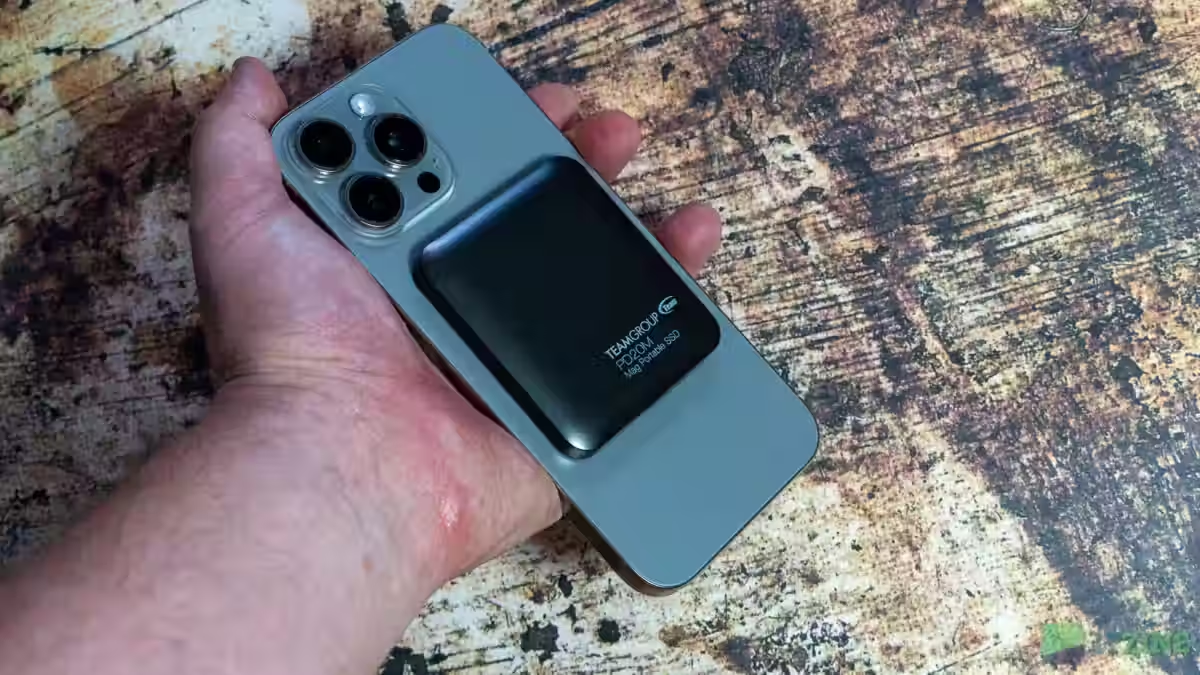
When it comes to durability, the PD20M isn’t designed as an all-terrain drive. It carries no official IP dust or water resistance rating, nor any shock certification. So keep it away from rain and sand. Inside, of course, there are no fragile moving parts, so it can withstand normal bumps and vibrations. Think everyday urban use—not rugged adventures.
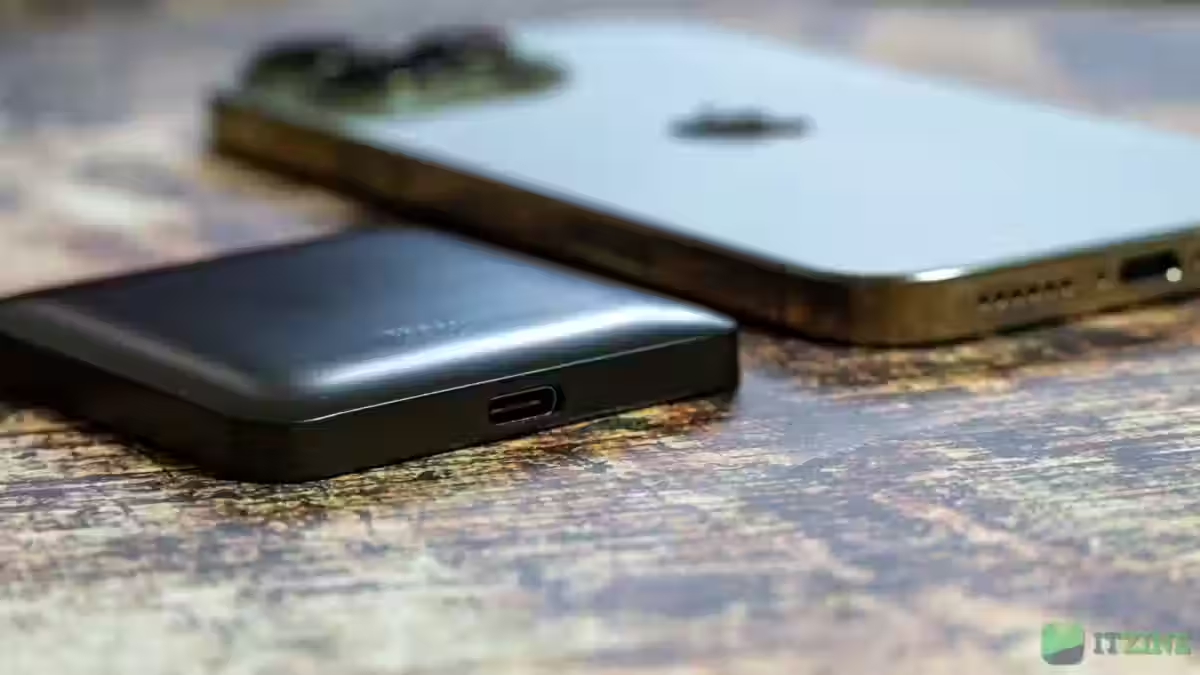
The TeamGroup PD20M ends up feeling incredibly compact, light, and ergonomic. It pairs well visually with Apple gear and beyond, while its magnetic backing makes it stand out from anonymous black boxes. Assembly feels solid, with trustworthy metal and rubber materials. It’s a shame there’s no waterproofing, but for office, studio, and travel contexts, that’s hardly a deal-breaker. Overall, the PD20M prioritizes user comfort over ruggedness—and it nails that mission.
Specifications and internal components
Beneath its sleek shell, the PD20M Mag houses a modern NVMe SSD. In simple terms, it’s an NVMe drive—the same tech often seen inside laptops—paired with a USB bridge controller. According to specs, it combines a high-speed USB 3.2 Gen 2×2 controller (likely from Phison or Silicon Motion, optimized for portable SSDs) with 3D NAND flash memory. The manufacturer doesn’t explicitly specify the NAND type, but test results hint at QLC NAND (quad-level cell). QLC offers higher storage density but trails TLC (triple-level cell) in write speed and endurance. This explains the modest speed drop outside the cache zone (covered below). Still, thanks to modern controllers’ dynamic SLC caching, the PD20M delivers impressive peak speeds.
For the 1 TB model, the fast SLC cache is about 20 GB, meaning the first ~20 GB of data written to a freshly wiped drive happen at top speed inside a pseudo-SLC buffer. The 2 TB model likely has a larger cache (~40 GB, roughly scaling with capacity). Once this cache fills, the controller writes directly to the main QLC flash, causing speeds to dip. This is typical SSD behavior, but here the PD20M’s cache is relatively modest. It likely lacks onboard DRAM (to save power and space), relying instead on Host Memory Buffer (HMB) or similar metadata caching tech. Operating temperatures range from 0 to 70 °C, beyond which the drive probably throttles to avoid overheating. Storage temperature range is -40 to 80 °C, so leaving it in a car during winter or summer won’t harm it.
TRIM is supported, so when connected over UASP to a PC, the OS can trim unused blocks, helping the drive maintain speeds over time. S.M.A.R.T. stats are also available, letting you monitor NAND health like erase cycles and remaining lifespan. Notably, there’s no hardware encryption here. While rivals like Samsung’s T7/T9 or WD My Passport SSD have AES-256 and dedicated software to set passwords, the TeamGroup PD20M lacks that. However, software encryption via your OS is feasible thanks to the SSD’s performance, with near-zero lag during encryption.
All told, under the hood, the PD20M is a modern NVMe SSD packed into a minimalist case. No frills like RGB lighting or wireless modules—just what you need for fast and steady performance. Now, let’s see how the claimed 2,000 MB/s speeds stack up in real-world tests and how it handles various workloads.
Testing and performance
Time for the fun part—putting the TeamGroup PD20M Mag through its paces. We tested the 1 TB version on a PC equipped with a USB 3.2 Gen 2×2 port, running both synthetic benchmarks and practical usage scenarios like copying large files, handling many small files, and recording video from an iPhone. We also compared results against some competitors.
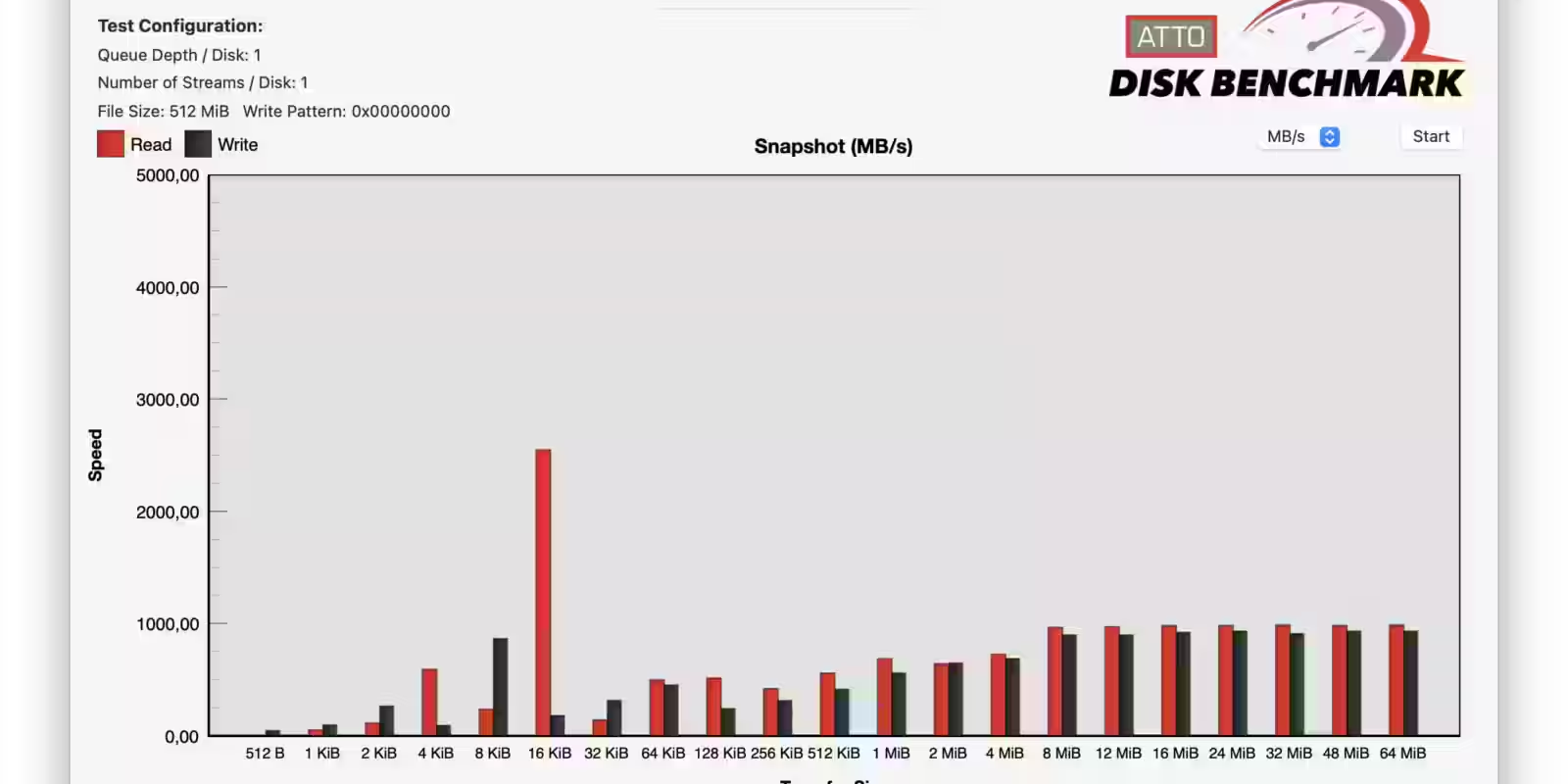
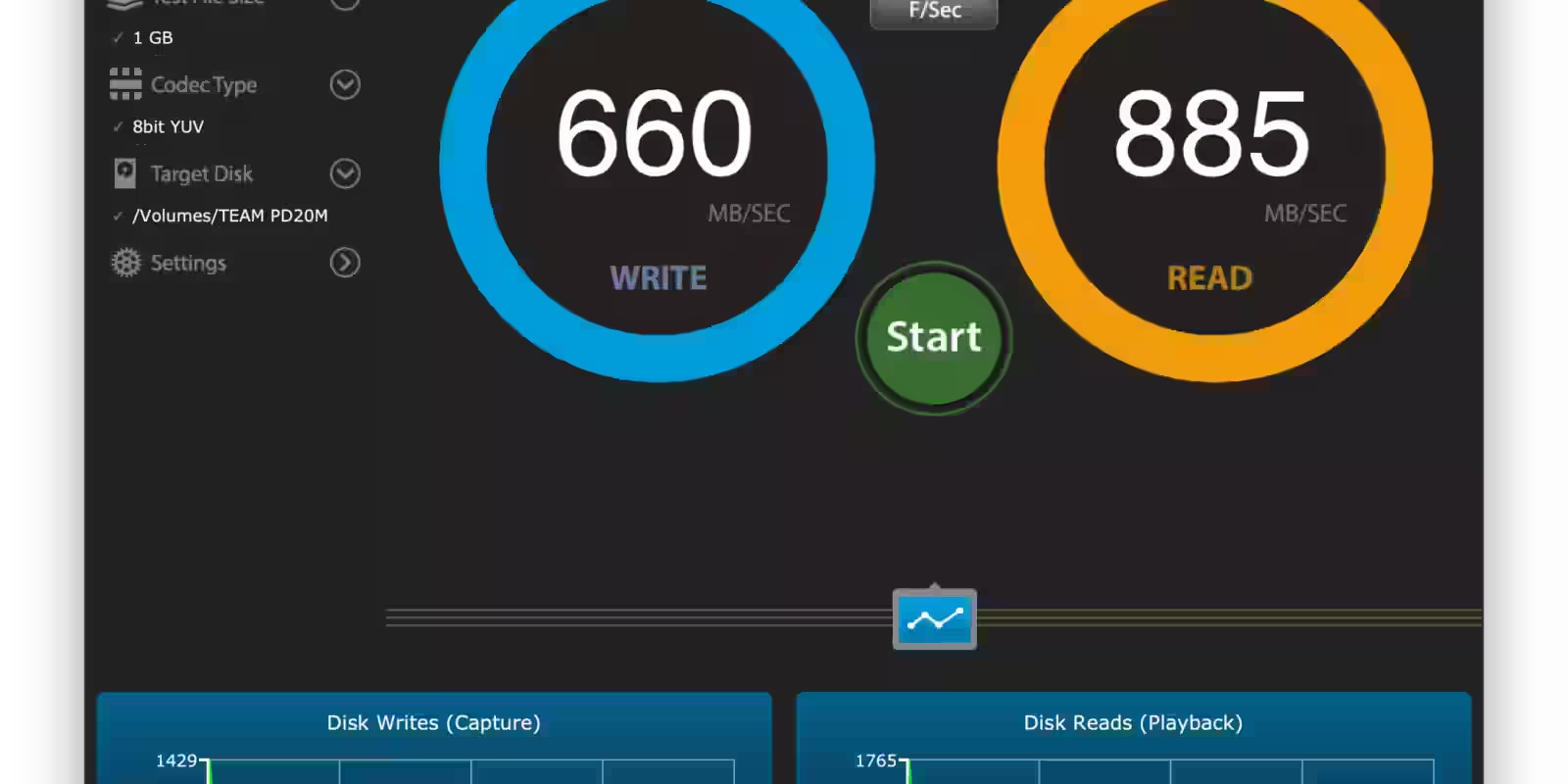
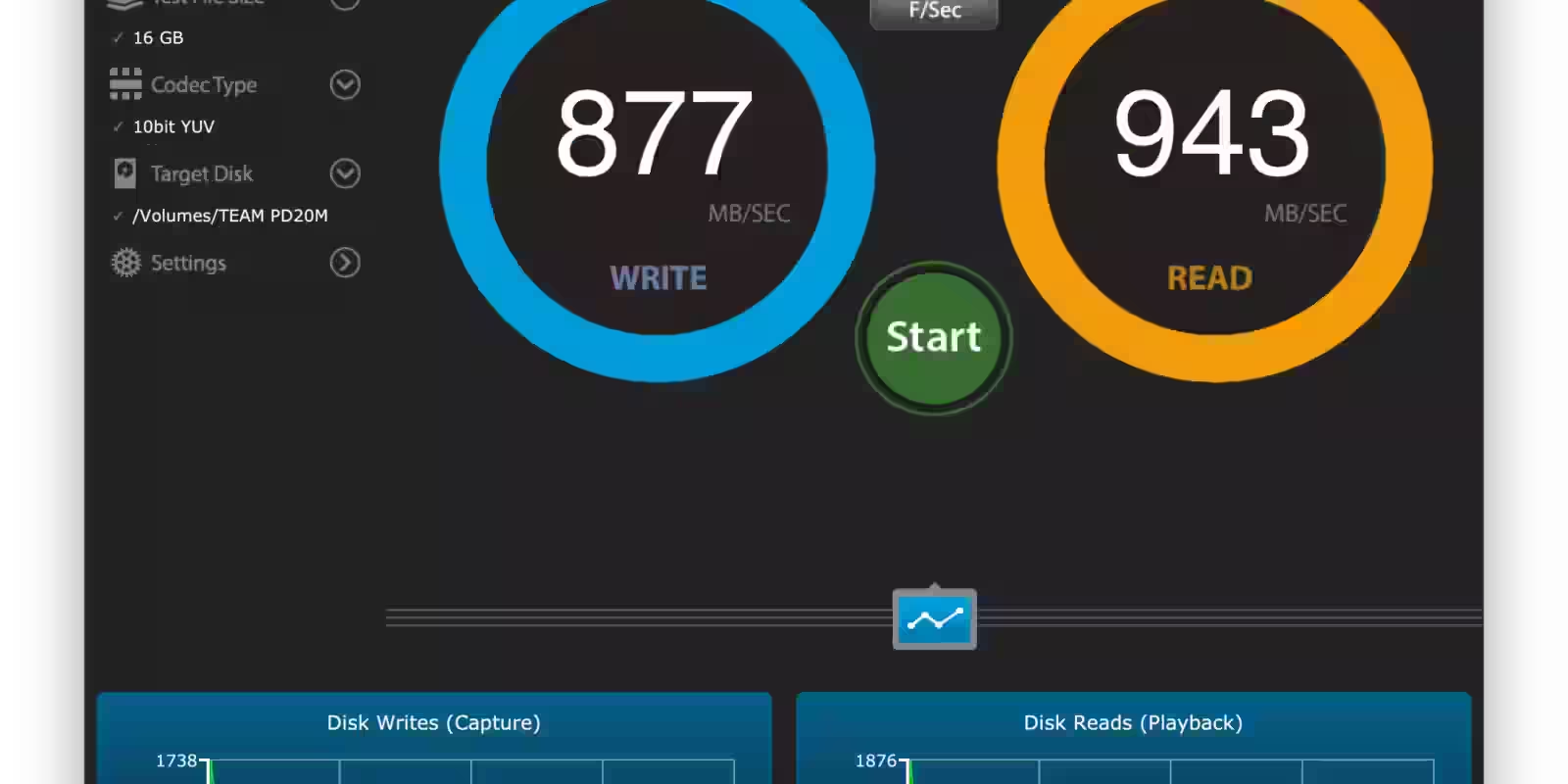
Synthetic benchmarks confirm its high class. ATTO Disk Benchmark and AJA System Test yielded solid numbers: read speeds around 0.8–0.9 GB/s and write speeds from 0.9 to 1.2 GB/s under optimal conditions. For instance, in AJA System Test simulating 8K video streaming, the drive hit roughly 943 MB/s read and 877 MB/s write.
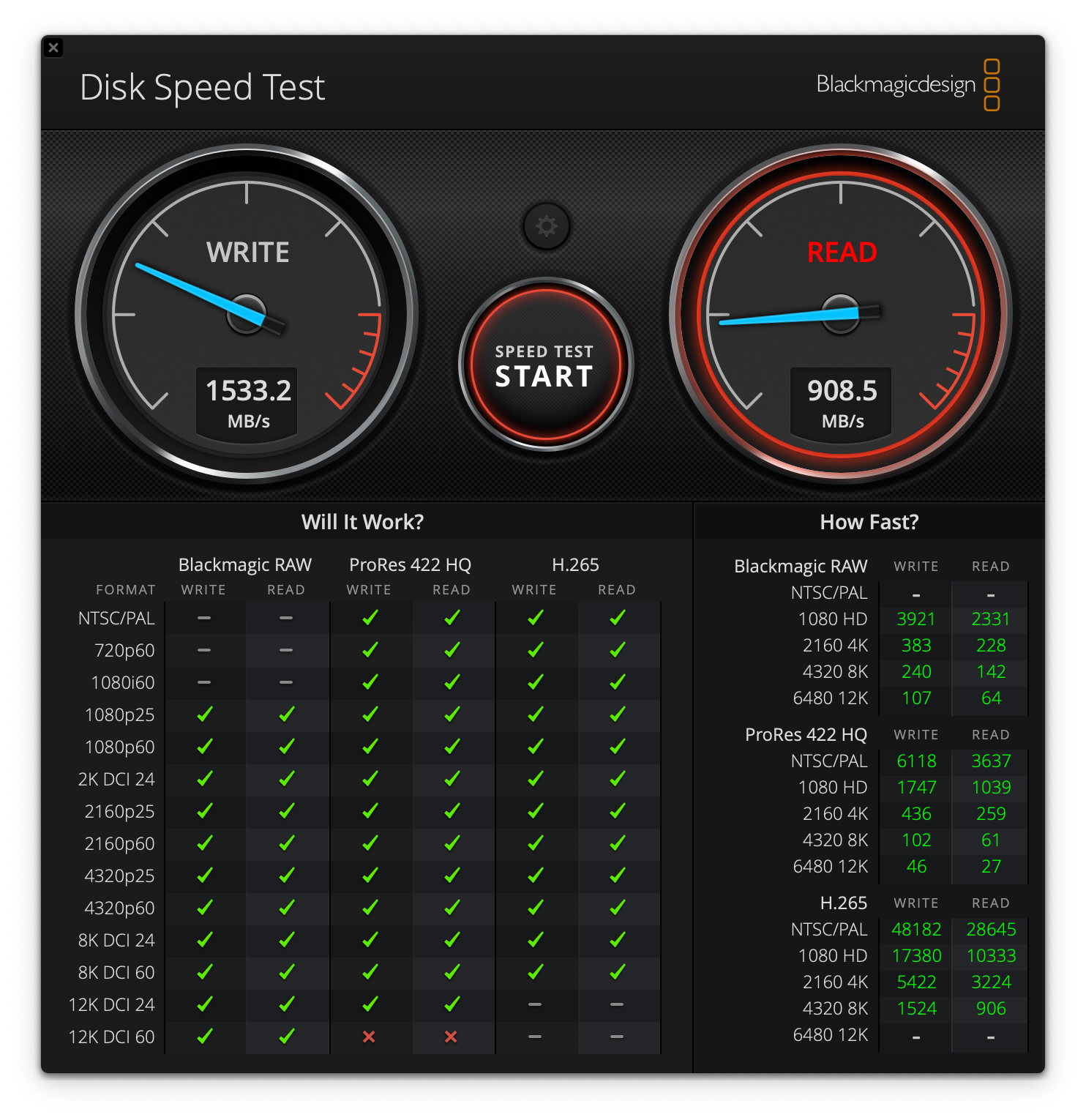
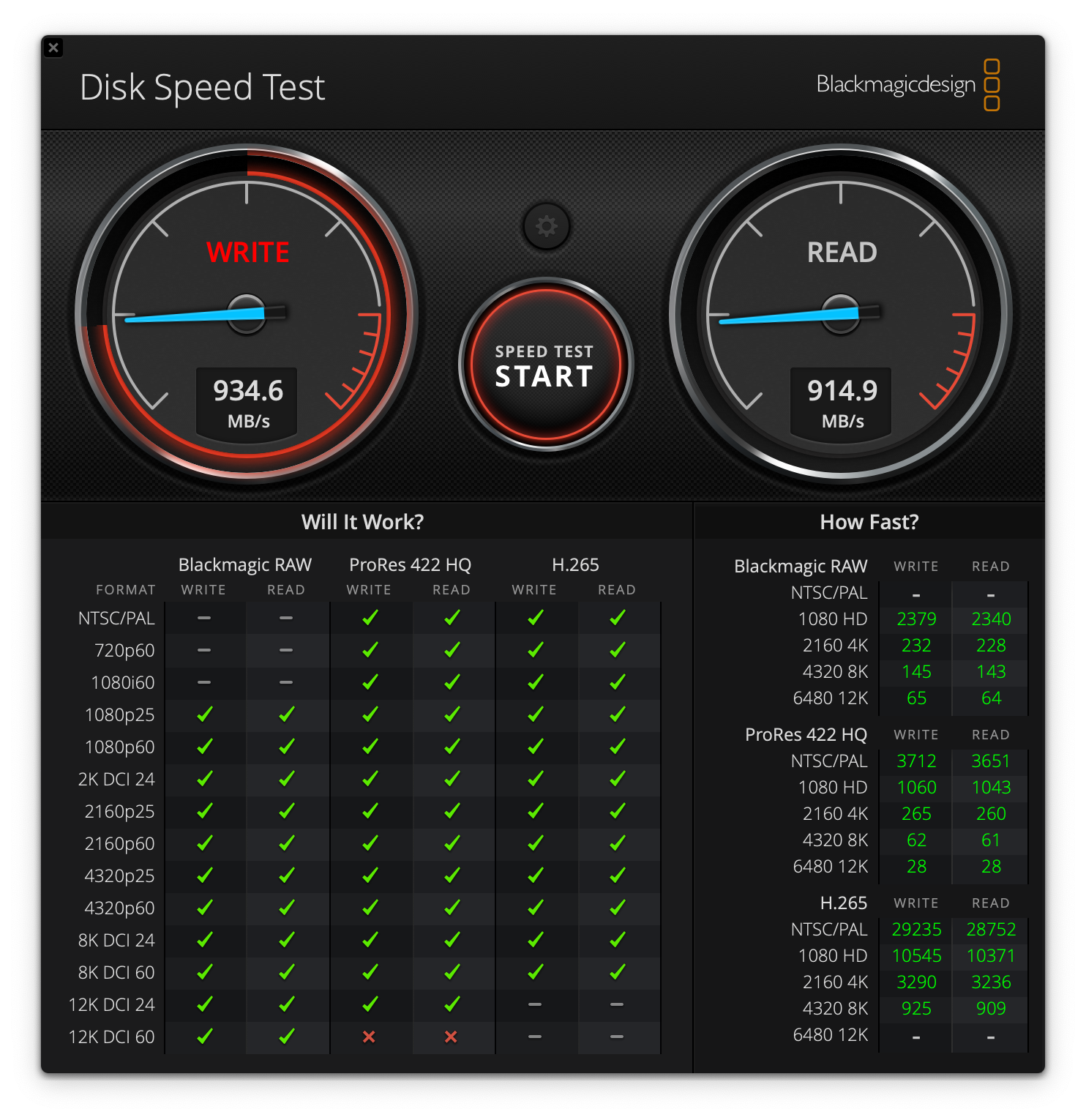
The Blackmagic Disk Speed Test (with a 5 GB file) often used for video editing workloads recorded about 1,533 MB/s write and 908 MB/s read. This is more than enough for professional formats up to ProRes 422 HQ 4K. So, for typical short bursts of activity, the PD20M matches top-tier SSDs. It also shows strong random access performance: tens of thousands of IOPS at 4K random (QD1) reads and writes. This means launching apps or games from the external SSD feels almost as snappy as an internal drive—no comparison to USB flash drives or HDDs, which slow down these tasks significantly.
The true test, however, is sustained workloads where cache limits and heat come into play. We ran a continuous 100 GB file write test. The 1 TB PD20M started strong at about 1.8 GB/s but after roughly 20–22 GB of writing, speeds dropped noticeably. That’s the SLC cache limit: once the pseudo-SLC buffer fills, the drive switches to direct QLC writes. Speeds fell to 300–400 MB/s and stayed near that level until the test ended. The average write speed over the entire large transfer was about 350 MB/s. That’s far below peak, but still 3–4 times faster than any HDD and roughly on par with a good SATA SSD. Thankfully, read speeds remained steady at 1–2 GB/s during prolonged sequential reads, limited only by the interface. The write slowdown applies only to sustained large writes in one go.
Regarding heat and throttling, the PD20M did warm up under load but never hit critical temps. The aluminum casing acts as a heat spreader; the hottest recorded temperature on the controller was around 68 °C during the long write test. That’s close to the thermal limit, but the drive maintained a stable 300+ MB/s write speed without further drops, indicating an acceptable thermal profile. Under typical tasks like copying a few gigabytes, gaming, or editing short videos, the drive stayed moderately warm (40–50 °C), which is normal.
Comparison with competitors
The external SSD market is competitive, so it’s important to see where TeamGroup PD20M Mag fits compared to rivals. It competes on two fronts: mainstream external SSDs (Samsung, SanDisk, Crucial, etc.) and niche solutions tailored for mobile shooting. Here’s a look at key contenders.

Samsung T7 / T7 Shield—arguably the most recognizable portable SSDs of the last generation, capped at about 1,050 MB/s due to USB 3.2 Gen 2 (10 Gbps) limits. TeamGroup PD20M doubles that if you have a Gen 2×2 port. Without Gen 2×2, though, real-world max speeds between the PD20M and T7 are similar (around 1,000 MB/s). That shifts focus to other factors: the PD20M boasts its unique magnetic mount, while Samsung T7 Shield offers IP65 water resistance and a rubberized casing rated to survive three-meter drops. So if you’re rough on gear or need ruggedness, Samsung’s Shield is more forgiving. PD20M is a slim, urban-focused alternative. Samsung is generally cheaper—T7 1 TB models can be found around $70, while the PD20M 1 TB has recently dropped to about $80–90. If you don’t need top-end ruggedness or MagSafe, Samsung might make more sense. Otherwise, the PD20M’s magnets and sleek profile are compelling.

Samsung T9—the latest generation launched in late 2023, supporting USB 3.2 Gen 2×2 and speeds up to 2,000 MB/s, making it a direct performance rival to the PD20M. It sports a plastic shell without rugged features, looking like a slightly larger T7. Its strengths lie in Samsung’s trusted components and software suite for encryption and firmware updates. Tests show the T9 maintains high sustained speeds better than the PD20M, likely due to pricier TLC NAND and a bigger cache. However, it launched with a steep $150 price tag for 1 TB—significantly higher than TeamGroup. Plus, it lacks any magnetic mounting. For iPhone videographers, the PD20M’s magnetic convenience wins. For laptop users wanting raw speed and brand trust, Samsung T9 may edge out on long-term stability.
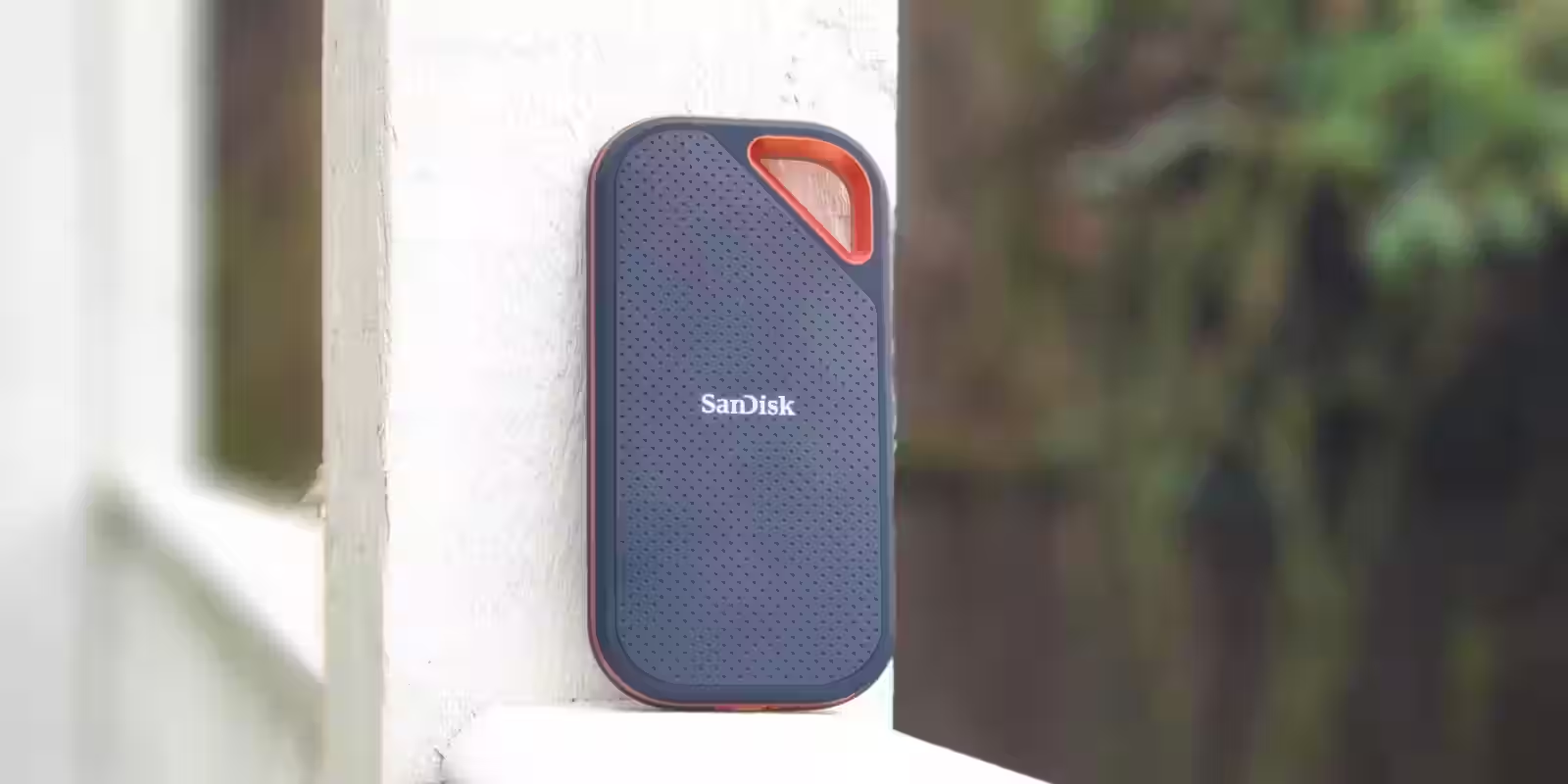
SanDisk Extreme Pro v2 and its sibling WD Black P50 are another set of recognized competitors. These 20 Gbps SSDs from Western Digital also promise ~2,000/2,000 MB/s speeds and come in rugged, rubberized IP55-rated cases that resist dust, water splashes, and survive drops from about 2 meters. They target photographers and videographers working outdoors. Against SanDisk, the PD20M is smaller and lighter (40 g vs. ~75 g). SanDisk models have faced heat and reliability issues, sparked by firmware-related failures reported in 2023. Though patched, the stigma remains, causing some pros to avoid them for critical tasks. Speed-wise, both drives are close, but SanDisk tends to maintain performance better when writing heavy loads, presumably thanks to a larger buffer that sustains ~1 GB/s writes longer before dropping. Pricewise, SanDisk is premium: expect around $130–140 for 1 TB, and near $200 for 2 TB—steeper than TeamGroup. So, PD20M offers better value but caters to a narrower niche. If you want ruggedness and don’t use an iPhone for recording, SanDisk or WD offers the usual safe bet. If you mostly work indoors or want quick phone attachment, TeamGroup is more appealing.
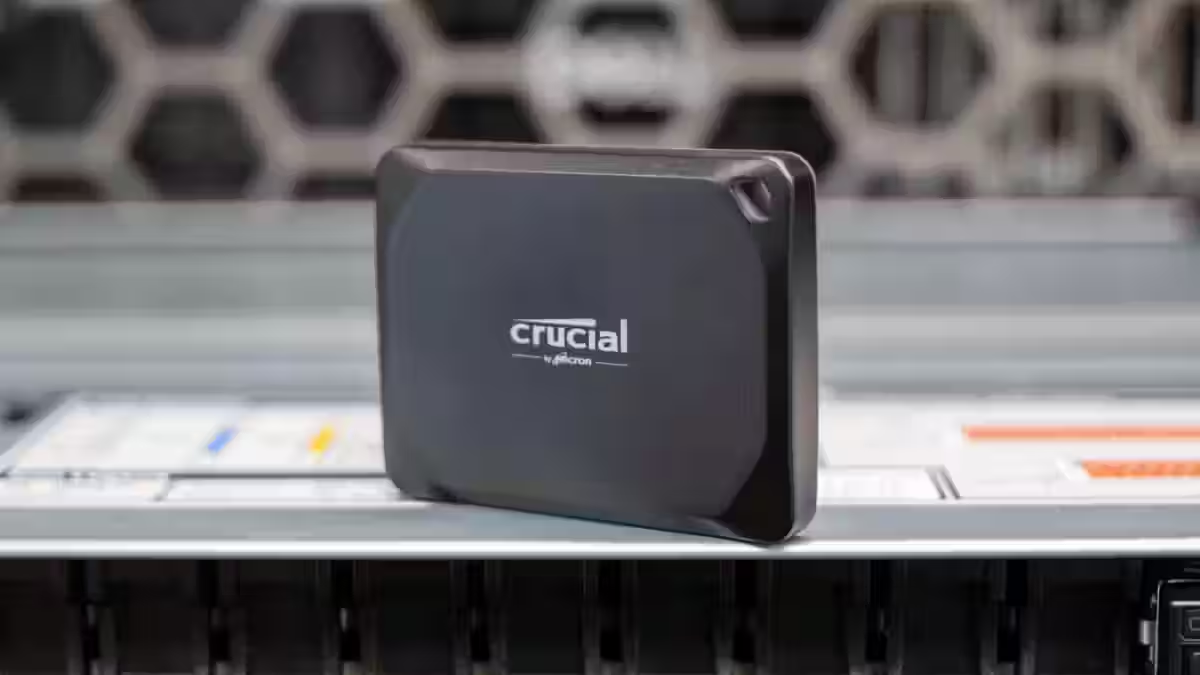
Crucial X10 Pro by Micron has earned positive reviews thanks to its stable high speeds and sturdy build. Offering up to 2,100 MB/s speeds, it also boasts IP55 dust and splash protection plus a shock-resistant case. Much larger than the PD20M (an 11 × 5 cm rectangular brick weighing 65 g), it’s less portable and lacks magnetic mounting. Crucial backs it with a 5-year warranty (vs. TeamGroup’s 3 years) and aims it at professionals. Our tests showed the X10 Pro only throttled speeds after around 100 GB of writes—indicating a much bigger cache. So for continuous large workloads, it outperforms the 1 TB PD20M. For shorter tasks, both are similarly fast. TeamGroup’s main win here is price: about $80 for 1 TB versus roughly $110 for Crucial, a significant 30% saving. Its magnetic attachment is unique, making the comparison even tougher. If you don’t need that feature and want a more robust drive that handles constant heavy use better, Crucial X10 Pro is the safer pick (albeit pricier).
Price and availability
TeamGroup PD20M Mag portable SSD launched in spring 2024 and by summer 2025 is widely available globally. The official launch MSRP was $129 for 1 TB and $199 for 2 TB models, but prices have since dropped significantly. Current retail prices are roughly:
- 1 TB: around $80–90 (about 7,000–8,000 Russian rubles at current rates)
- 2 TB: approximately $150–170 (roughly 13,000–15,000 rubles)
Prices vary by region and seller, but TeamGroup aims to stay price-competitive with more established brands. For example, the Crucial X10 Pro 1 TB hovers above $100, and the Samsung T9 clocks in near $130 for 1 TB, making PD20M an attractive value. In Russia, TeamGroup products can be found through DNS retail chains as well as on marketplaces like Ozon, Wildberries, and AliExpress—either on the official TeamGroup store or reliable electronics sellers.