US imposes duties on selected AI chips, including the Nvidia H200, shipped to China
 By ForGeeks
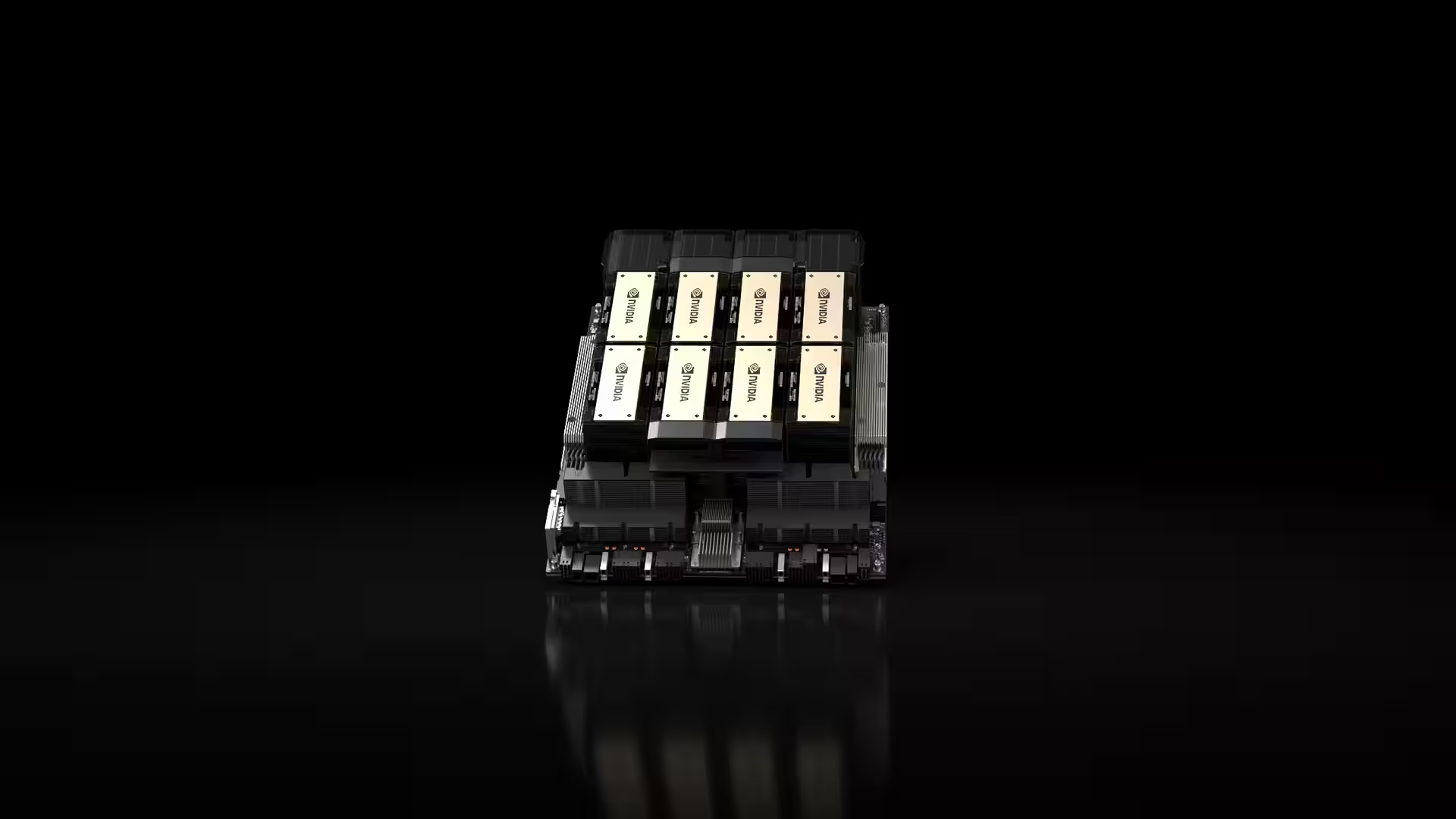
After months of rumors, Donald Trump’s administration has officially announced tariffs on some semiconductor products. We’re not talking about all chips, but just some categories, including Nvidia’s cutting-edge H200 AI gas pedals, which are slated to be shipped to China.
After rumors, the Trump administration has officially announced tariffs on some semiconductor products.
On Wednesday, U.S. President Donald Trump signed a proclamation imposing a 25 percent duty on advanced AI chips manufactured outside the U.S. that pass through U.S. territory before being exported to buyers in other countries. The measure affects products from Nvidia as well as other companies, including AMD with its MI325X gas pedals.
The measure also affects products from Nvidia, as well as other companies, including AMD with its MI325X gas pedals.
The move solidifies a key decision by the U.S. Commerce Department, which in December gave Nvidia permission to start shipping H200 chips to verified and approved customers in China. Despite the imposition of duties, Nvidia itself has reacted positively to the authorities’ decision, as it still allows the company to sell these gas pedals to select customers.
The move reinforces a key decision by the U.S. Department of Commerce, which in December gave Nvidia permission to start selling these gas pedals to selected customers.
Demand for H200 chips does exist. According to media reports, Nvidia was even considering ramping up their production due to the large number of pre-orders from Chinese companies. But demand — is only one factor. Just as important is the question of how the Chinese authorities will regulate the import of such semiconductors.
China today finds itself in a similar yet different situation to the US in the chip industry and the global race in artificial intelligence. The country is eager to develop its own semiconductor industry, but also doesn’t want to fall behind in technology while its domestic developments catch up with foreign competitors.
China’s semiconductor industry is similar to that of the U.S., but different from that of the U.S. and the global AI race.
According to Nikkei Asia, China’s central government is now drafting rules and guidelines that will determine how much semiconductors Chinese companies will be able to buy overseas. That could mean a partial easing of Beijing’s current tough stance on chip imports and open the way for Nvidia’s purchases.
It’s important to note that the new order does not apply to chips that are imported into the U.S. and used domestically for research, defense, or commercial purposes.
The text of the proclamation emphasizes that the U.S. currently only fully produces about 10% of the semiconductors needed by the nation’s economy. This dependence on foreign supply chains, according to the proclamation, poses a serious risk to both the economy and national security.