Samsung is preparing the most advanced OLED screens for the upcoming iPhone 18 Pro and iPhone Fold
 By ForGeeks
Samsung Display has been supplying Apple with OLED panels for years, and according to a new report, the South Korean company is working on the most technologically advanced OLED display in its history specifically for future iPhones. These screens are expected to get models like the iPhone 18 Pro, as well as the foldable iPhone.
The key innovation will be the use of an advanced LTPO+ OLED panel with oxide technology in the display driver. This solution improves the energy efficiency of the screen while maintaining support for adaptive refresh rates ranging from 1Hz to 120Hz. As a result, future iPhones will be able to use less power without sacrificing image smoothness.
Another important feature of the new panels will be support for placing an infrared camera below the display. This is directly related to the Face ID system. In current iPhones, all Face ID components — infrared camera, laser dot projector and infrared illumination — are located in the Dynamic Island cutout (and previously — in «the bangs»).
If Apple does introduce LTPO+ displays in the iPhone 18 Pro and foldable iPhone, the company will be able to move some or all of the Face ID sensors under the screen. That would noticeably reduce Dynamic Island in future Pro models or potentially do away with it altogether.
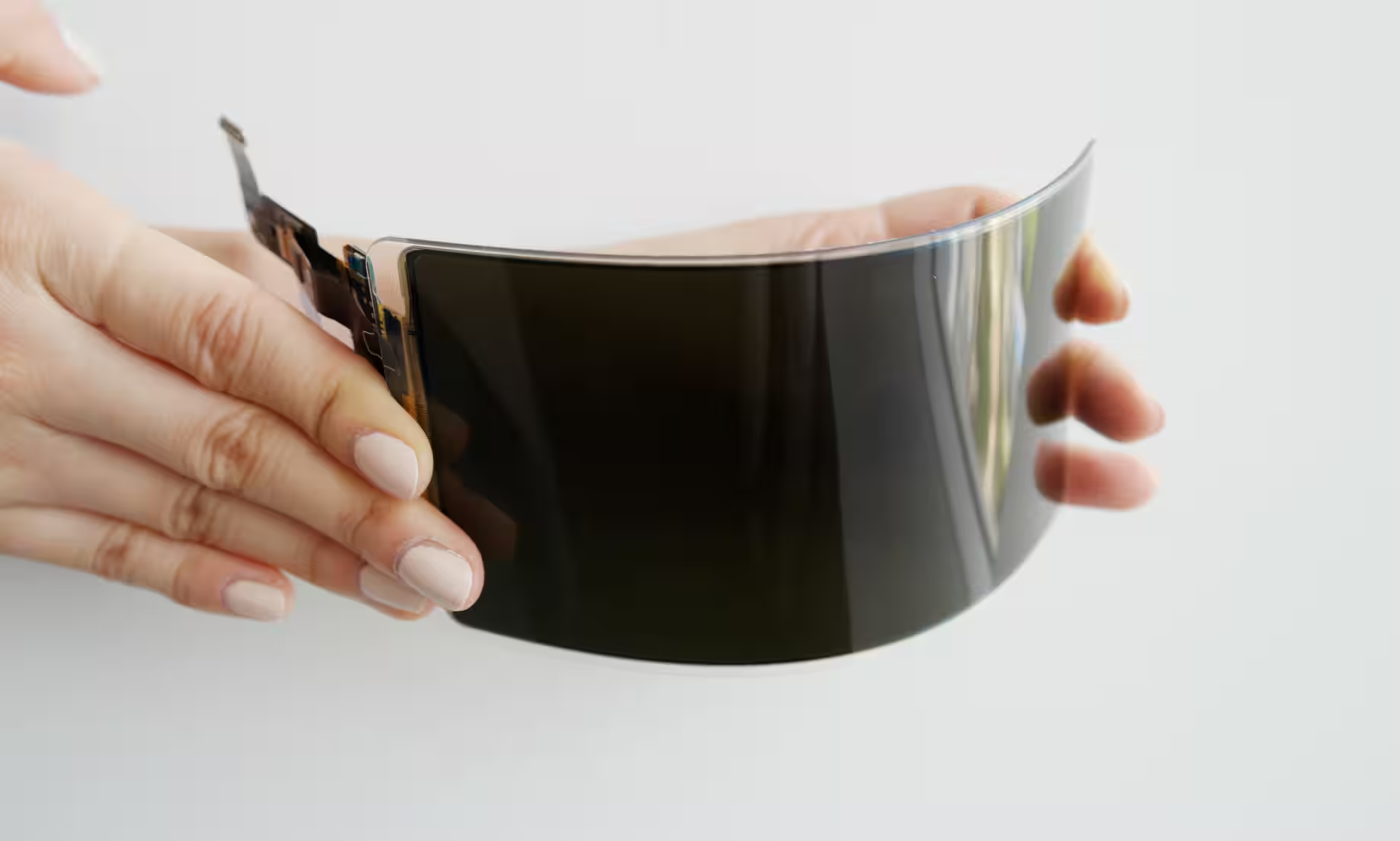
The report also confirms earlier rumors that Samsung Display is developing a virtually invisible fold for the foldable iPhone. If this can be realized in mass production, Apple could avoid one of the major problems with today’s foldable smartphones — a visible crease in the center of the screen.
The report also confirms that Samsung Display is developing a virtually invisible crease for the foldable iPhone.
In parallel, Apple continues to diversify its supply chain and is partnering with other display manufacturers, including China’s BOE. However, despite these efforts, Samsung Display and LG Display still lead the OLED segment thanks to their combination of high quality and scalable manufacturing. For this reason, BOE is apparently excluded for now from supplying OLED panels for the Pro versions of the iPhone.
Interestingly, Samsung is already actively using LTPO-OLED displays in its Galaxy S and Galaxy Z lines, but has yet to introduce LTPO+ in its own smartphones. The technology is expected to appear in Galaxy devices in the future, bringing them closer to the iPhone in terms of screen energy efficiency.