Intel officially enters the AI processor race
 By Anna Brooks
Intel CEO Pat Gelsinger announced at Cisco’s AI Summit that the company is launching production of specialized graphics processing units (GPUs), marking a major push to compete in the AI accelerator market.
The new dedicated division will be led by Keyvan Esfarjani, Intel’s executive vice president of data center group, who joined the company in September 2025 as part of a strategic talent overhaul aimed at bringing in engineers with specialized chip expertise. In January, Eric Demers, former senior VP of Qualcomm with over 13 years at the company, also joined the team. Gelsinger emphasized that this project is still in its early stages, with the final architecture to be shaped closely alongside key customers.
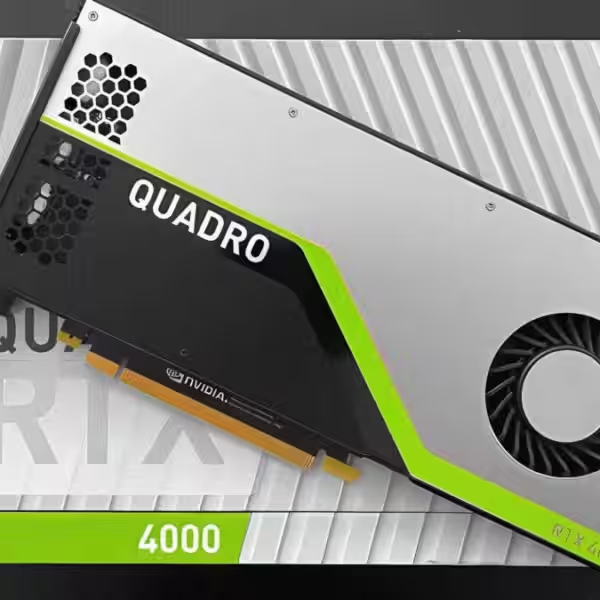
While NVIDIA didn’t invent the GPU, its relentless strategy of adapting graphics processors for AI workloads has vaulted the company to dominant market positions and a valuation exceeding $3 trillion. Intel, grappling with declining server CPU market share and delays in rolling out new process technologies, is now looking to replicate that winning formula. The focus is on flexibility and catering to the demands of major clients like cloud providers and AI system developers.
Industry experts note Intel faces several critical hurdles: it must deliver not just a competitive chip in terms of raw performance, but also build a comprehensive software ecosystem akin to NVIDIA’s CUDA; guarantee sufficient production capacity at its own fabs; and offer pricing attractive enough to win over customers. The company expects its first products to hit the market no earlier than 2027-2028. Meanwhile, NVIDIA continues to fortify its lead with the unveiling of its Blackwell Ultra architecture, while AMD and emerging Chinese players like Biren and Moore Threads intensify their efforts in this arena. For Intel, this move is more than just portfolio expansion-it’s about long-term survival in a landscape where demand for traditional CPUs grows far slower than that for specialized AI accelerators.