ChatGPT, Alice and DeepSeek lead among users under 35 years old
 By Arthur Berg
A study by Anketolog found that the choice of neural networks is directly related to the age of the user. Younger audiences are more likely to favor foreign and universal AI services, while older groups choose Russian solutions.
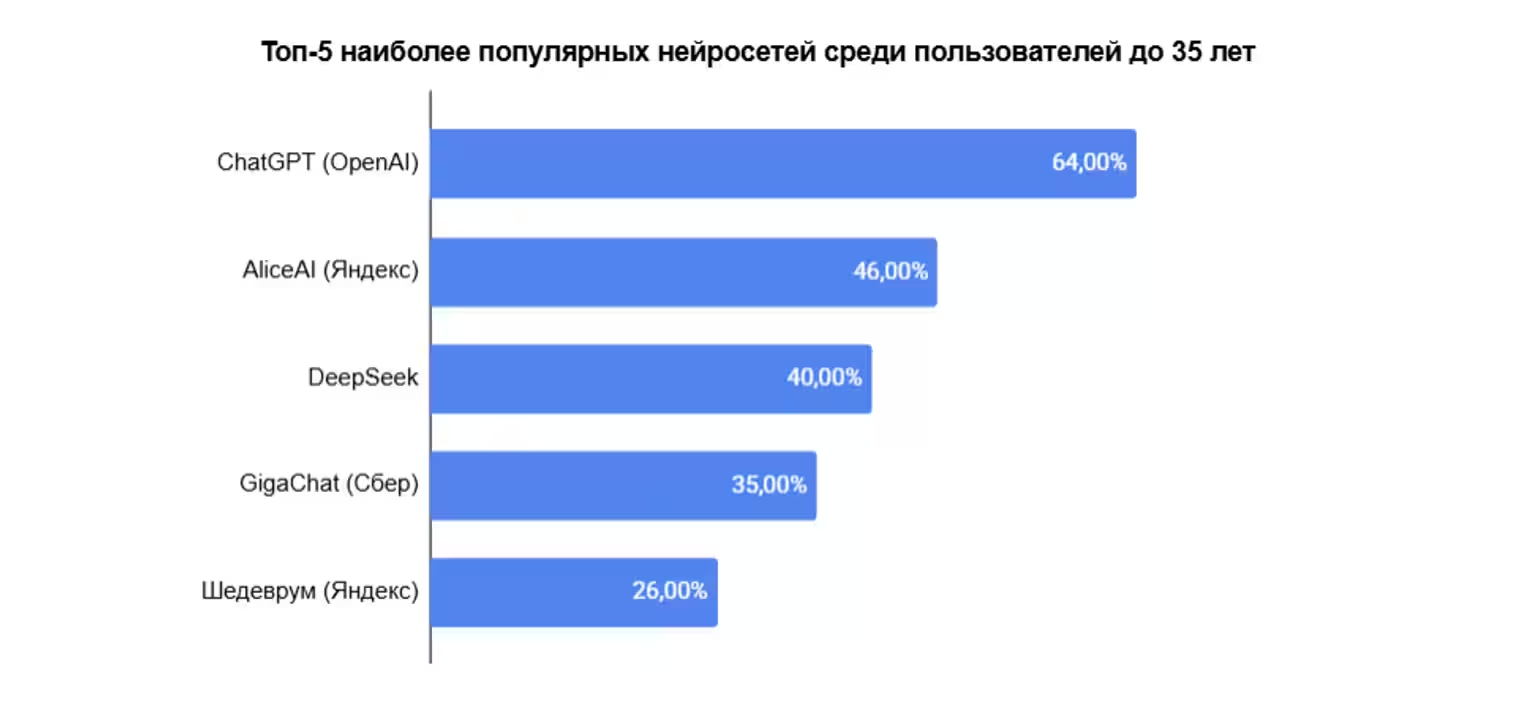
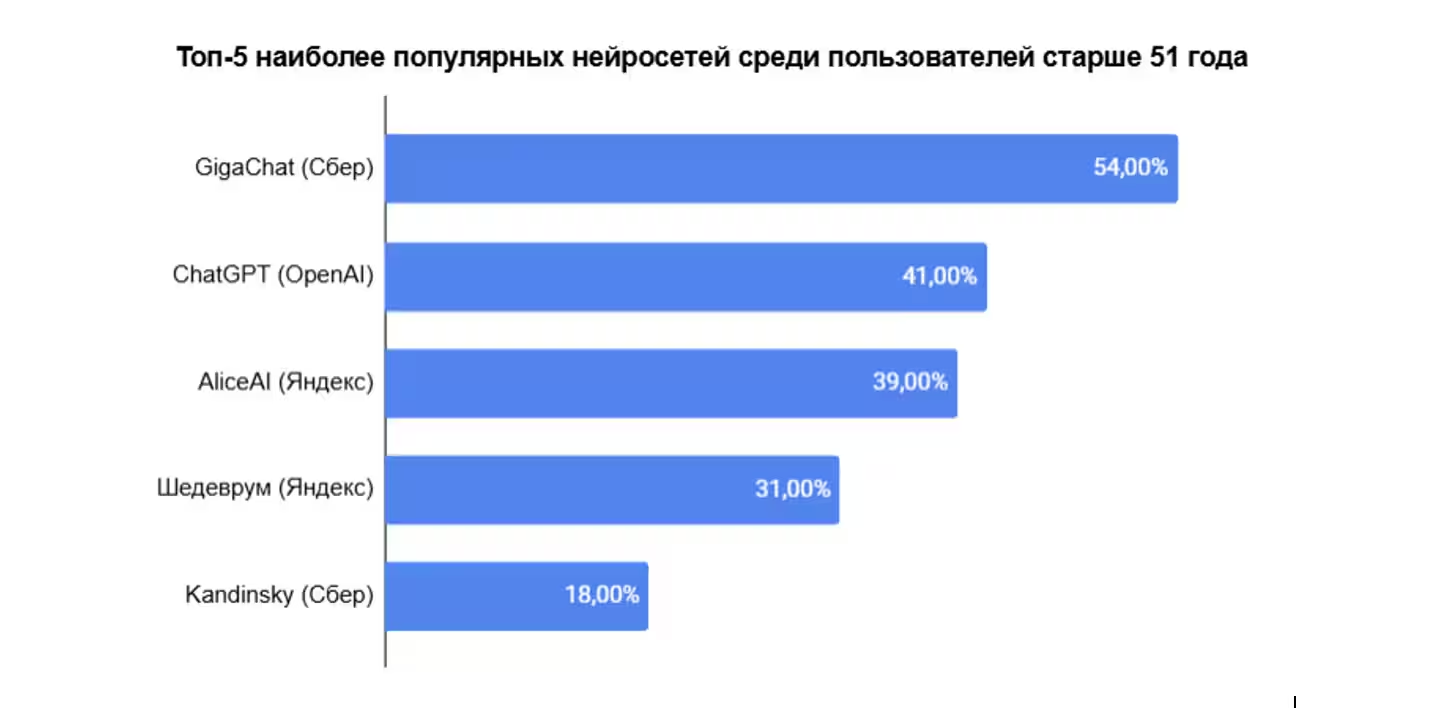
According to the survey results, ChatGPT, Alice AI and DeepSeek are the most popular among respondents under 35. ChatGPT is used by 64% of this age group, Alice AI by 46%, and DeepSeek by 40%. At the same time, users over the age of 51 are much more likely to use GigaChat – 54% of respondents in this category prefer this service.
Age affects AI usage scenarios
Analysts note that age determines not only the choice of a particular neural network, but also the tasks users entrust to it.
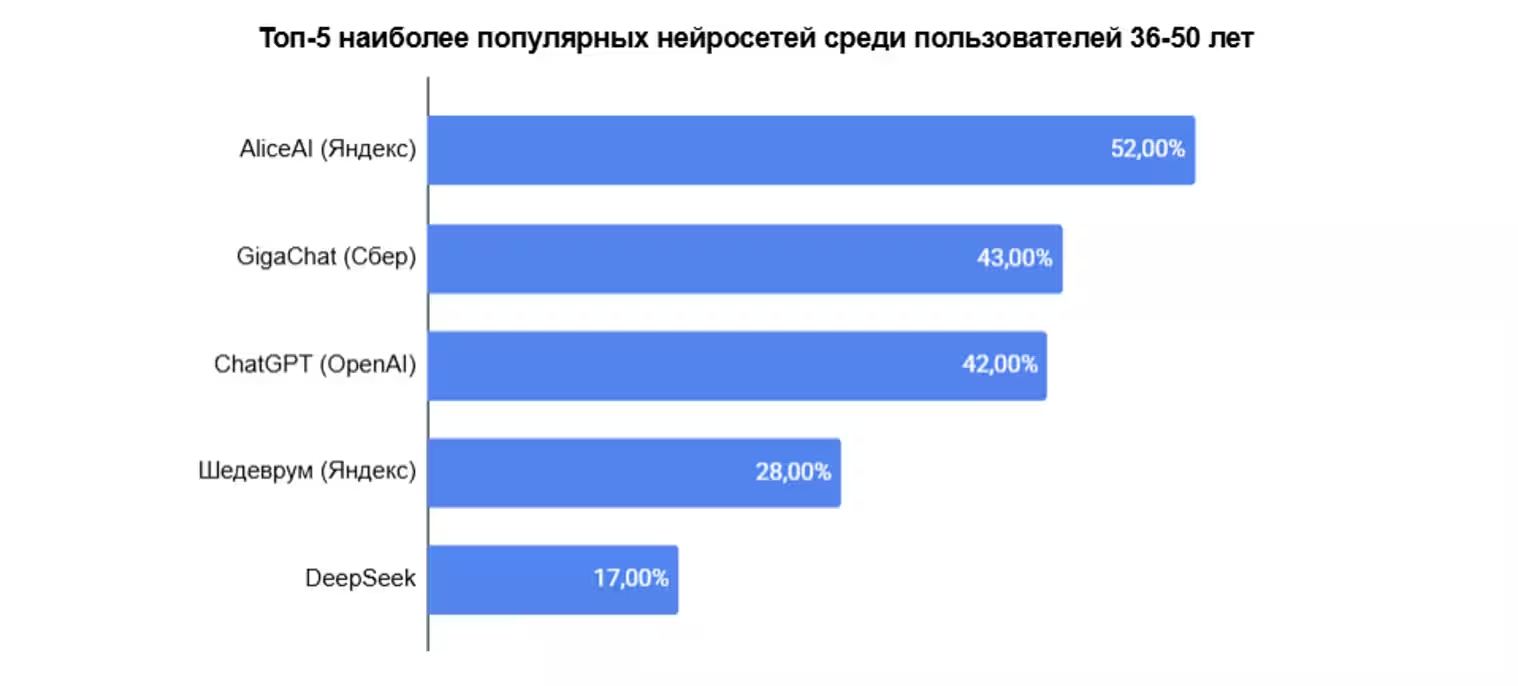
Adolescents under 18 are the most likely to use AI for self-development purposes – for motivation, recommendations, and personal advice. That’s what 34% of respondents in this group said. Users between the ages of 18 and 24 are more likely to use neural networks for recipe and menu planning, with 33% choosing this scenario.
Respondents between the ages of 25 and 35 are leading the way in using AI to create personal content, with 34% of respondents generating texts, ideas and other materials with the help of neural networks. Users over 50 years old are significantly more likely than others to use AI to find information and answer questions, with 65% of survey respondents choosing this option.
Personal tasks remain top priority
In general, most users use neural networks primarily for personal purposes. This was reported by 41% of respondents. Thirty-six percent of respondents reported using AI exclusively for work or study, while another 23% said they use neural networks equally for personal and professional tasks.
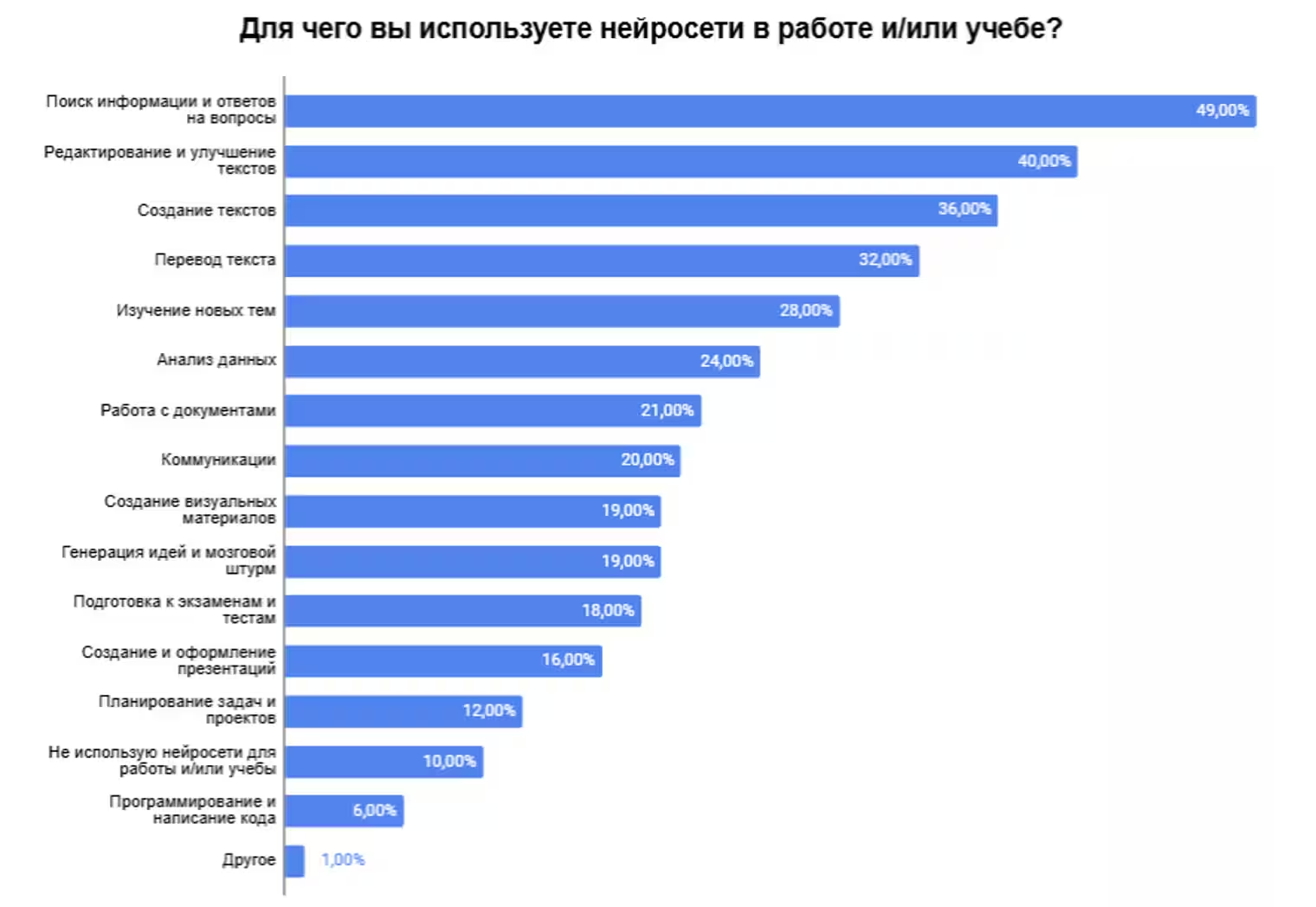
How neural networks are being used in work and learning
The most popular work and learning scenario is learning new topics, with 28% of respondents choosing this option. Data analysis with AI is used by 24% of respondents, and document management by 21%.
The most popular scenario among work and learning scenarios is learning new topics, chosen by 28% of respondents.
20% of users use neural networks for communication tasks, including preparing responses and correspondence. Creating visual materials is used by 19%. About the same proportion of respondents use AI for idea generation and brainstorming, as well as for preparing for exams and tests – 19% and 18%, respectively. Writing program code remains the least popular scenario, chosen by only 6% of survey participants.
AI as a tool for everyday life and entertainment
For personal use and entertainment, neural networks are most often used to create content for social media – posts, captions and ideas. This option was cited by 26% of respondents. Self-development support, including motivation and advice, is used by 23%, and the same number turn to AI for recipes and menu planning.
Neural networks are most often used to create content for social media, such as posts, captions and ideas.
Help with repairs and household issues, such as finding instructions and advice, was cited by 20% of users.
Frequency of use and experience with AI
The survey showed a high level of audience engagement. 77% of users turn to neural networks at least once a week. More than 70% of respondents have been using AI services for more than six months, and almost every third respondent – 31% – has been using them for more than a year.
Why Choose Russian Neural Networks
The key advantages of Russian neural networks include a more accurate understanding of the Russian language, free access or lower cost compared to foreign analogs, as well as ease of registration and quick start without complicated restrictions.
Russian neural networks are among the key advantages of Russian neural networks.
Research Methodology
The survey was conducted between October 20 and October 24 using Anketolog’s online panel. 500 neural network users participated in the study. The sample was formed according to the quota principle: 100 respondents in each age group – under 18 years old, 18 to 24 years old, 25 to 35 years old, 36 to 50 years old, and over 50 years old.