Google launches personal intelligence feature for Gemini
 By ForGeeks
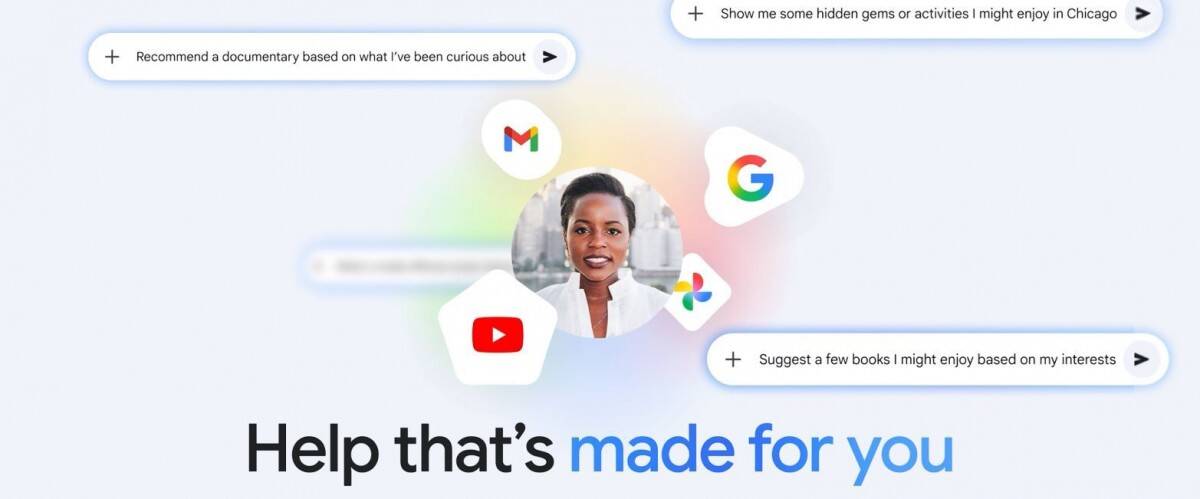
Google has unveiled a new Personal Intelligence feature for the Gemini assistant. It works on the principle of voluntary connectivity: it’s up to the user to decide whether or not to enable it. Once activated, the feature securely links data from Google services like Gmail, YouTube, Google Search, and Google Photos so that Gemini can use that information in conversations with the user. Personal Intelligence will become available to Google AI Pro and AI Ultra subscribers in the US within the next week. The feature works in the web version as well as on Android and iOS.
Users in the US can check the availability of Personal Intelligence in the app or on Gemini’s website by going to Settings > Personal Intelligence. There, you can also choose which Google apps will be connected to the assistant.
The main benefit of Personal Intelligence — the ability to find specific details in a user’s personal data, such as emails or photos, and use them to answer questions. The feature works with text, images and video to provide, in Google’s words, «uniquely personalized answers».
After Personal Intelligence is turned on, Gemini accesses the user’s data to fulfill queries and help with tasks. Google emphasizes that all information is already stored securely in the company’s ecosystem, so the user doesn’t have to share sensitive data with third-party services to personalize it.
All information is already stored in the company’s ecosystem, so the user doesn’t have to share sensitive data with third-party services for personalization.
If you want, you can use temporary chat rooms where you can communicate with Gemini without personalization. Google also says the assistant tries not to make proactive conclusions based on sensitive data such as health, although it is willing to discuss such topics if the user requests it.
The company separately emphasizes that Gemini does not train directly on the contents of a Gmail inbox or Google Photos library. It only learns from limited information, such as individual user requests to Gemini and model responses, to improve the service’s performance over time.