NASA and Roscosmos cosmonauts arrived at the ISS
 By ForGeeks
The Soyuz MS-28 spacecraft carrying NASA astronaut Chris Williams and Roscosmos cosmonauts Sergei Kud-Sverchkov and Sergei Mikaev has arrived at the International Space Station. In the next two weeks, 10 people will work in orbit at once.
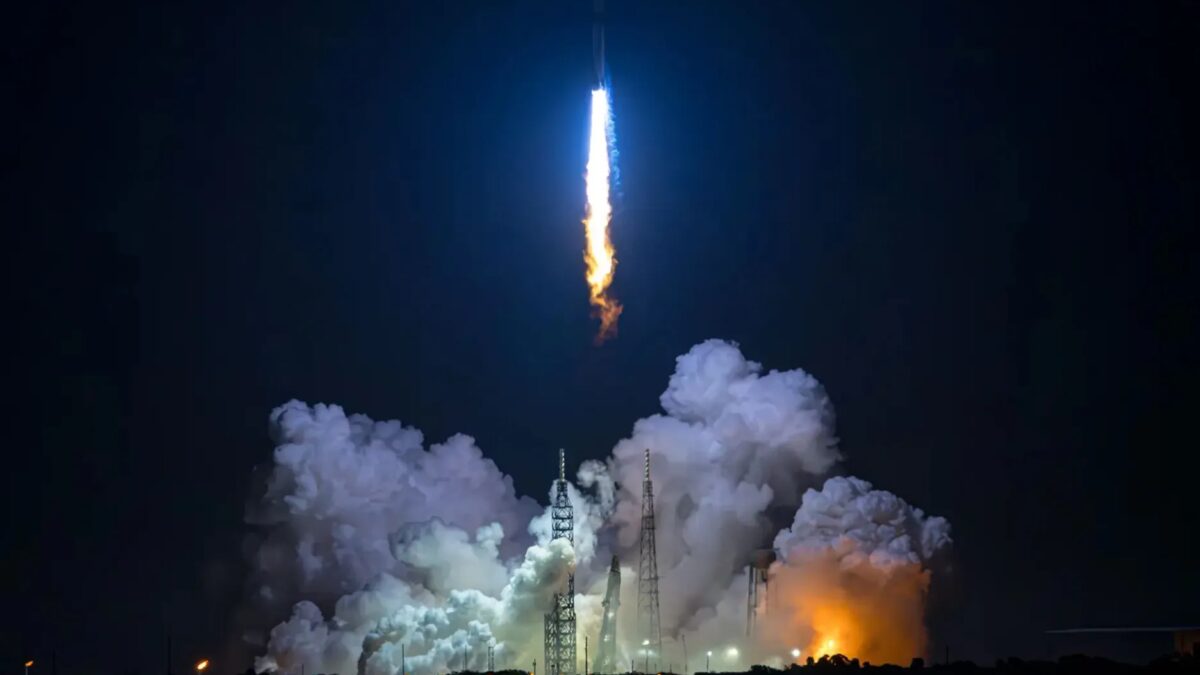
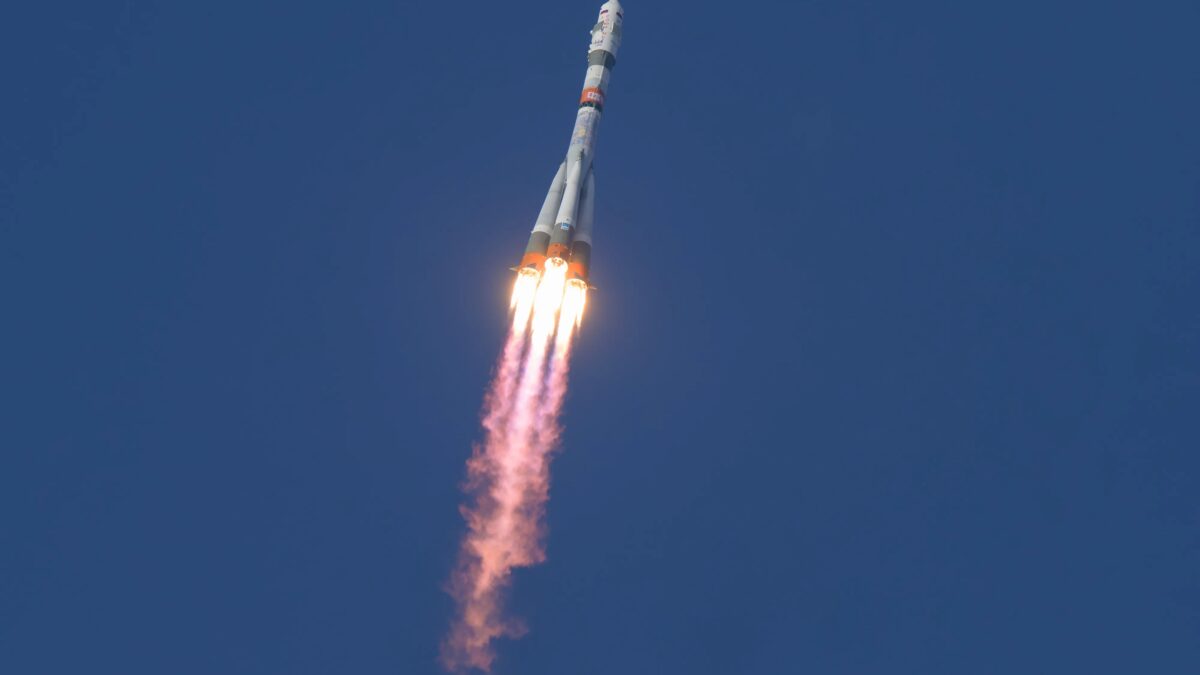
The crew launched from the Baikonur Cosmodrome in Kazakhstan at 4:27 a.m. U.S. Eastern Time (2:27 a.m. Baikonur time). After a three-hour flight and two revolutions around the Earth, the Soyuz MS-28 docked with the Rassvet module of the Russian segment of the ISS at 7:34 a.m. Thus, three more crew members were added to the current crew of the station for a limited period.
The Soyuz MS-28 crew has expanded the ISS to ten people
The hatches are expected to open at about 10:10 a.m. After that, Chris Williams, Sergei Kud-Sverchkov and Sergei Mikayev will move to the station and join the main shift.
The crew of Expedition 73: NASA astronauts Mike Fink, Zena Cardman and Johnny Kim, JAXA (Japan Aerospace Exploration Agency) astronaut Kimiya Yui, and Roscosmos cosmonauts Sergei Ryzhikov, Alexei Zubritsky and Oleg Platonov will meet them in orbit.
The crew will be joined by NASA astronauts Mike Fink, Zena Cardman and Johnny Kim, JAXA astronaut Kimiya Yui, and Roscosmos cosmonauts Sergei Ryzhikov, Alexei Zubritsky and Oleg Platonov.
This means that for the next two weeks, ten people will be working aboard the station at once – allowing for more scientific experiments and engineering work to be done at the same time.
NASA is broadcasting the docking and crew entry live via NASA+, Amazon Prime and YouTube. The hatch-opening broadcast is scheduled to begin at 9:50 a.m. The agency separately reminds that its content can be watched on a variety of platforms, including social media.
Some of the content can be viewed on a variety of platforms, including social media.
What Chris Williams will be doing on a mission to the ISS
While on the station, Chris Williams will be engaged in scientific research and technology demonstrations. These experiments are aimed at advancing manned space science and producing applications for use on Earth.
At the end of the mission, Chris Williams will be involved in scientific research and technology demonstrations.
In particular, the astronaut will help install and test a new modular exercise machine for long-duration missions. Such an exercise facility is important to keep the crew healthy in weightlessness, especially in preparation for long-duration missions beyond Earth orbit.
The astronaut will help install and test a new modular simulator for long-duration missions.
Williams will also be involved in experiments to improve the efficiency of cryogenic propellant utilization, which is critical for future rocket and space systems. A separate area is the growth of semiconductor crystals in microgravity, where the absence of convection and particle settling allows for better structures.
Williams will also be involved in experiments to improve the efficiency of cryogenic propellants, which is critical for future rocket and space systems.
Another goal of the mission is to help NASA develop new safety protocols during re-entry. It is about improving procedures and algorithms to protect crews during re-entry in future missions.
Transition to Expedition 74 and transfer of station command
The changeover of the long-term expedition is scheduled for Monday, Dec. On that day, Johnny Kim, Sergei Ryzhikov and Alexei Zubritsky will leave the station, ending an eight-month science mission in orbit. After they leave, Expedition 74 will officially begin.
Ahead of that event, a traditional change-of-command ceremony is planned. On Sunday, Dec. 7, at 10:25 a.m. ET, station leadership will be officially transferred from Sergei Ryzhikov to Mike Fink. The ceremony will also be broadcast live on NASA+.
The arrival of the Soyuz MS-28 crew coincides with several milestones in the station’s life: the short-term expansion of the crew to ten people, the end of the current long-term mission and the start of Expedition 74.