Astronomers discover lava tsunamis on a distant exoplanet
 By Anna Brooks
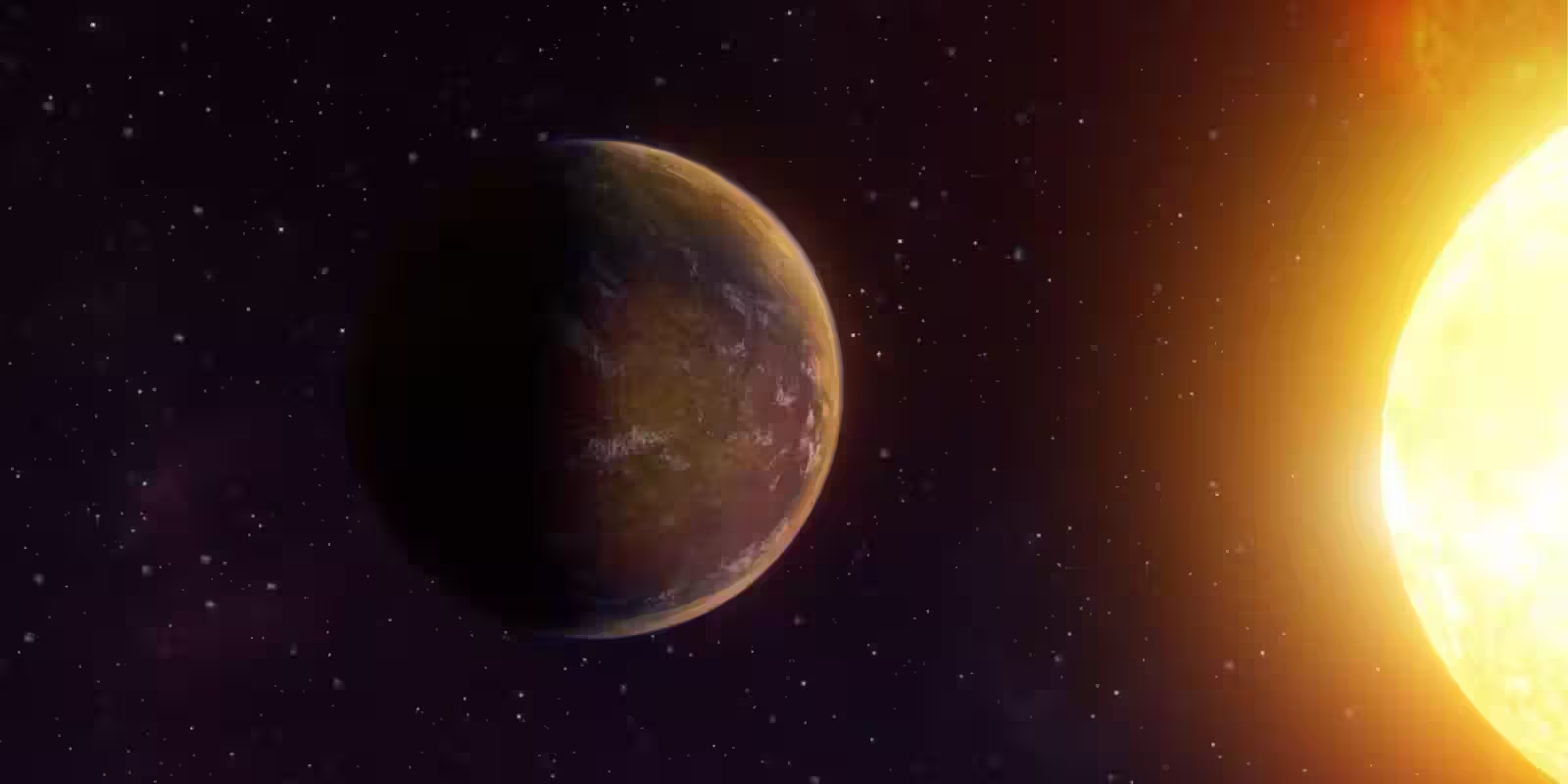
Recently, astronomers ran simulations of conditions on an exoplanet orbiting extremely close to its star and concluded that its surface could experience lava tsunamis. This phenomenon is driven by the planet’s extreme proximity to its parent star.
The search for exoplanets has been one of the most exciting areas in astronomy for years. Over time, scientists have made numerous discoveries, including planets somewhat similar to Earth. But this case involves a so-called super-Earth, with conditions radically different from anything in our Solar System.
The discovery is detailed in a study published on arXiv by researchers Mohammad Farhat and Eugene Chang. They studied the exoplanet 55 Cancri Ae, located about 40 light-years from Earth. This planet orbits the yellow dwarf 55 Cancri A so closely that it completes a full revolution in just 18 hours. As a result, surface temperatures reach an estimated 2000 degrees Celsius.
Calculations showed that under these extreme conditions, the planet’s surface consists of a vast ocean of molten lava, where tsunamis form. These lava waves can reach heights of several meters and move at impressive speeds. Unlike Earth, where tidal forces come from the gravity of a moon, tides on 55 Cancri Ae are caused by the intense gravitational pull of the star itself. This leads to the formation of a lava ocean and extreme surface dynamics.
Findings like this vividly illustrate the incredible diversity of worlds out there in the universe and help scientists better understand the physics beyond our Solar System. As observation and modeling techniques advance, we can expect many more remarkable discoveries in the years ahead.