Ryzen 5800X3D experiences a second birth: AM4 platform remains relevant
 By ForGeeks
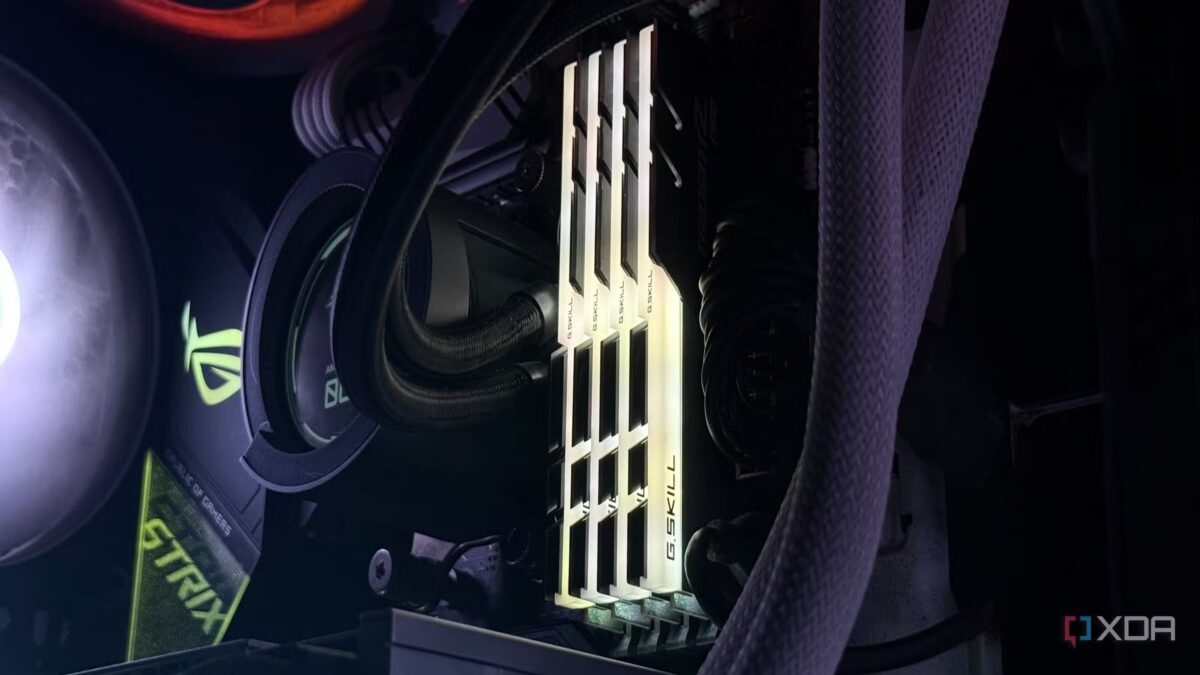
Almost a decade after the release of the AM4 socket, the platform remains relevant not only in performance tests, but also in sales. The Ryzen 7 5800X3D, considered by many to be the best gaming processor of all time, continued to sell out strongly over the holiday sales period, and there are more than enough reasons to do so. It’s the best processor for gaming in a DDR4 platform, and as RAM has become prohibitively expensive for new builds and upgrades, many gamers have turned to the older platform to save money.
- 5800X3D leads in sales among all AM5 processors during the holidays
- DDR4 shows age in niche high-speed applications
- The high cost of DDR5 and new platforms pushes users to AM4 upgrades
Solution for gamers looking to save money
The5800X3D leads in sales not because it’s secretly underpriced. It sells the best because it solves the problem that gamers actually face: upgrading the CPU in an existing system. Most people don’t build computers from scratch. They’re running perfectly capable AM4 systems with Ryzen 5 3600, 3700X, 5600X or something similar, and they need the extra frames without the cost of buying a new CPU, RAM and a whole new platform.
They’re using a perfectly capable AM4 system with Ryzen 5 3600, 3700X, 5600X or something similar, and they need the extra frames without the cost of buying a new CPU, RAM and a whole new platform.
The 5800X3D is the most direct answer to that desire. It fits into a huge number of motherboards with a simple BIOS update, works with a user’s existing DDR4 memory, and brings a tangible performance boost to gaming. Despite its fairly high aftermarket price, it looks like the smartest choice for those looking for a direct CPU replacement without replacing the entire system.
And it’s the smartest choice for those looking for a direct CPU replacement without replacing the entire system.
DDR5 is indeed faster, but the price is steep
On paper, DDR5 has much higher bandwidth than DDR4 and modern kits like DDR5-6000 or DDR5-7200 can deliver high frequency gaming loads much better than the classic DDR4-3200 and DDR4-3600 that most AM4 owners use. In some CPU-bound titles at 1080p resolution, this advantage is clearly evident, and DDR5 can be ahead by tens of percent depending on the memory configuration and game engine. However, as resolution increases, these advantages disappear quite quickly. It all depends on what games you play and how limited you are by the GPU.

Modern games demand more from RAM
Modern games are increasingly approaching GPU video memory limits with textures that are constantly growing in size and the number of entities that need to be loaded into video memory. When a game runs out of video memory on your GPU, it starts putting resources into system memory, putting a strain on the PCIe bus to move data back and forth. This is when classic FPS sags due to lack of video memory occur, where the average FPS looks acceptable, but the 1% lows become unplayable.
Even if you have enough system memory, its speed matters. Systems on DDR5 will handle this more gracefully than systems still running on DDR4. Also, if you’re still on DDR4, you probably have a graphics card with less than 10GB of video memory, which means you’ll start running into memory limits more often as games become more demanding.
For most gamers, DDR4 is enough
In the vast majority of scenarios, your DDR4 memory is still more than enough for acceptable performance in 2026. If you have enough of it, you shouldn’t run into problems due to memory speed. Even games that put a lot of load on the CPU will run acceptably on the 5800X3D. It’s such a powerful processor, and the proof is in the benchmarks. Nothing has yet dislodged it from the top of the performance charts, despite its age of almost four years. Such longevity is unparalleled, regardless of RAM speed.
AM4 platform isn’t over yet
The5800X3D is proof that AMD has made AM4 too good. For anyone with an older Ryzen-powered system, it’s still the most satisfying upgrade you can make: stick it in, update the BIOS, and suddenly your computer feels like it skipped a generation. Prices for used 5800X3Ds are pretty wild on the aftermarket, considering the processor once cost as little as $270 at a certain point in its lifecycle. Even though it’s more than double that price now, it seems like a bargain compared to current RAM prices.