The Hubble telescope has captured a cluster of protoplanetary disks
 By ForGeeks
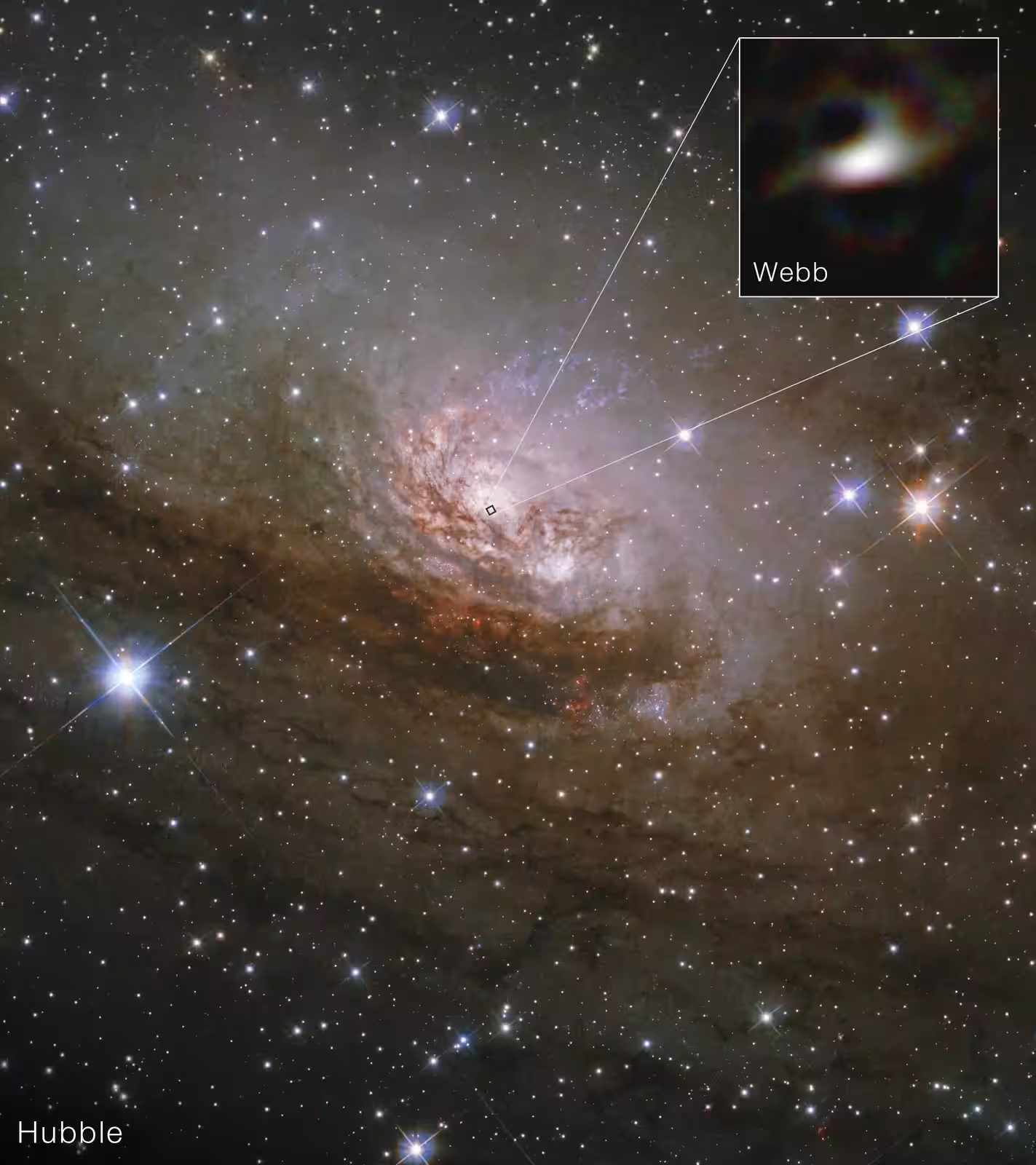
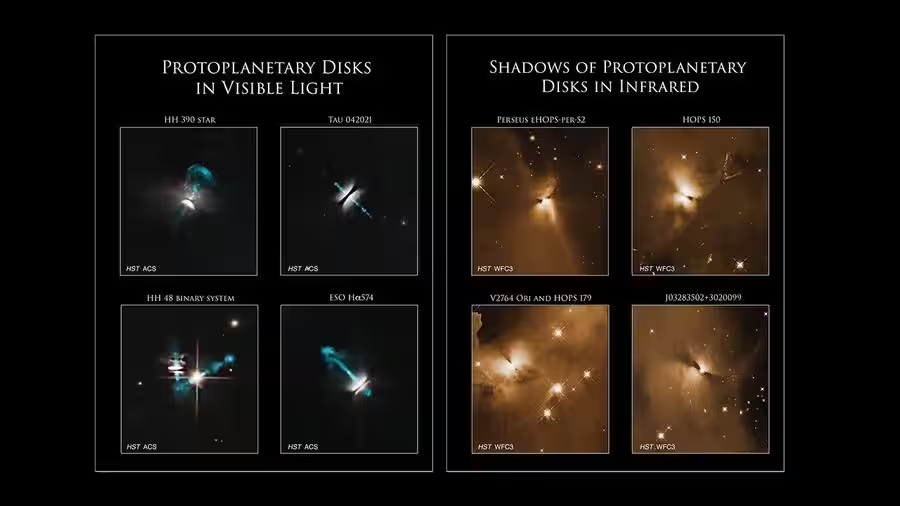
The «Hubble» Space Telescope has published a selection of images of protoplanetary disks — structures made of gas and dust in which planets may eventually form. The collection includes disks around several young stars: some captured in visible light, some — in the infrared. These images are helping scientists to better understand the formation of star systems.
The collection includes eight protoplanetary disks: four captured in visible light and four — in infrared. As stars are born, they attract surrounding gas and dust. Some of this matter forms a spinning disk — the protoplanetary disk. The gas and dust continue to fuel the growing star, and the remaining matter in orbit can eventually become planets.
In visible-light images, protoplanetary disks appear as dark streaks of dust against a bright glow. Object HH 390 is not strictly observed from an edge-on view, so its disk appears to be shifted to the edge of the bright region.
At the same time, the protoplanet disk appears to be shifted to the edge of the bright region.
The bright glow around the disks — is a reflection nebula. Such nebulae are made up of gas and dust illuminated by the light of a nearby star. Jets of gas ejected by young stars are also visible in the images. Objects HH 390 and Tau 042021 are about 450 light-years from Earth in the Taurus molecular cloud. The lower stars are located nearly 500 light-years away in the Chameleon I star-forming region.
Stars imaged in infrared are in earlier stages of evolution than those seen in optical light. In these stages, the star is surrounded by a dense shell of dust through which visible light cannot pass. Infrared light, on the other hand, is able to penetrate this dust veil, making the internal structures visible.
The dark areas at the center of the bright glow in infrared images — these are the protoplanetary disks. Their shadows falling on the surrounding cloud visually make the disk appear larger. The stars in the upper right and lower left corners are located in Orion’s molecular cloud about 1,300 light-years from Earth. The stars in the upper left and lower right corners are located in the Perseus molecular cloud about 1,500 light-years away.