The James Webb telescope has received the clearest image of the “neighborhood” of a black hole
 By ForGeeks
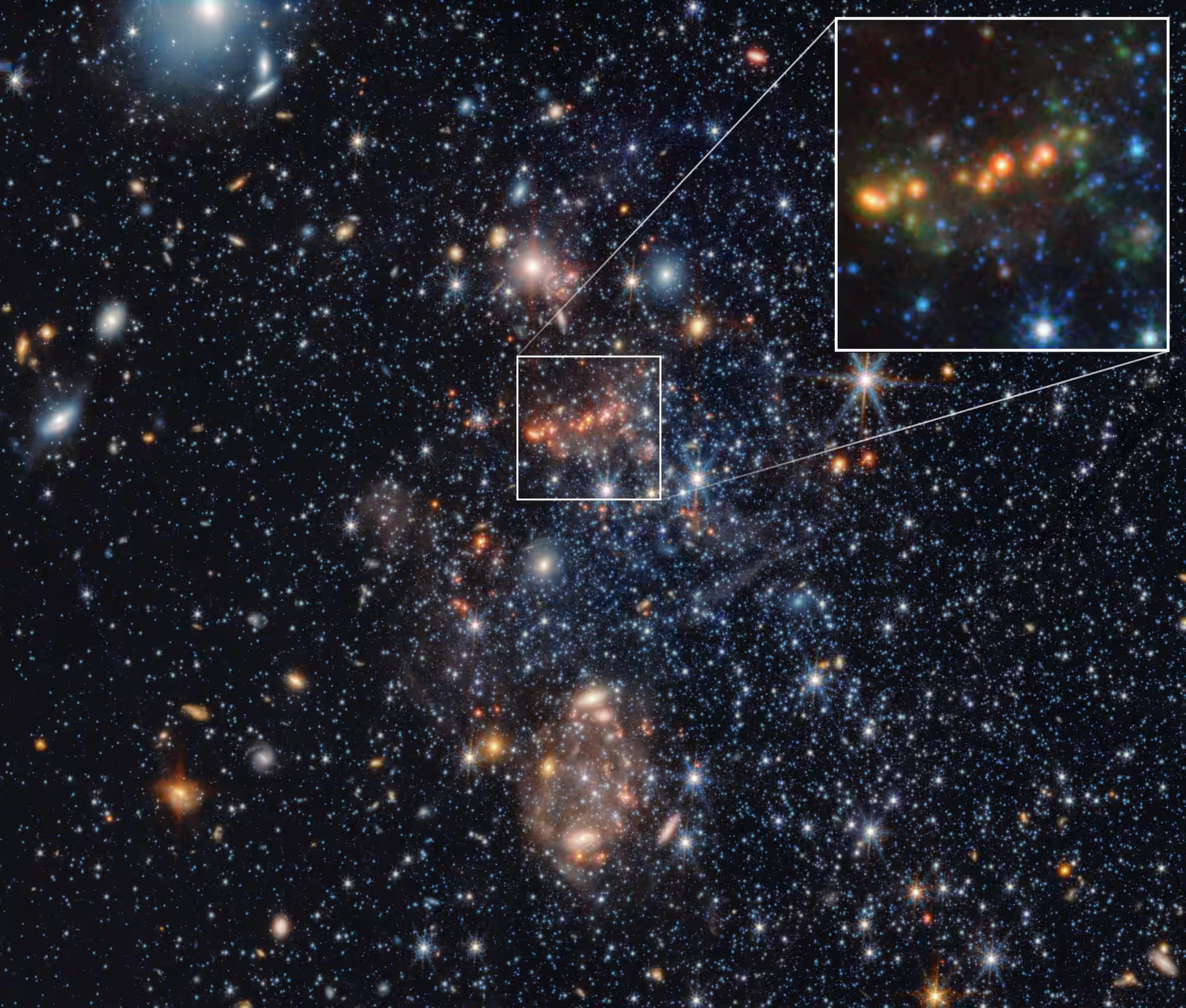
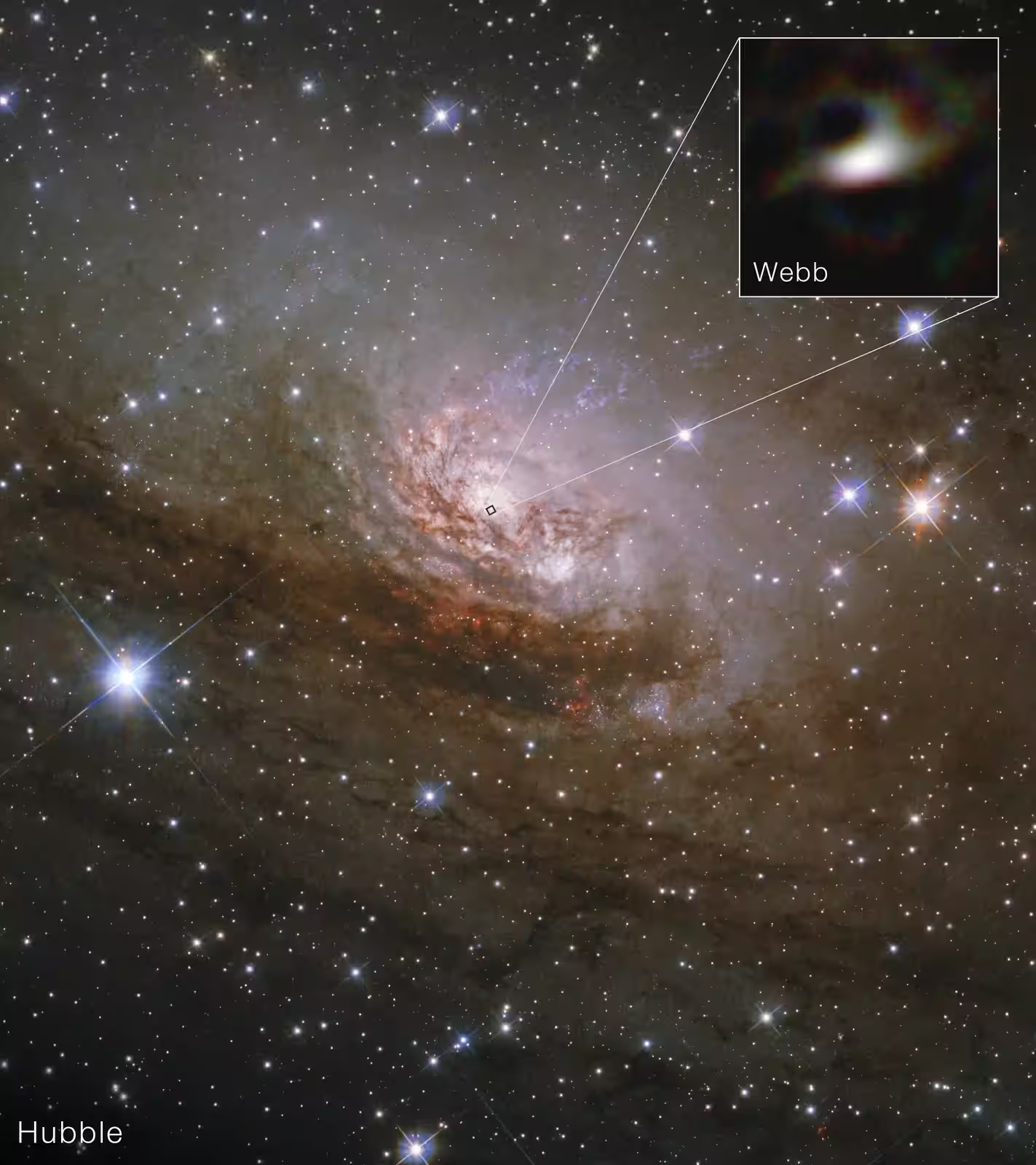
The James Webb Space Telescope has obtained the sharpest and most detailed image of the central region of the Circinus galaxy ever observed. The new data have disproved ideas that scientists have held for many years, and the method used may help to better understand the nature of the many other black holes in the Universe.
Some of the black holes in the galaxy have been observed by the James Webb telescope.
The Circinus galaxy is about 13 million light-years from Earth and contains an active supermassive black hole. Previously, astronomers have recorded an excess of infrared radiation at its center and assumed that most of it originates in the streams of matter ejected by the black hole. However, to accurately determine the source of this radiation for a long time failed.
The new telescope study gave a very different picture. It turns out that about 87% of the hot infrared radiation comes from dust located in the immediate vicinity of the black hole. Less than 1% comes from hot dust emissions, and the remaining 12% — from more distant regions. This indicates that the bulk of the luminous dust is not ejected outward, but instead participates in the process of «feeding» the black hole.
The observations were made with the Aperture Masking Interferometer instrument on the James Webb Telescope’s NIRISS (infrared camera and slitless spectroscopy) instrument. The interferometric method overcame problems associated with light from stars and surrounding matter, as well as with the dense torus — a ring-shaped structure of gas and dust surrounding the black hole and hiding its interior.
The use of this technology has produced an exceptionally sharp image of the galaxy’s core. This is the first ever infrared interferometric image of an extragalactic object obtained from space, and the first time that Webb’s high contrast mode has been applied to a galaxy outside the Milky Way. Scientists believe that this approach could be the key to unlocking the mysteries of many other black holes. The study was published in the scientific journal Nature.