Bryan Johnson is selling immortality for $1 million a year – with a waiting list already forming
 By Maya Collins
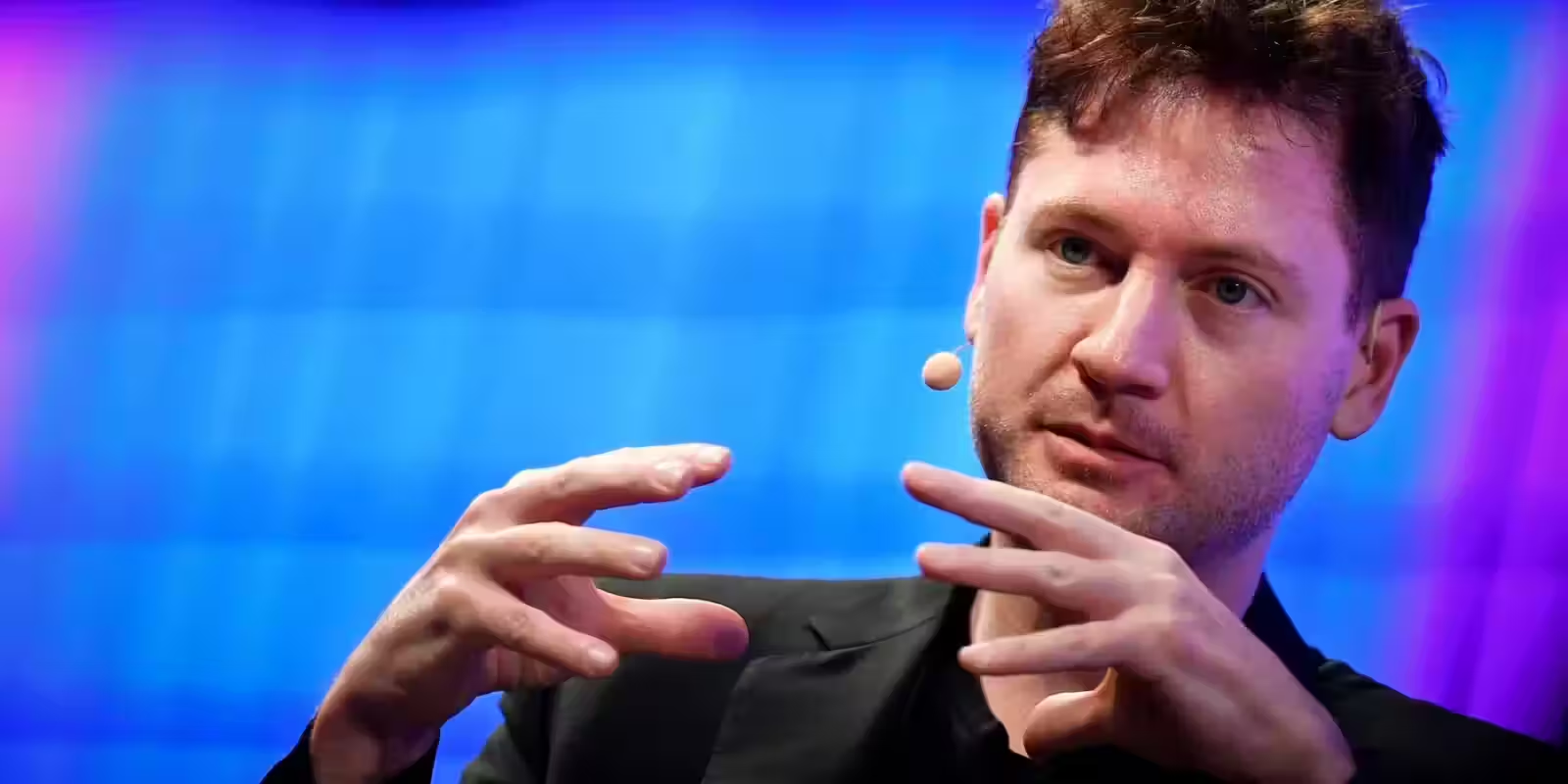
Entrepreneur Bryan Johnson has launched a program called Immortals, offering three participants the opportunity to follow his intense longevity regimen for $1 million a year. Within the first 30 hours after the announcement, over 1,500 people applied. This isn’t some garage biotech startup – it’s a full-service offering featuring a concierge team, 24/7 BryanAI support, millions of biological data points, and access to high-end therapies.
Selection will be done through interviews, with organizers promising a “broad spectrum” of candidates ranging from politicians to artists. Johnson himself has spent years putting extreme longevity practices to the test: he reportedly spends around $2 million annually on health upkeep, including weekly chemical peels, regular detailed diagnostics, and, according to some reports, blood transfusions from a teenage family member.
How much does Immortals cost?
The price tag is $1 million per year for each participant during this initial phase. For that sum, organizers promise a package combining monitoring technology, personalized support, and access to “best-in-class” procedures. The official package includes:
- a concierge team and 24/7 BryanAI support;
- a wide range of tests and continuous biometric data collection;
- protocols for skin and hair care;
- access to costly therapies and interventions.
The organization describes the model as a continuous loop of “measure – research – intervene – repeat.” Johnson also says the steep price is temporary: as the program scales, costs are expected to decrease and become “universally accessible,” although no timelines or specific plans were shared.
“Overcoming death will be humanity’s greatest achievement, and Johnson’s generation will be the first that never dies.”
Bryan Johnson, entrepreneur and biohacker
Who else is betting on longevity?
Johnson isn’t alone in this space. The longevity ecosystem features major players like Jeff Bezos, who holds a stake in Altos Labs, while Peter Thiel and Bezos have backed Unity Biotechnology. OpenAI’s CEO recently invested $180 million in Retro Biosciences. This highlights how the fight against aging has evolved into a battleground not just between scientists but also among venture capital teams writing increasingly large checks.
These projects are pushing longevity science forward, but they’re also creating a market for exclusive services. When access to experimental therapies is driven as much by ability to pay as by medical need, health outcomes risk becoming asymmetrical.
What’s next for the market and society?
Immortals is both a showcase of what’s possible and a test of demand for premium longevity. If it proves commercially viable and media-effective, expect a wave of similar offerings – private clinics, subscriptions for personalized monitoring, and “tickets” to experimental treatments.
The big open question is social: Will the longevity struggle remain a luxury market or find a path toward widespread adoption through standardization and price drops? For now, the winners are those who can afford the price tag and control the narrative; the losers are those for whom even minimal access to these technologies remains out of reach.