Musical candy and robotic butlers: the weirdest gadgets of CES 2026

 By ForGeeks
At CES 2026, among the usual TVs and laptops, there were gadgets that made attendees raise their eyebrows in surprise. Bone-conduction lollipops, solar-powered robot trackers, and digital fingernails are just some of the devices that may not change the future of electronics, but they were certainly memorable.
- Lollipop Star transmits music through your jaw using bone conduction
- Solar Mars Bot from Jackery autonomously follows the sun for maximum charging
- LG CLOiD coordinates smart appliances and does household chores
Lollipop Star: music through the jaw
Imagine taking a bite of a lollipop and a song playing in your head. Lollipop Star has taken this idea literally by combining ordinary caramel with bone conduction technology. When you bite into the candy, micro-vibrations occur that travel through your jaw and skull straight to your inner ear. So you can listen to music privately while eating the candy.
Each lollipop is tied to a specific song from artists like Ice Spice, Akon or Armani White – a hybrid of a confection and a gaming audio gadget. Many saw the device as a fun gimmick with no practical use, but it was the quirkiness of the musical candy that made it one of the most talked-about gimmicks at the show.
Solar Mars Bot: a rover that follows the sun
Jackery has revealed the Solar Mars Bot, a futuristic approach to solar charging stations. Instead of static panels, the autonomous robot uses artificial intelligence-based navigation and computer vision to track and follow the sun’s movement. The device moves throughout the day, maximizing the capture of solar energy.
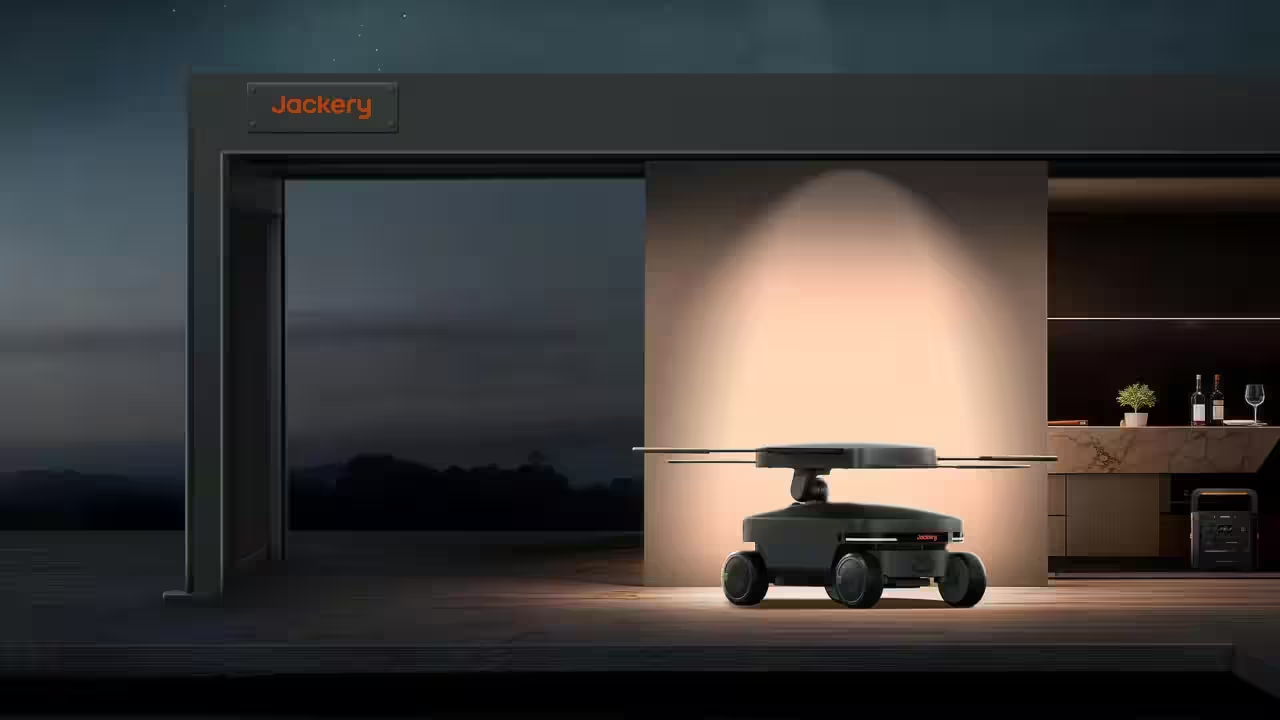
Inside is a capacious battery and multiple ports for connecting gadgets – it’s actually a mobile solar power station, capable of charging devices where sunlight is most intense. Whether camping away from power outlets or for home use, the Solar Mars Bot demonstrates a new approach to renewable energy that combines robotics with practical functionality.
Sweekar: a pocket pet with AI
Sweekar is inspired by the virtual pets of the 1990s, but takes the concept into the physical world. This compact AI pet starts life in egg form, hatches in a couple days and physically grows, going through life stages from baby to adult as it interacts with its owner.
Sweekar is a compact AI pet that starts life as an egg, hatches in a couple days and physically grows, going through life stages from infant to adult as it interacts with its owner.
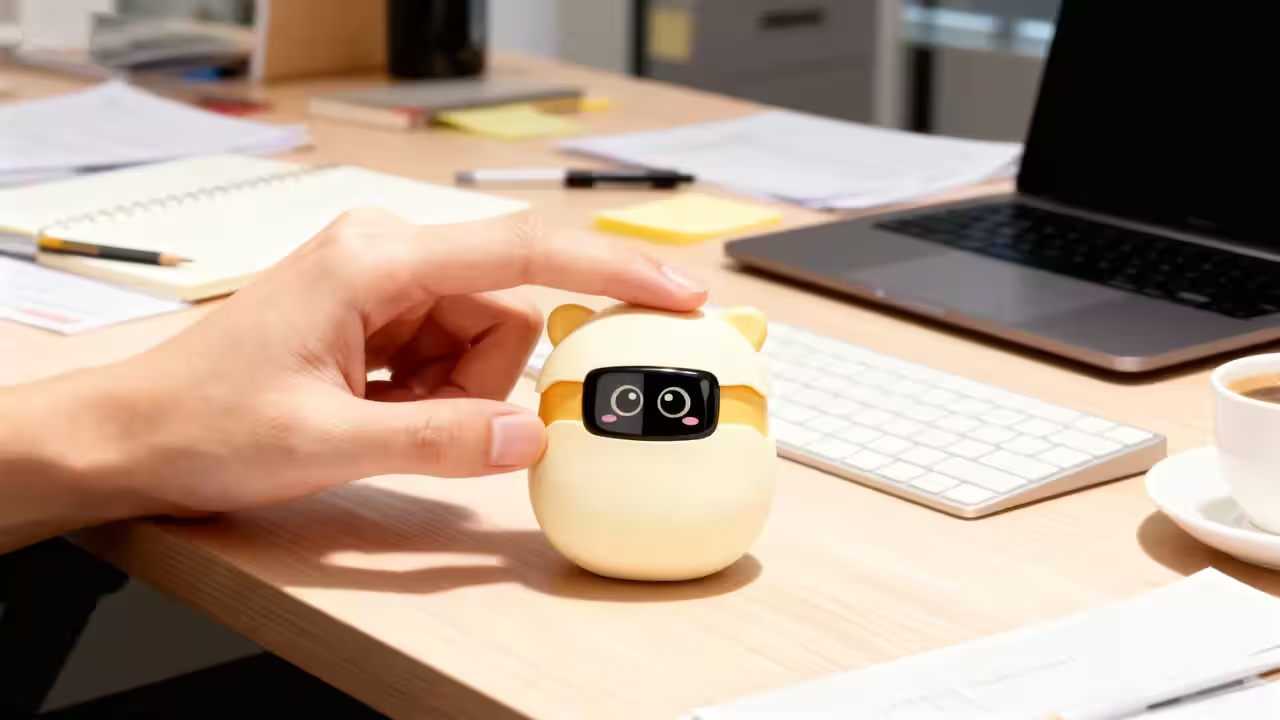
Through a mobile app, users talk to Sweekar, feed it, and care for it. Over time, owners build a bond with the robot, which learns and adapts. The device combines robotics with personality modeling to become more of a playful companion than a static gadget.
iPolish: digital manicure
Not all the weirdness of CES was robots. iPolish introduced an entirely different kind of personal tech – digitally color-changing nails. Tiny electrophoretic films are applied to acrylic nails, and a compact activating device lets you switch between hundreds of shades right from your smartphone.
A tiny electrophoretic film is applied to acrylic nails, and a compact activating device lets you switch between hundreds of shades right from your smartphone.

This means no more buying different bottles of nail polish – one gadget replaces the entire palette. The product is clearly niche, but illustrates how CES is embracing creativity beyond the usual TVs and computers.
LG CLOiD: a butler with artificial intelligence
LG is no newcomer to innovation and robotics, and with LG CLOiD, the company is taking home appliances to the next level. The ambitious robot is part of LG’s Zero Labor Home concept. This AI-powered home robot aims to automate household tasks through coordinating with connected appliances and using artificial intelligence to decide on the next action.
An AI-powered home robot aims to automate household tasks through coordinating with connected appliances and using artificial intelligence to decide on the next action.
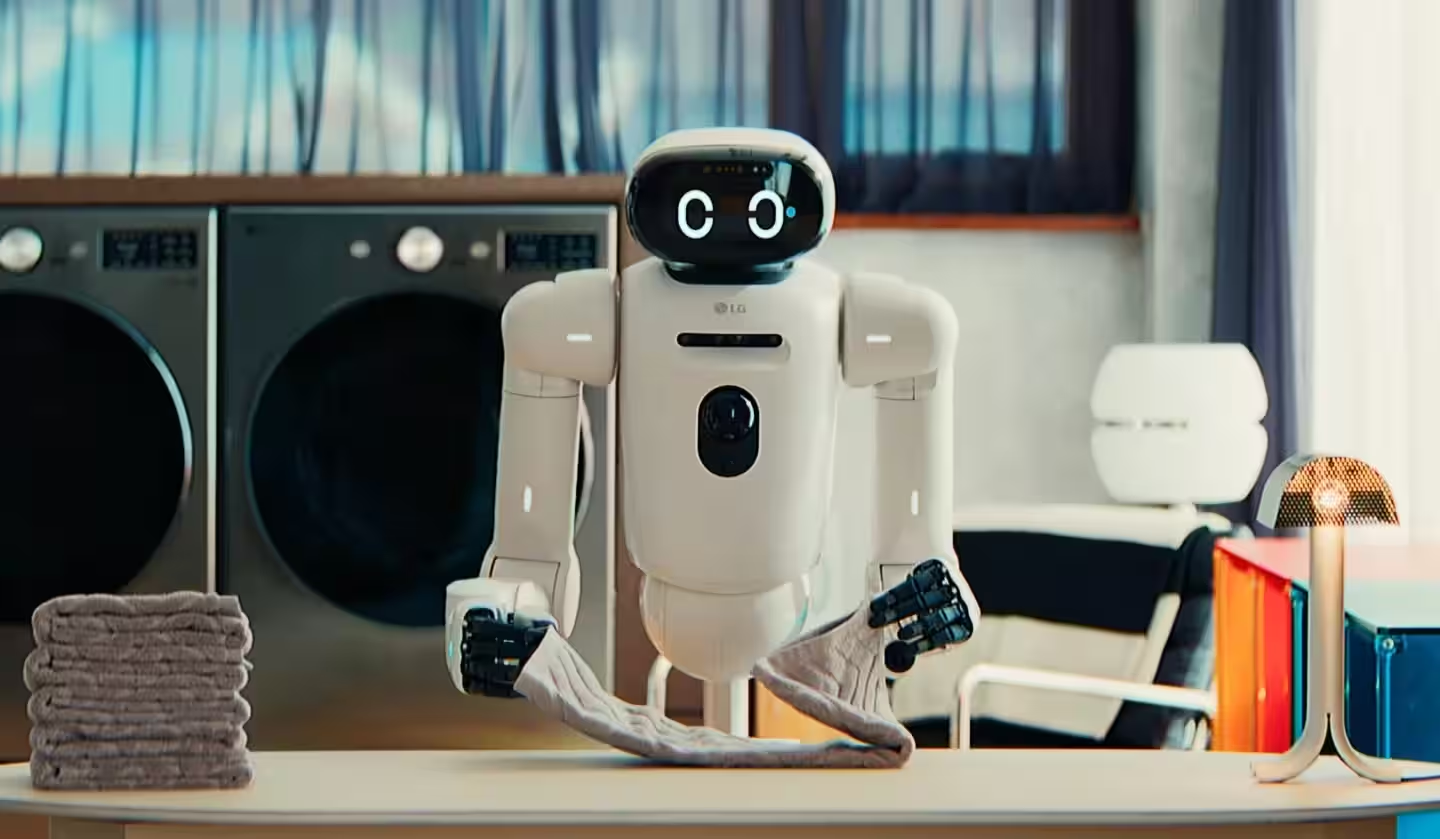
Demonstrations showed CLOiD pulling groceries out of the fridge, putting food in the oven, and folding laundry, all through a combination of articulated arms, autonomous navigation, and generative AI. The head unit simultaneously serves as a mobile smart home hub, integrating voice interaction and appliance control. For now, CLOiD remains a futuristic development not ready for the mass market, but it points to a future where robots can truly augment everyday life. And that future could come soon enough.